How AI-Assisted Stroke Care Is Revolutionizing Triage
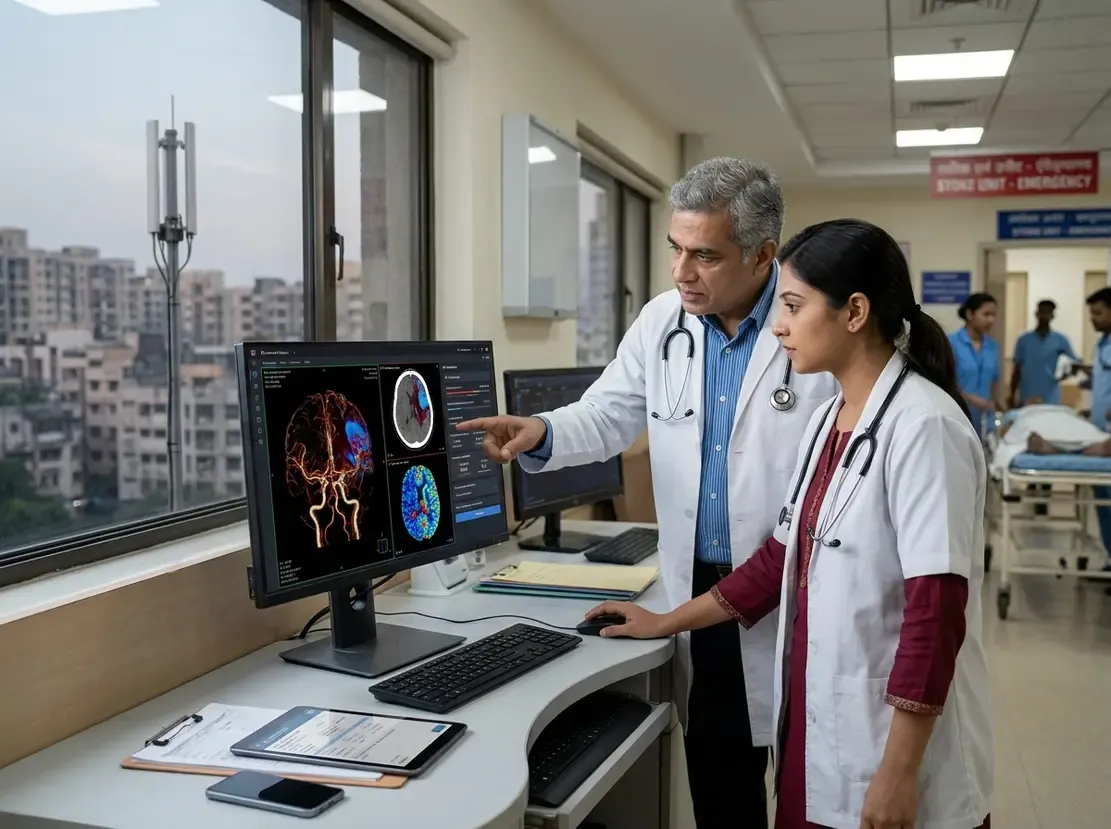
Modern emergency neurology is evolving rapidly to improve survival and functional independence. Consequently, AI-assisted stroke care has emerged as a cornerstone for rapid acute evaluation. Every minute of ischemia destroys approximately 1.9 million neurons. Therefore, rapid reperfusion remains crucial for salvaging brain tissue. Health systems now deploy connected technologies to accelerate critical clinical decisions.
The Expanding Role of AI-Assisted Stroke Care
Clinicians face significant diagnostic pressure during acute neurovascular presentations. However, advanced artificial intelligence algorithms streamline this initial imaging workflow. These automated tools rapidly identify large vessel occlusions on neuroimaging scans. Furthermore, they quantify core ischemic infarct volumes and salvageable penumbra within minutes. This rapid automated analysis helps stroke teams bypass traditional workflow bottlenecks. As a result, interventional teams mobilize before the patient arrives at the angiography suite. Similarly, 5G-connected ambulances enable real-time tele-neurology evaluations during transit. Pre-hospital teams transmit essential vital signs and clinical scores directly to receiving emergency physicians. Thus, connected networks shorten door-to-needle and door-to-puncture times dramatically.
Extending the Therapeutic Window for Mechanical Thrombectomy
Traditionally, clinicians restricted acute reperfusion interventions to strict early timeframes. Intravenous thrombolysis remains effective within 4.5 hours of symptom onset. In contrast, endovascular mechanical thrombectomy now provides therapeutic benefit up to 24 hours in selected patients. Pivotal landmark trials, such as DAWN and DEFUSE-3, reshaped these management paradigms. These trials demonstrated that perfusion imaging can identify salvageable tissue regardless of rigid elapsed clock time. Consequently, patients waking up with deficits or presenting late can still qualify for mechanical recanalization. In addition, neuro-intensive care units provide specialized continuous monitoring post-intervention. Advanced hemodynamic management and neuro-navigation suites prevent secondary injury and intracranial hemorrhage. Ultimately, this comprehensive continuum optimizes neurological recovery for complex stroke cases.
Frequently Asked Questions
Q1: What clinical role does artificial intelligence serve in acute stroke triage?
Artificial intelligence detects large vessel occlusions and calculates ischemic core volumes automatically on brain imaging. Consequently, this technology accelerates decision-making and reduces door-to-treatment intervals.
Q2: Who qualifies for mechanical thrombectomy in the extended 24-hour window?
Patients with large vessel occlusions in the anterior circulation who exhibit favorable clinical-core or perfusion mismatches qualify for late intervention. Therefore, advanced neuroimaging guides eligibility rather than symptom duration alone.
Q3: How do 5G-connected ambulances enhance pre-hospital stroke management?
Connected ambulances transmit real-time patient data and telemetry directly to the stroke team. Thus, neurologists initiate pre-arrival preparations, ensuring instant access to thrombolysis upon hospital arrival.
References
- Apollo launches AI-assisted stroke care programme - ETHealthworld
- Powers WJ, Rabinstein AA, Ackerson T, et al. Guidelines for the Early Management of Patients With Acute Ischemic Stroke: 2019 Update. Stroke. 2019;50(12):e344-e418.
- Nogueira RG, Jadhav AP, Haussen DC, et al. Thrombectomy 6 to 24 Hours after Stroke with a Mismatch between Deficit and Infarct. N Engl J Med. 2018;378(1):11-21.
- Albers GW, Marks MP, Kemp S, et al. Thrombectomy for Stroke at 6 to 16 Hours with Selection by Perfusion Imaging. N Engl J Med. 2018;378(8):708-718.