Why Clinical Judgement Remains Indispensable in AI Era

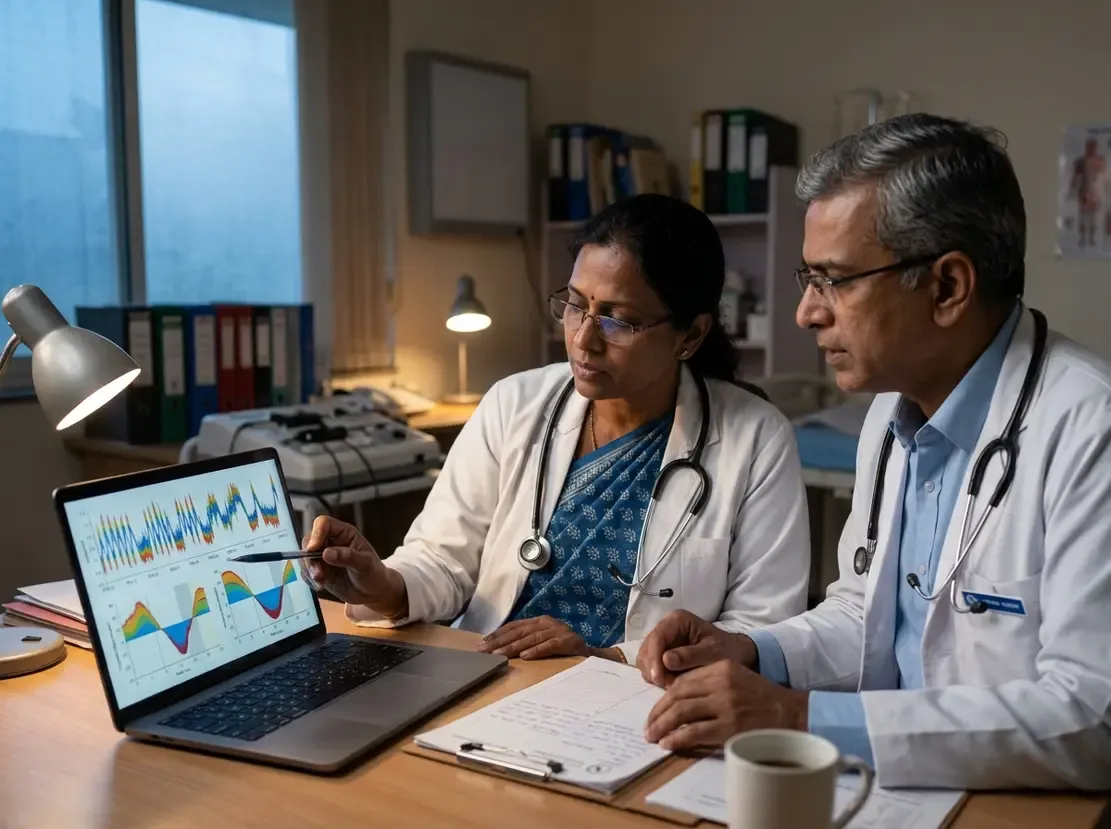
The rapid adoption of AI in radiology is transforming diagnostic workflows across India. However, raw computational models alone do not guarantee clinical success or patient safety. As frontier algorithms commoditise baseline image analysis, healthcare institutions must distinguish between rented software and proprietary clinical knowledge. Consequently, clinicians must maintain decisive oversight to prevent diagnostic errors and diagnostic deskilling.
Why Intelligence Is Becoming Infrastructure in Healthcare
Artificial intelligence models are rapidly shifting from high-tech novelties into standard hospital utilities. For instance, diagnostic reasoning that previously required specialized academic laboratories now runs through commercial programming interfaces. Therefore, access to an algorithm no longer provides a durable institutional advantage. Because competing hospitals can license the exact same models overnight, software alone cannot serve as a clinical moat. Moreover, static archives of unlabelled imaging data fail to provide meaningful competitive separation. In contrast, true clinical value emerges from continuous operational experience under real-world hospital constraints.
Closed Learning Loops for AI in Radiology
A machine learning model without an active feedback loop degrades over time. Conversely, a deployed diagnostic network compounds in accuracy when integrated into daily clinical decisions. In high-volume tele-radiology networks, specialist radiologists review thousands of scans every single day. Each time a consultant radiologist accepts, corrects, or escalates an algorithm's output, the system captures vital contextual nuance. For example, edge cases, atypical anatomic variations, and institutional discrepancies enrich the underlying knowledge architecture. Furthermore, these real-world corrections cannot simply be scraped from medical textbooks or web archives. Thus, the learning system surrounding the model constitutes the real institutional asset.
Clinical Accountability and Ethical Mandates in India
Modern algorithms can suggest diagnoses, but they cannot accept professional responsibility. Ultimately, a licensed medical doctor must sign the radiology report and explain critical findings to the patient's family. In high-stakes medicine, ethical accountability remains an inseparable element of patient care. Furthermore, the Indian Council of Medical Research emphasizes human-in-the-loop governance to safeguard clinical autonomy and safety. Practitioners who rely uncritically on automated recommendations risk automation bias and diagnostic error. Therefore, physicians must aggressively question algorithmic suggestions rather than passively adopting automated conclusions. When clinicians retain their diagnostic ownership, patient outcomes improve significantly.
Frequently Asked Questions
Q1: What does it mean for a medical practice to become unclaudable?
To become unclaudable, a healthcare organization must build proprietary advantages that general artificial intelligence cannot commoditise. Specifically, this involves integrating active clinical learning loops, proprietary deployment context, and uncompromised physician accountability.
Q2: Why cannot algorithms replace human accountability in Indian radiology?
Medical ethics and Indian regulations require a licensed practitioner to validate findings and bear legal responsibility. Because algorithms lack moral agency and cannot communicate with families, final diagnostic decisions must remain with clinicians.
Q3: How do learning loops improve diagnostic algorithms over time?
Learning loops systematically record expert corrections, clinical disagreements, and rare edge cases during everyday practice. As a result, the diagnostic system continuously sharpens its accuracy rather than becoming obsolete.
References
- Become unclaudable - ETHealthworld
- Indian Council of Medical Research (ICMR). Ethical Guidelines for Application of Artificial Intelligence in Biomedical Research and Healthcare. DHR-ICMR AI Cell, New Delhi; 2023.
- Central Drugs Standard Control Organisation (CDSCO). Medical Device Rules 2017 & Software as a Medical Device (SaMD) Regulatory Framework. Ministry of Health and Family Welfare, Government of India.