Bisleri Water Row: Is Your Bottled Water Really Safe?
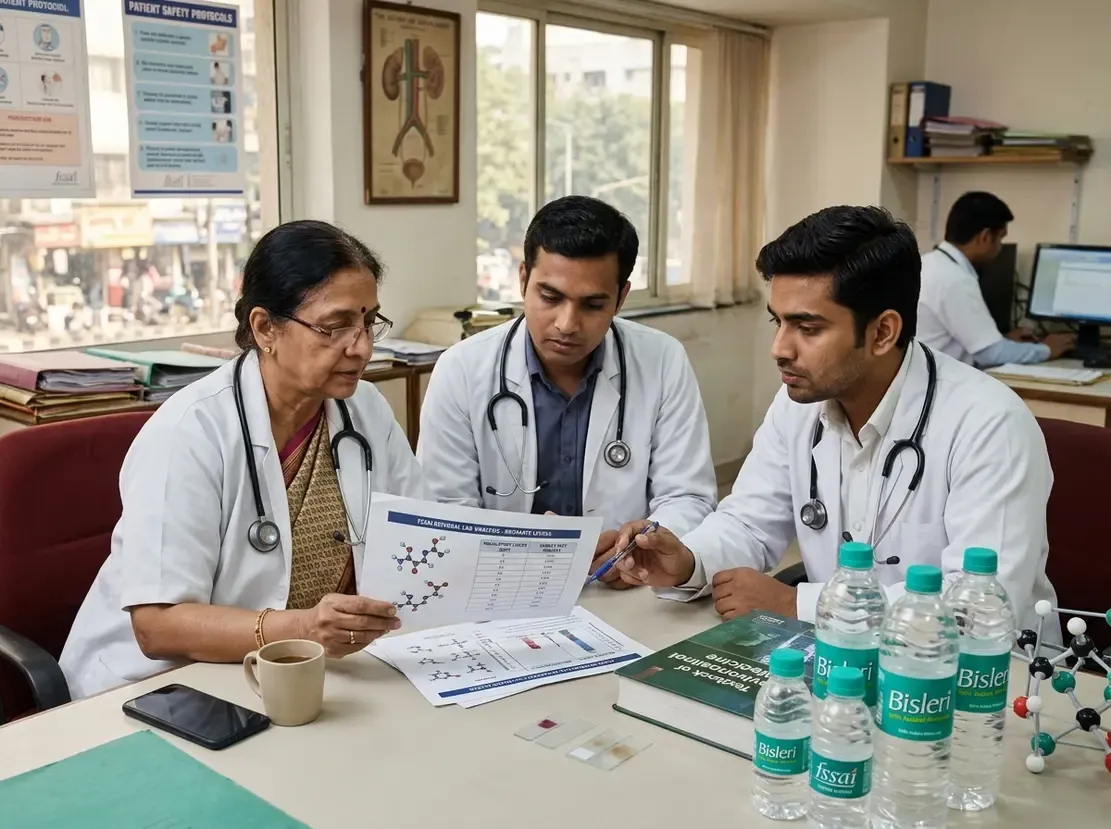
Bisleri Water Row: Is Your Bottled Water Really Safe?
The Food Safety and Standards Authority of India (FSSAI) recently sanctioned prosecution against Bisleri International. Consequently, public attention has shifted toward chemical safety and bromate in drinking water. Bisleri stated that its packaged water is entirely safe for human consumption. Furthermore, the company clarified that an official referral laboratory found bromate levels within the prescribed limit.
The FSSAI Regulatory Action and Testing History
The regulatory dispute traces back to water samples collected from Bisleri's Goa facility in September 2025. During the initial evaluation, five of the six collected samples complied with national standards. However, the sixth sample showed a bromate level of 12 micrograms per litre. In contrast, the current FSSAI regulatory ceiling stands at 10 micrograms per litre.
Bisleri promptly appealed the initial findings in November 2025. Therefore, the food authority forwarded the disputed sample to an appellate referral laboratory. According to the company, the referral facility reported bromate within permissible limits. Nevertheless, that same referral test unexpectedly flagged polynuclear aromatic hydrocarbons. To resolve the contradictory results, Bisleri commissioned an independent evaluation at another accredited facility. Subsequently, this third test confirmed compliant bromate levels. Bisleri submitted these findings to regulatory officials in February 2026. Moreover, the brand highlighted that it maintains ninety internal quality checks across ten production stages.
Health Risks of Bromate in Drinking Water
Bromate is an undesirable chemical byproduct formed during water purification. Specifically, ozone treatment oxidizes naturally occurring bromide ions into bromate. The World Health Organization classifies bromate as a provisional chemical risk with a strict ten microgram limit.
Additionally, the International Agency for Research on Cancer categorizes potassium bromate as a Group 2B possible human carcinogen. Animal toxicology studies demonstrate that chronic exposure produces renal and thyroid tumors. In acute overdoses, bromate can induce gastrointestinal distress, acute kidney failure, and permanent auditory nerve damage. Therefore, clinicians must understand these environmental thresholds when patients present with unexplained toxicities. Packaged water manufacturers must strictly control ozonation parameters to prevent excess disinfection byproducts.
Clinical Guidance for Healthcare Practitioners
Physicians regularly encounter inquiries regarding drinking water safety and chemical contamination. Consequently, medical professionals should reassure patients that a slight, transient elevation rarely causes immediate acute harm. However, long-term exposure to persistent environmental toxins remains a valid public health concern for those working in general practice.
Furthermore, medical teams should educate patients on selecting certified packaged products that display clear regulatory approval numbers. Healthcare providers must remain vigilant regarding industrial contamination reports in their local jurisdictions. As a result, robust surveillance protects community health and reinforces consumer trust, which is a vital part of comprehensive primary care.
Frequently Asked Questions
Q1: Why did FSSAI sanction prosecution against Bisleri?
FSSAI initiated legal action after a sample showed bromate at 12 micrograms per litre. This result exceeded the statutory limit of 10 micrograms per litre.
Q2: What did the referral laboratory find upon retesting?
According to Bisleri, the appellate referral laboratory reported bromate within prescribed limits. However, the referral laboratory separately detected polynuclear aromatic hydrocarbons in the water sample.
Q3: How does bromate enter packaged drinking water?
Bromate forms as a chemical disinfection byproduct during treatment. Specifically, ozone reacts with naturally present bromide ions in raw source water to produce bromate.
References
- Bisleri says packaged drinking water safe, claims referral lab found bromatewithin prescribed limit - ETHealthworld
- High bromate in bottled water: How does it enter water and what are the possible health risks? - The Times of India
- Bromate in Drinking-water - World Health Organization (WHO)