Assam Study Confirms Safety Across 3,800 CERVAVAC Doses
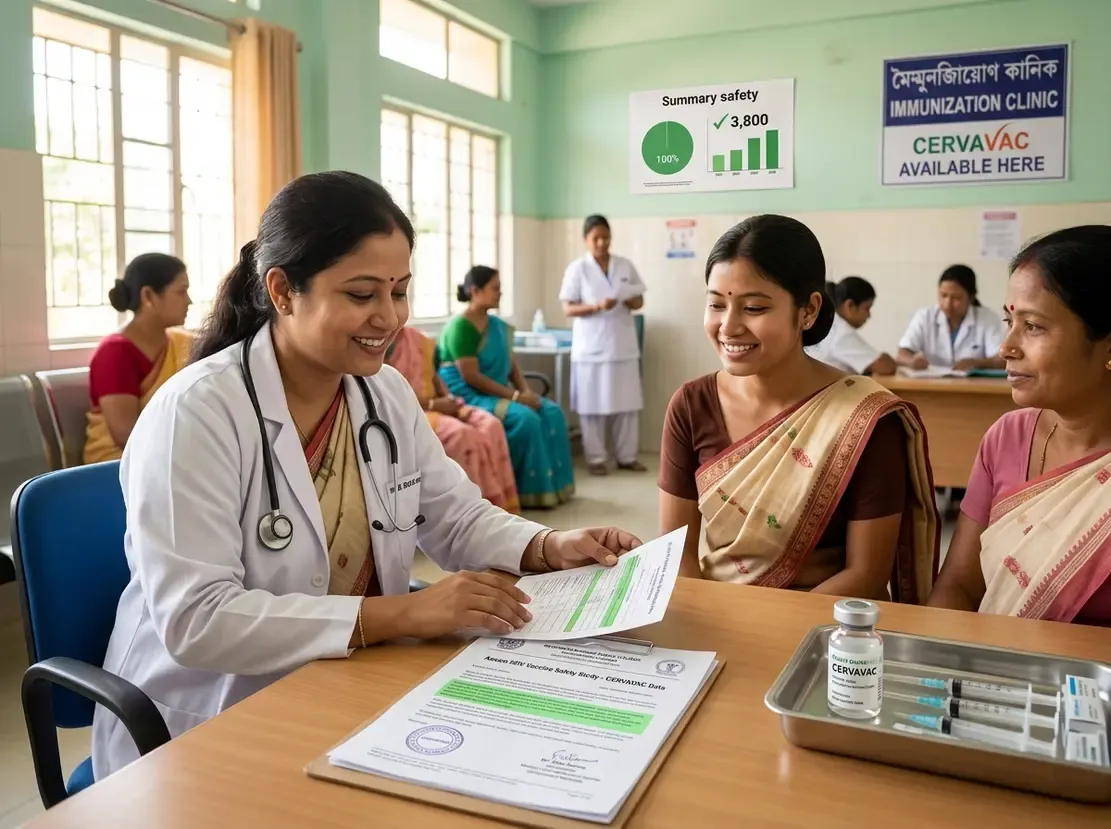
Clinicians across India now have vital real-world evidence confirming CERVAVAC vaccine safety in adolescent populations. A pioneering study conducted in Assam followed 2,000 young girls receiving 3,800 vaccine doses over twelve months. Furthermore, the findings show an exceptional tolerability profile with zero reports of severe adverse events. Consequently, this study provides timely reassurances for healthcare practitioners recommending HPV immunisation.
Assessing CERVAVAC Vaccine Safety in Real-World Practice
The independent study appeared in the peer-reviewed Annals of Oncology Research and Therapy. Specifically, researchers from Assam Medical College and Hospital collaborated with Dispur Hospital and Pratishruti Cancer and Palliative Trust. Between March 2025 and February 2026, healthcare workers administered the indigenously manufactured quadrivalent vaccine to girls aged nine and older. In addition, the team monitored all recipients closely across consecutive vaccine doses. Therefore, the data reflects genuine community implementation rather than tightly restricted clinical trial conditions.
Key Clinical Findings from the Assam Cohort
Most importantly, the investigation revealed an absence of serious adverse events following immunisation. In fact, only 6.1% of vaccine recipients reported mild injection site discomfort. Recipients experienced localized swelling and brief soreness that resolved without medical intervention. Moreover, clinicians observed no systemic allergic reactions, anaphylaxis, or neurological sequelae throughout the study period. Thus, the safety profile matches well-documented benchmarks established by international HPV vaccines.
Overcoming Vaccine Hesitancy in Cervical Cancer Prevention
Cervical cancer remains the second most frequent malignancy among Indian women. However, misinformation on social media frequently undermines public confidence in prophylactic immunization drives. Hence, objective clinical evidence plays an indispensable role in dispelling unjustified parental anxiety. By documenting large-scale outcomes in Assam, this initiative provides robust proof of community-level tolerance. Consequently, primary care physicians and gynecologists can leverage these findings to encourage timely vaccination among eligible adolescents.
Frequently Asked Questions
Q1: What adverse effects were documented in the Assam CERVAVAC study?
The study recorded no major adverse events following immunisation. Specifically, only 6.1% of participants experienced mild, transient pain and minor swelling at the injection site.
Q2: Who conducted this real-world HPV vaccination assessment?
Researchers from Assam Medical College and Dispur Hospital conducted the study alongside the Pratishruti Cancer and Palliative Trust.
Q3: How many doses were administered during the vaccination initiative?
Healthcare workers administered a total of 3,800 CERVAVAC doses to 2,000 girls aged nine and above over a one-year period.
Enhance Your Clinical Expertise
Medical professionals looking to broaden their knowledge in preventive care and related specialties can explore structured learning opportunities through OC Academy to stay updated with the latest clinical guidelines and real-world evidence.
References
- Assam study reports no major side effects after 3,800 HPV vaccine doses - ETHealthworld
- Annals of Oncology Research and Therapy - Safety and Tolerability of CERVAVAC in Assam Adolescent Cohort
- The Lancet Oncology - Immunogenicity and safety of a quadrivalent HPV vaccine in girls and boys aged 9-14 years in India