Coronary Angioplasty Protocols: Lessons From AIIMS Case
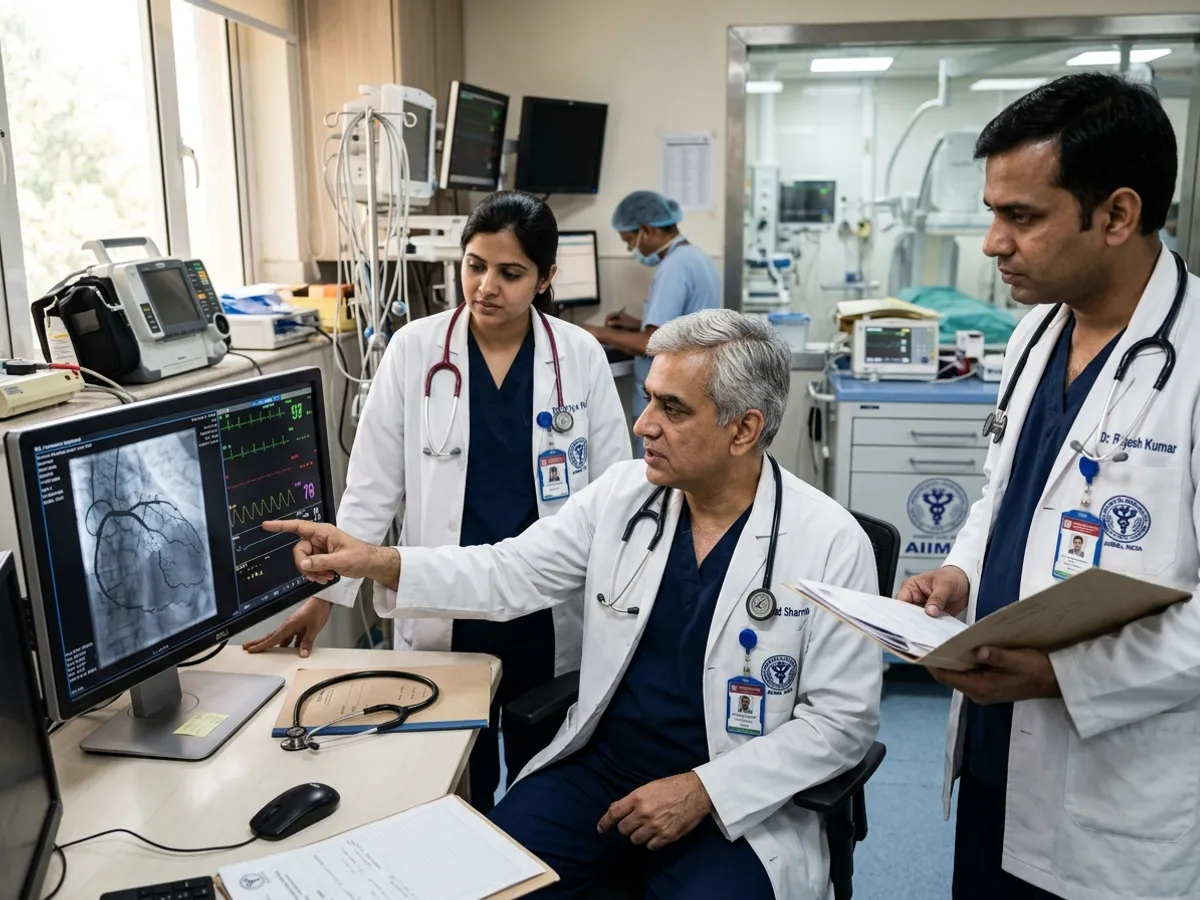
Union Health Minister J P Nadda was successfully discharged from the All India Institute of Medical Sciences (AIIMS), New Delhi, following a scheduled procedure. Clinicians performed a successful coronary angioplasty after the minister experienced cardiac uneasiness. Consequently, the medical team kept him under close hemodynamic observation in the Department of Cardiology before clearing his hospital discharge.
Clinical Presentation and Coronary Angioplasty Timeline
The minister initially presented to AIIMS after experiencing acute physical uneasiness. Therefore, the medical team admitted him promptly for preliminary diagnostic evaluation. On the evening of admission, interventional cardiologists performed a coronary angiography to assess vessel patency.
Subsequently, the cardiology team scheduled and executed a targeted coronary angioplasty procedure. Following the intervention, physicians maintained intensive monitoring to track post-procedure stability and prevent immediate thrombotic complications. Fortunately, the patient had a comfortable recovery and thanked the clinical team upon discharge.
Diagnostic Pathways in Suspected Coronary Artery Disease
When patients present with non-specific chest uneasiness, clinicians must act swiftly to rule out acute coronary syndromes. Diagnostic protocols prioritize immediate electrocardiography, serial cardiac enzyme assays, and non-invasive hemodynamic monitoring.
Furthermore, early coronary angiography remains the gold standard for defining coronary anatomy and identifying hemodynamically significant stenosis. If clinicians detect critical obstructive lesions, percutaneous coronary intervention offers rapid arterial revascularization. Consequently, timely revascularization significantly reduces ischemic burden and preserves myocardial tissue.
Post-Intervention Monitoring and Recovery Guidelines
Post-procedure care requires vigilant hemodynamic observation in a dedicated cardiac unit. Specifically, nursing teams monitor vascular access sites to detect potential hematomas or bleeding complications.
Additionally, cardiologists prescribe dual antiplatelet therapy to prevent acute in-stent thrombosis. Patients must adhere strictly to these antithrombotic regimens alongside statins and blood pressure controllers. Moreover, structured cardiac rehabilitation and lifestyle modifications promote long-term vascular health after hospital discharge.
Frequently Asked Questions
Q1: Why is coronary angioplasty performed after angiography?
Coronary angiography reveals the precise site and extent of arterial blockages. Consequently, cardiologists perform coronary angioplasty with stenting to widen narrowed arteries and restore optimal myocardial blood flow.
Q2: How long do patients typically stay under observation after angioplasty?
Most uncomplicated cases require 24 to 48 hours of post-procedure observation. Therefore, clinicians monitor vital parameters, access site healing, and cardiac rhythm before approving discharge.
Q3: What medications are essential following a coronary stent placement?
Patients require dual antiplatelet therapy to prevent stent thrombosis. Additionally, doctors prescribe statins, antihypertensives, and lifestyle adjustments to reduce long-term cardiovascular risk.
References
- Union health minister Nadda discharged from AIIMS after angioplasty - ETHealthworld
- 2021 ACC/AHA/SCAI Guideline for Coronary Artery Revascularization - Journal of the American College of Cardiology
- Patient Management Following Percutaneous Coronary Intervention - National Institutes of Health (PMC)