
Managing Pediatric Firecracker Burn Injuries Post Diwali
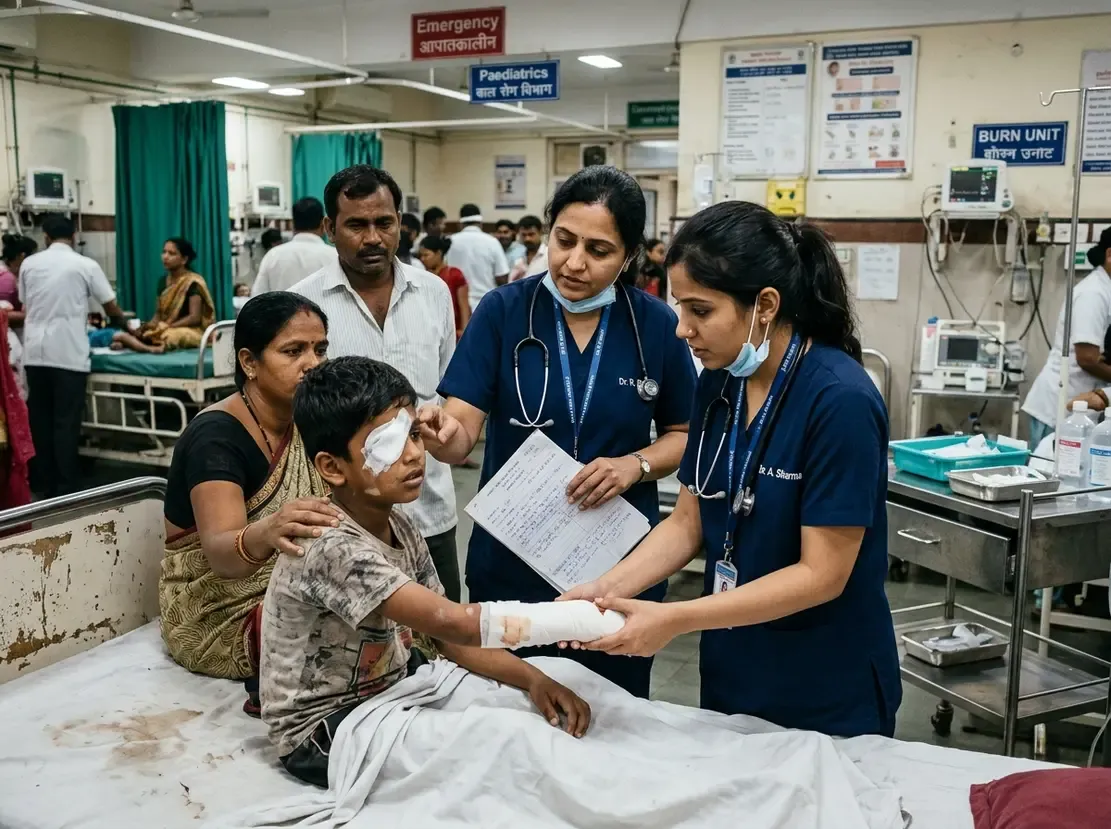
During festive celebrations in India, hospitals regularly witness a surge in acute trauma cases. Specifically, firecracker burn injuries remain a major cause of preventable morbidity among children and young adults. Recent hospital surveillance reveals substantial emergency department visits across premier centers in New Delhi. Therefore, medical practitioners must recognize common injury patterns and prepare effective clinical pathways.
Epidemiological Trends and Pediatric Vulnerability
Data from tertiary facilities demonstrate that minors bear a disproportionate burden of thermal trauma. For instance, AIIMS New Delhi reported forty-two festive burn presentations within forty-eight hours. Furthermore, children under eighteen years accounted for nearly half of these clinical admissions. Notably, conical fountain devices, commonly called anaar explosions, triggered severe injuries in older adolescents. Safdarjung Hospital similarly treated one hundred thirty-five outpatient burn cases over the same holiday period. In addition, pediatric patients below twelve years comprised over a quarter of these presentations.
Emergency Management of Firecracker Burn Injuries
Prompt resuscitation remains essential when clinicians encounter acute blast and flame trauma. First, teams must secure the patient airway and assess inhalation trauma from toxic smoke. Consequently, clinicians should administer warmed balanced crystalloids according to standard pediatric fluid protocols. Hand trauma predominates among adults, requiring early elevation and neurovascular assessment. Conversely, pediatric patients often present with extensive truncal and facial burns needing critical care. As a result, early surgical consultation helps determine the need for escharotomy or debridement.
Addressing Complex Ocular Trauma and Blast Pathology
Ophthalmic casualties represent another critical dimension of festive blast trauma. Indeed, specialized eye casualty units evaluated over one hundred patients during the Diwali festive peak. While conservative therapy stabilized non-sight-threatening superficial burns, eighteen individuals presented with corneal perforations. Therefore, ophthalmic surgeons conducted urgent repairs to salvage visual acuity in young victims. Moreover, bystanders frequently suffer severe blast trauma despite not handling explosives directly. Clinicians must educate communities on strict eye protection and adult supervision.
Frequently Asked Questions
Q1: Why are children more vulnerable to severe firecracker burn injuries?
Children often lack motor coordination and risk awareness when handling pyrotechnic devices. Furthermore, their thinner skin and smaller body surface area accelerate thermal injury depth and systemic fluid loss.
Q2: What is the immediate first-aid priority for festive burn trauma?
First, cool the affected area with clean running tap water for ten to twenty minutes. However, avoid applying ice, unsterile ointments, or home remedies, and seek emergency hospital evaluation immediately.
Q3: Which firecrackers cause the highest rate of ocular and blast trauma?
Conical ground fountains and aerial blast fireworks cause significant ocular rupture and deep dermal burns. Additionally, unexpected blast delays frequently injure bystanders and curious children standing nearby.
References
- Children among worst affected in Diwali firecracker burn cases - ETHealthworld
- Tandon R, Agrawal K, Narayan RP, Tiwari VK, Prakash V, Kumar S, Sharma S. Firecracker injuries during Diwali festival: The epidemiology and impact of legislation in Delhi. Indian J Plast Surg. 2012;45(1):97-101.
- Agrawal A, et al. Firecracker-related ocular injuries during the Diwali festival: A multicentric prospective study from Central and Western India. Indian J Ophthalmol. 2026.


