
Do Microplastics in Ovarian Fluid Reduce IVF Success?
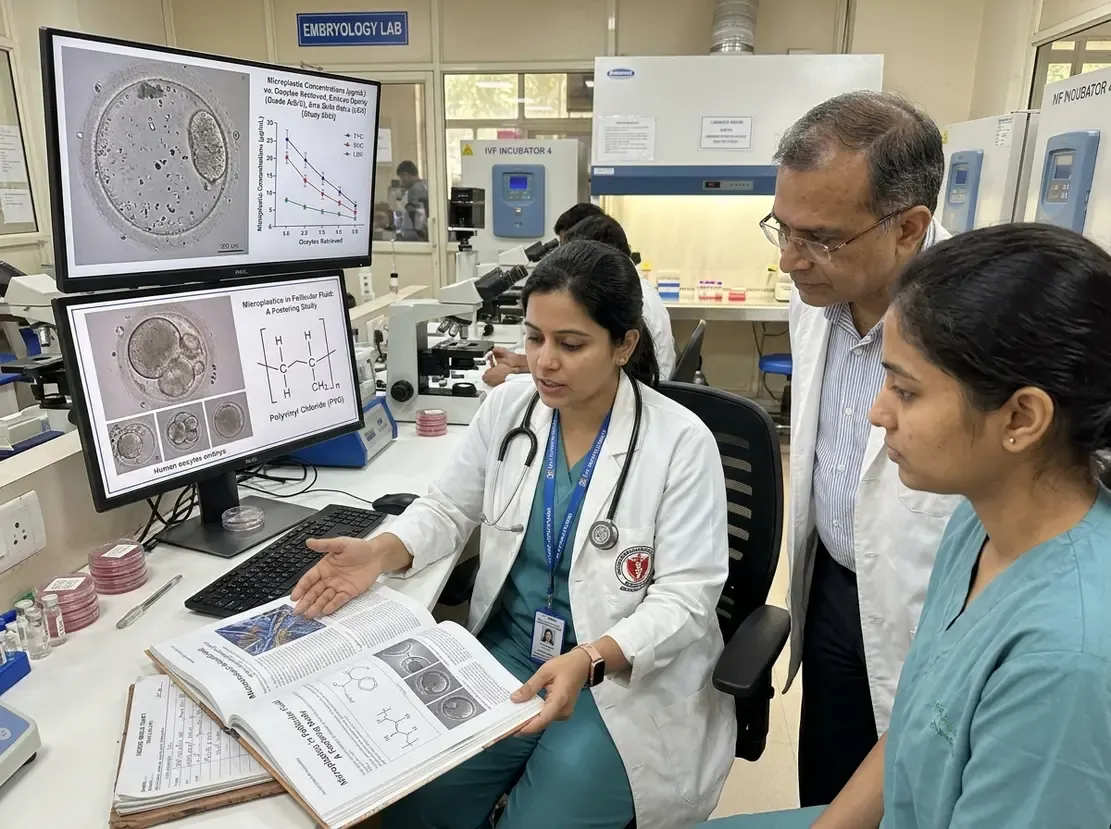
Recent investigations into environmental contaminants highlight the growing hazard of follicular fluid microplastics in reproductive medicine. Clinicians now recognize that non-biodegradable synthetic polymers cross biological barriers and accumulate in ovarian tissues. Specifically, this chemical intrusion alters the delicate intrafollicular microenvironment that supports oocyte maturation and steroidogenesis. Consequently, fertility specialists must understand how synthetic polymer accumulation influences clinical outcomes during assisted reproduction.
How Follicular Fluid Microplastics Affect Ovarian Function
Environmental plastic debris degrades into microscopic particles through weathering and industrial processing. Subsequently, humans ingest and inhale these tiny xenobiotics daily through contaminated food, drinking water, and air. In the ovarian follicle, microscopic polymers induce localized oxidative stress, inflammation, and cellular dysfunction. In addition, plastic materials release harmful plasticizers such as phthalates and bisphenols into follicular fluid. Therefore, these pervasive contaminants disrupt meiotic spindle formation and impair normal granulosa cell communication. Ultimately, this biological stress harms egg quality and reduces reproductive potential.
Key Findings From the Prospective Cohort
A prospective cohort study evaluated 203 women undergoing in vitro fertilisation at an academic centre in Beijing. Notably, researchers collected follicular fluid during oocyte retrieval to measure polymer concentrations using pyrolysis-gas chromatography and mass spectrometry. The investigators subsequently tracked live birth rates, clinical pregnancies, and embryological parameters among 158 women undergoing their first embryo transfer.
The study revealed clear dose-dependent toxic effects tied directly to polyvinyl chloride concentrations. For instance, each standard-deviation increase in log-transformed polyvinyl chloride resulted in 1.33 fewer retrieved oocytes. Furthermore, higher exposure correlated with 0.90 fewer two-pronuclear zygotes and 0.60 fewer high-quality embryos. Crucially, polyvinyl chloride reduced the odds of clinical pregnancy by 45 percent and lowered live birth odds by 40 percent. However, the authors observed no statistically significant associations with polystyrene or polyamide 66 after multivariable adjustment.
Clinical Implications for Indian Fertility Specialists
These findings carry immense relevance for reproductive medicine practitioners in India. Rapid industrialization, plastic packaging ubiquity, and environmental pollution increase systemic exposure across diverse demographics. Hence, clinicians should evaluate environmental toxicant exposure when managing unexplained poor ovarian reserve or repeated implantation failure.
Moreover, fertility clinics must counsel couples on practical lifestyle modifications before starting ovarian stimulation. For example, physicians can advise patients to avoid heating food in plastic containers and switch to glass bottles. Similarly, centers should audit laboratory disposables to limit medical plastic leachates during gamete handling. While prospective replication remains essential, preventive guidance offers immediate value for optimizing ART outcomes.
Frequently Asked Questions
Q1: Which specific plastic polymer demonstrated the strongest negative impact on IVF outcomes?
Polyvinyl chloride demonstrated the most significant negative association with IVF outcomes. Higher concentrations correlated directly with fewer retrieved oocytes, fewer good-quality embryos, and reduced live birth rates.
Q2: How do microplastics penetrate human ovarian follicular fluid?
Microplastics enter the body through ingestion, inhalation, and dermal absorption. Subsequently, these particles travel through the vascular system, cross protective follicular barriers, and accumulate within the ovarian microenvironment.
Q3: What practical steps can clinicians recommend to reduce microplastic exposure?
Clinicians can advise couples to avoid microwaving foods in plastic containers. Additionally, patients should choose glass or stainless steel containers and filter their drinking water.
References
- Xiong X et al. Microplastics and Nanoplastics in Follicular Fluid and in Vitro Fertilisation Outcomes: A Prospective Cohort Study. BJOG. 2026 Nov 18. doi: 10.1111/1471-0528.70382. PMID: 43051300.
- Hunt K, Davies A, Fraser A, et al. Exposure to microplastics and human reproductive outcomes: A systematic review. BJOG. 2024;131(5):675–683.
- Montano L, Raimondo S, Piscopo M, et al. First evidence of microplastics in human ovarian follicular fluid: An emerging threat to female fertility. Ecotoxicol Environ Saf. 2025;291:117868.


