
How Genomics and AI Will Transform Healthcare in India
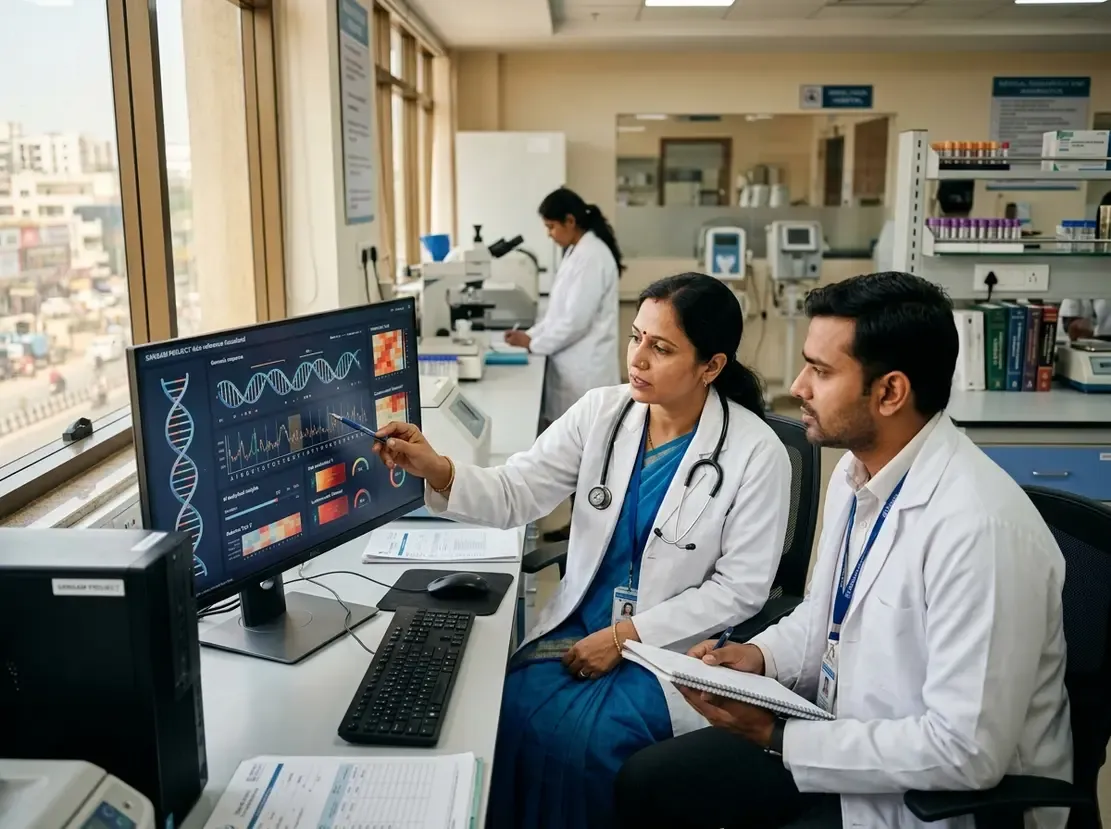
Healthcare leaders are rapidly accelerating the shift toward preventive and personalized clinical care across the subcontinent. Specifically, the integration of genomic medicine in India offers clinicians unprecedented capabilities to detect non-communicable diseases before symptoms emerge. Union Minister Jitendra Singh emphasized this critical transition while addressing the 42nd convocation of the Sri Ramachandra Institute of Higher Education and Research in Chennai. Consequently, clinical practitioners must prepare for a paradigm shift that integrates high-throughput sequencing into routine preventive diagnostics.
Advancing Genomic Medicine in India Through SANGAM
At the core of this initiative lies the ambitious Sequencing Atlas for National Genomics and Medicine programme. Indeed, this landmark effort operates under the National Genomics Data Grid. The project aims to sequence one million genetically diverse Indian genomes to link clinical phenotypes with genomic variations. Furthermore, India encompasses over 4,500 distinct endogamous population groups. Therefore, foreign reference datasets fail to capture the unique genetic architecture of Indian patients. In addition, the SANGAM repository allows clinicians to identify population-specific variants associated with adverse drug events. Ultimately, this national database will empower doctors to tailor drug choices and dosages to individual patients.
Tackling Cardiometabolic Disease in Young Populations
During his address, the minister underscored the escalating prevalence of cardiometabolic conditions among young Indians. In particular, coronary artery disease and early-onset type 2 diabetes pose severe national healthcare challenges. Traditional risk assessments frequently underestimate vulnerability in young adults who lack classic lifestyle indicators. However, emerging technologies such as artificial intelligence and polygenic risk scores can uncover latent genetic susceptibility. Machine learning algorithms can synthesize clinical parameters, biomarker assays, and genomic data. As a result, physicians can stratify cardiovascular risk decades before coronary events occur. Similarly, early targeted lifestyle and pharmacological interventions can significantly retard disease progression. Modern clinicians must therefore incorporate these predictive tools into standard health checks, supported by advanced metabolic disorder care strategies.
Harnessing AI, Quantum Computing, and Translational Ecosystems
Beyond genomics, synergistic technologies are expanding the frontiers of medical innovation. For example, quantum computing promises to accelerate molecular simulations and drug discovery workflows. Concurrently, artificial intelligence refines diagnostic imaging and optimizes multi-omics data interpretation. Academic medical centres play an indispensable role in translating these technological breakthroughs into clinical practice. Notably, Sri Ramachandra Institute of Higher Education and Research exemplifies this collaborative academic model. The institution recently launched 26 academic programmes and established 25 strategic collaborative agreements. Moreover, the campus incubates more than 40 biotechnology startups funded by BIRAC and DBT. Such translational ecosystems bridge laboratory science and bedside therapeutics. Thus, young healthcare graduates receive immediate exposure to cutting-edge clinical tools.
Actionable Steps for Practicing Physicians
To leverage these innovations effectively, clinicians must adapt their daily practice patterns. First, doctors should familiarize themselves with pharmacogenomic testing guidelines to avoid severe drug reactions. In addition, practitioners must educate high-risk patients regarding the benefits of multi-gene panel testing. Healthcare professionals should also advocate for comprehensive electronic health records that integrate genomic profiles. Furthermore, interdisciplinary collaboration between medical specialists, geneticists, and bioinformaticians remains paramount. Clinicians can thereby formulate personalized treatment regimens that improve adherence and therapeutic efficacy. Ultimately, adopting these emerging technologies ensures more resilient, proactive patient care.
Frequently Asked Questions
Q1: What is the SANGAM programme in India?
The Sequencing Atlas for National Genomics and Medicine (SANGAM) is a national initiative under the National Genomics Data Grid. It aims to sequence the genomes of one million diverse Indian individuals and link genomic data to clinical outcomes for personalized medicine.
Q2: Why are emerging technologies crucial for disease prevention in India?
Emerging tools like artificial intelligence and genomics identify disease predispositions early. Consequently, they help clinicians prevent and manage non-communicable diseases such as type 2 diabetes and coronary artery disease before symptoms appear.
Q3: How do BIRAC and DBT support medical innovation in Indian institutions?
BIRAC and the Department of Biotechnology provide vital funding and mentorship to institutional incubators. For example, they support over 40 startups at SRIHER to translate biomedical research into viable clinical solutions.
References
- Union minister Jitendra Singh calls for greater use of emerging tech to preventdisease - ETHealthworld
- Press Information Bureau, Government of India. India Entering Era of Personalised and Precision Medicine Driven by Genomics, AI, and Biotechnology: Dr. Jitendra Singh. Published March 13, 2026.
- Department of Biotechnology, Ministry of Science and Technology, Government of India. Population Genomics for Public Health and the GenomeIndia Initiative.


