How Haryana Is Overhauling Its Suicide Prevention System
Haryana has reinforced its comprehensive suicide prevention response across all districts. Consequently, public health authorities are shifting their focus toward early distress detection, systematic counselling, and prompt clinical intervention. State officials emphasize that suicide prevention cannot rely solely on managing established psychiatric illnesses. Instead, communities, academic institutions, families, and primary clinicians must collaborate closely. This collective effort ensures that individuals facing acute emotional crises obtain timely clinical attention without enduring social stigma.
Key Pillars of the State Suicide Prevention Response
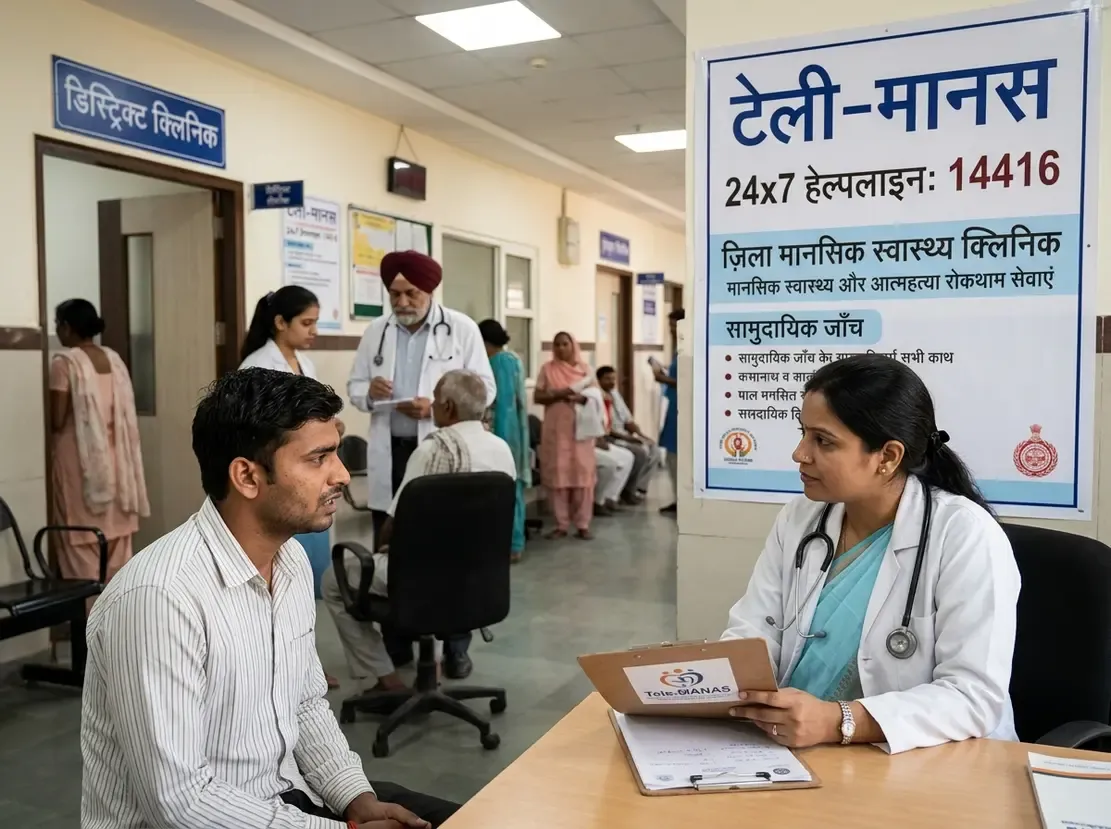
The state's enhanced framework leverages two core healthcare delivery platforms. First, the District Mental Health Programme now operates across every single district in Haryana. These district units provide diagnostic evaluation, psychiatric therapy, structured counselling, and tertiary specialist referrals. Second, the round-the-clock Tele-MANAS helpline provides continuous emergency coverage via toll-free access codes. Trained psychiatric social workers and counsellors manage these telephone lines, addressing acute depression, relationship strain, and substance abuse. Therefore, callers receive immediate triaging and seamless escalation to district facilities whenever severe self-harm risks arise.
Epidemiological Trends and Caller Demographics
Recent program data reveals critical patterns regarding psychological distress within the northern state. Specifically, Tele-MANAS logged 19,773 cumulative calls between October 2022 and late 2026. Furthermore, individuals between 18 and 45 years of age account for approximately 82 percent of all interactions. This high proportion demonstrates that emotional distress disproportionately affects working-age individuals and students. Clinical analysis indicates that sadness and depressive symptoms constitute over one-third of presented complaints. In addition, acute academic anxiety, workplace stress, insomnia, and substance use make up the remaining major clinical presentations.
Clinical Implications for Primary Care Practitioners
Primary healthcare physicians serve as the first line of defense against preventable self-harm. Multi-factorial stressors typically drive suicidal ideation rather than an isolated psychiatric disorder. For example, financial strain, chronic medical illness, romantic separation, and competitive academic pressure regularly converge to trigger decompensation. Consequently, clinicians must actively screen vulnerable patients presenting with somatic symptoms, appetite changes, severe insomnia, or persistent hopelessness. Moreover, medical teams must never dismiss explicit or veiled suicide references as manipulative behavior. When a patient communicates self-harm intent, practitioners must avoid leaving them unattended and initiate immediate psychiatric referral protocols.
Frequently Asked Questions
Q1: What are the primary contact numbers for Tele-MANAS in India?
Individuals can reach the Tele-MANAS helpline toll-free through the short code 14416 or by dialling 1-800-891-4416 at any hour.
Q2: What services does the District Mental Health Programme offer?
The program provides clinical psychological assessments, outpatient psychiatric care, counselling sessions, and direct escalation to tertiary healthcare facilities.
Q3: Which demographic group accounts for the majority of crisis calls in Haryana?
Adults aged between 18 and 45 years represent approximately 82 percent of all logged distress calls across the state.
For healthcare professionals looking to expand their expertise in mental health care, exploring specialized psychiatry speciality courses can provide advanced clinical insights.
References
- Haryana strengthens suicide-prevention response; counselling, early distressdetection in focus - ETHealthworld
- Ministry of Health and Family Welfare, Government of India. Tele-MANAS: National Tele Mental Health Programme Guidelines.
- Directorate General of Health Services, Ministry of Health and Family Welfare. District Mental Health Program (DMHP) Operational Framework.