How Cervical Dilatation Alters the Labor Proteome at Term
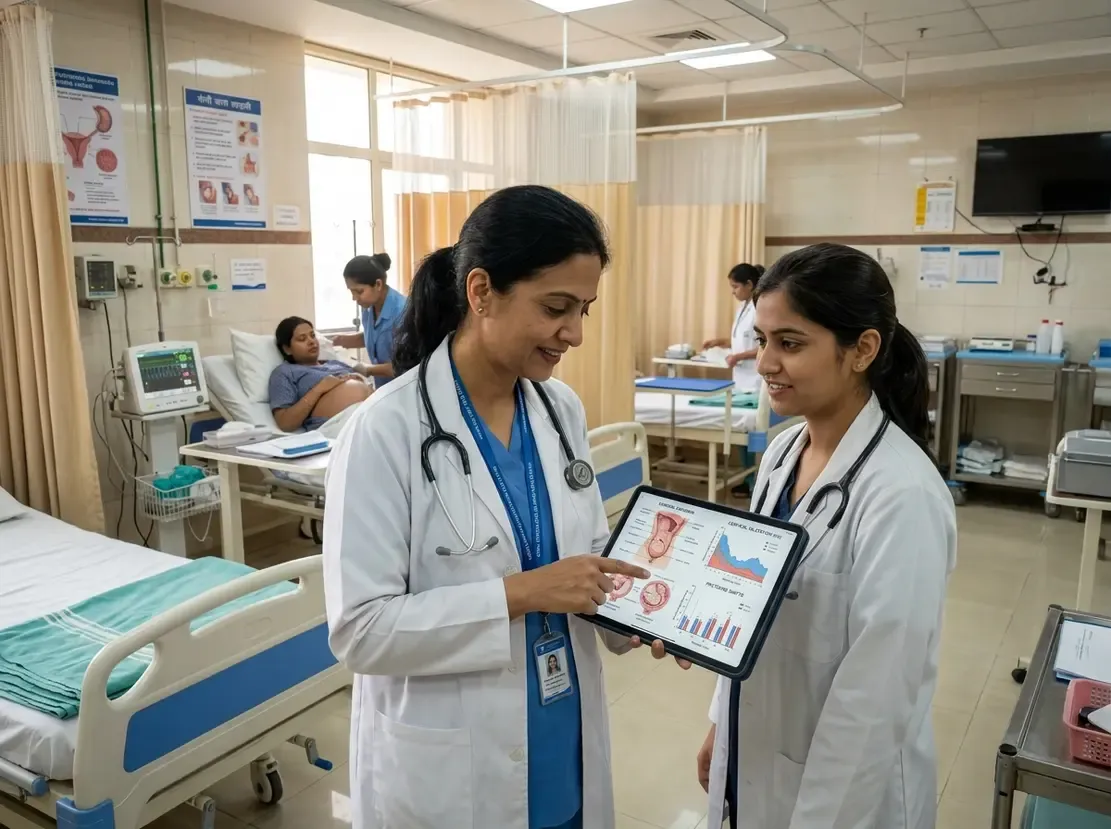
Understanding the exact biochemical triggers of human labor at term remains a central challenge in modern obstetrics. Although clinicians routinely observe cervical change, the underlying molecular pathways have remained unclear. Therefore, characterising the amniotic fluid proteome offers critical insights into the execution phase of parturition.
Proteomic Dynamics of Human Labor at Term
A recent cross-sectional study investigated 98 term deliveries with intact membranes. Specifically, researchers measured 7,288 proteins in amniotic fluid using an aptamer-based assay. They compared 61 women not in labor against 37 women in active labor. As a result, the authors identified 656 differentially expressed proteins between both cohorts. Notably, 214 proteins increased in abundance, whereas 442 proteins decreased during active labor.
Molecular Shifts Across Cervical Dilatation
Parturition alters the proteome progressively as the cervix opens. At early dilatation of 1 to 3 cm, selective alterations emerge. Specifically, aldo-keto reductase family 1 member B1 and L-plastin increase markedly. These proteins modulate prostaglandin synthesis and actin cytoskeletal reorganization. Consequently, early labor initiates targeted mechanical and enzymatic changes in intra-amniotic tissues.
Furthermore, molecular complexity escalates dramatically as labor advances. The study identified 359 altered proteins at 4 to 6 cm of dilatation. This number surged to 3,050 proteins at 7 to 10 cm. In addition, 580 proteins correlated directly with the degree of cervical opening. Key elevated factors included interleukin-6, interleukin-8, and granulocyte colony-stimulating factor. Thus, advanced cervical dilatation triggers intense inflammatory signaling.
Biological Pathways and Clinical Implications
Functional enrichment revealed broad activation of critical physiological networks. Most importantly, myeloid-cell activation, neutrophil degranulation, and cell junction remodeling dominated the late stages. Moreover, cell-to-cell communication and extracellular matrix remodeling surged alongside cervical widening. Intriguingly, most identified proteins had never appeared in earlier parturition studies. Therefore, these discoveries substantially expand our understanding of human birth biology.
However, clinicians must interpret these findings within an appropriate context. The data illuminate the execution phase rather than the initial labor trigger. Even so, these biomarkers could guide novel diagnostics for labor dystocia or spontaneous preterm labor. Clinicians may eventually utilize targeted proteomic panels to track labor progression objectively, aligning with advanced diagnostic training found in Clinical Program Obstetrics Gynaecology MRCOG.
Frequently Asked Questions
Q1: What is the execution phase of human labor?
The execution phase represents clinically established active labor. Unlike the preparatory phase, it involves regular myometrial contractions and progressive cervical dilatation.
Q2: Which primary proteins change during early cervical dilatation?
During early dilatation (1-3 cm), levels of AKR1B1 and L-plastin rise significantly. These proteins regulate prostaglandin F synthesis and actin cytoskeletal assembly.
Q3: How does advanced cervical dilatation affect intra-amniotic inflammation?
Advanced dilatation (7-10 cm) stimulates thousands of proteomic changes. It dramatically amplifies innate immune responses, neutrophil degranulation, and cytokines like IL-6 and IL-8, which can be further studied through professional obstetrics gynecology and womens health speciality courses.
References
- Meyyazhagan A et al. The molecular architecture of human labor at term during the execution phase: changes across cervical dilatation. Am J Obstet Gynecol. 2026 Oct 16. doi: undefined. PMID: 42887629.
- Romero R, et al. The amniotic fluid proteome changes with term labor and informs biomarker discovery in maternal plasma. Am J Obstet Gynecol. 2023 Feb;228(2):S800-S818.
- Bhat G, et al. The amniotic fluid proteome changes across gestation in humans and rhesus macaques. Sci Rep. 2023 Oct 9;13(1):17012.