NMC Mandates Review of Stricter Animal Testing Rules
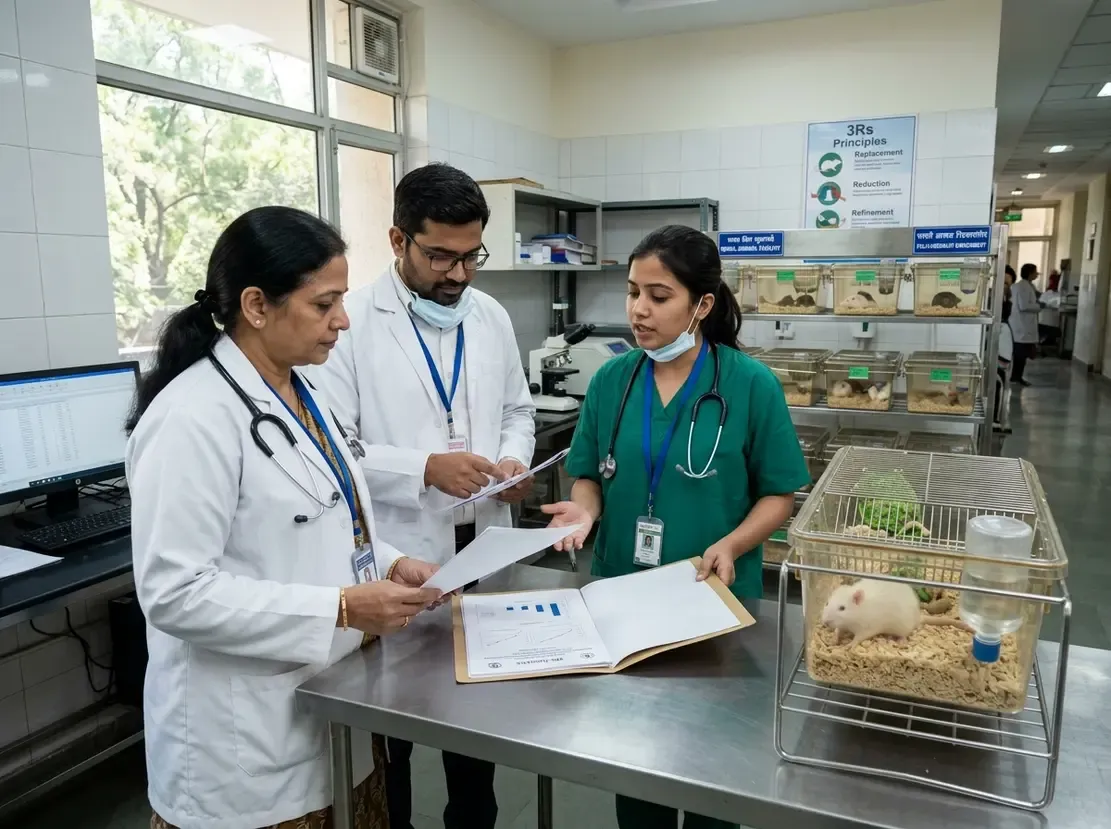
The National Medical Commission (NMC) has directed medical institutions across India to vet the newly proposed laboratory animal rules. Specifically, the regulator directed college heads to submit their feedback to the oversight committee within thirty days. Consequently, these draft regulations aim to modernize animal ethics and elevate humane standards in medical education.
Core Provisions of the New Laboratory Animal Rules
The draft framework firmly anchors biomedical research in the internationally recognized 3Rs principles: replacement, reduction, and refinement. Therefore, researchers must actively explore non-animal alternatives before considering live animal models. Additionally, scientists must restrict the number of subjects to the statistical minimum necessary for valid findings.
Moreover, the proposals prohibit experiments that cause prolonged, severe suffering that investigators cannot alleviate. The regulations classify experimental procedures into four distinct severity tiers: non-recovery, mild, moderate, and severe. Consequently, this formal classification ensures closer scrutiny of invasive laboratory procedures.
Mandatory Veterinary Oversight and Ethics Governance
Furthermore, the proposed rules mandate direct veterinary oversight across all experimental and breeding facilities. Under these guidelines, every medical college must appoint a qualified veterinarian to oversee animal well-being. Additionally, institutions must establish a nine-member Institutional Animal Ethics Committee with a three-year tenure. This committee includes subject specialists, a biologist, a veterinarian, and four official nominees.
Importantly, the committee must convene at least twice a year to review ongoing research protocols. Researchers must also prioritize early humane endpoints to prevent avoidable mortality during trials. If animal sacrifice becomes unavoidable, facilities must log exhaustive euthanasia records detailing methods and precise dosages.
Impact on Medical Research and Compliance Measures
Meanwhile, the draft places stringent restrictions on the use of stray and feral domestic species. Researchers can only use these animals under rare, scientifically justified circumstances. Similarly, non-human primates remain restricted to narrowly defined research goals where no alternative species can suffice.
Establishments must maintain active registration with national regulators and undergo biannual inspections. If authorities discover procedural deficiencies, they will issue a 15-day rectification notice. However, regulatory inspectors may take immediate punitive action if animals face imminent welfare hazards.
Frequently Asked Questions
Q1: Why did the NMC issue a notice regarding laboratory animals?
The NMC issued this advisory so that medical college administrators can review and submit comments on the proposed CCSEA guidelines within 30 days.
Q2: What are the primary principles driving the updated rules?
The regulations focus on the 3Rs: replacement of live models, reduction of animal numbers, and refinement of procedures to minimize suffering.
Q3: What role will veterinarians have under the new guidelines?
Every research establishment must appoint a veterinarian to supervise animal welfare, track health status, and oversee experimental interventions.
References
- NMC asks medical colleges to vet draft rules seeking tighter checks on animalexperiments - ETHealthworld
- National Medical Commission. Public Notice: Draft Prevention of Cruelty to Animals (Control and Supervision of Experiment, Breeding and Trading of Laboratory Animals) Rules, 2026.
- The New Indian Express. NMC asks medical colleges to examine new draft rules on reducing use of animals in scientific experiments.