Odisha Targets Malaria Surge with Strict Surveillance
Public health authorities have recently strengthened malaria surveillance in Odisha following the detection of 37,899 cases through August this year. Consequently, the state health department directed field personnel to escalate active case finding. Officials also confirmed nine related fatalities during this timeframe. Although these numbers show a decline from previous years, transmission hotspots persist in forested regions. Therefore, medical teams must maintain high vigilance to avert further outbreaks.
Current Status of Malaria Surveillance in Odisha
Odisha continues to contribute significantly to India's total vector-borne disease burden. Specifically, the state accounted for roughly 26.6% of the country's 142,000 cases reported through August. In comparison, Odisha documented 68,693 malaria infections during the same period in 2024. Health authorities note that early intervention has successfully contained the overall case fatality rate. However, hard-to-reach terrain and mobile tribal communities still complicate vector control initiatives. Thus, field units must sustain rigorous monitoring across all endemic blocks.
Key Containment Strategies and Field Operations
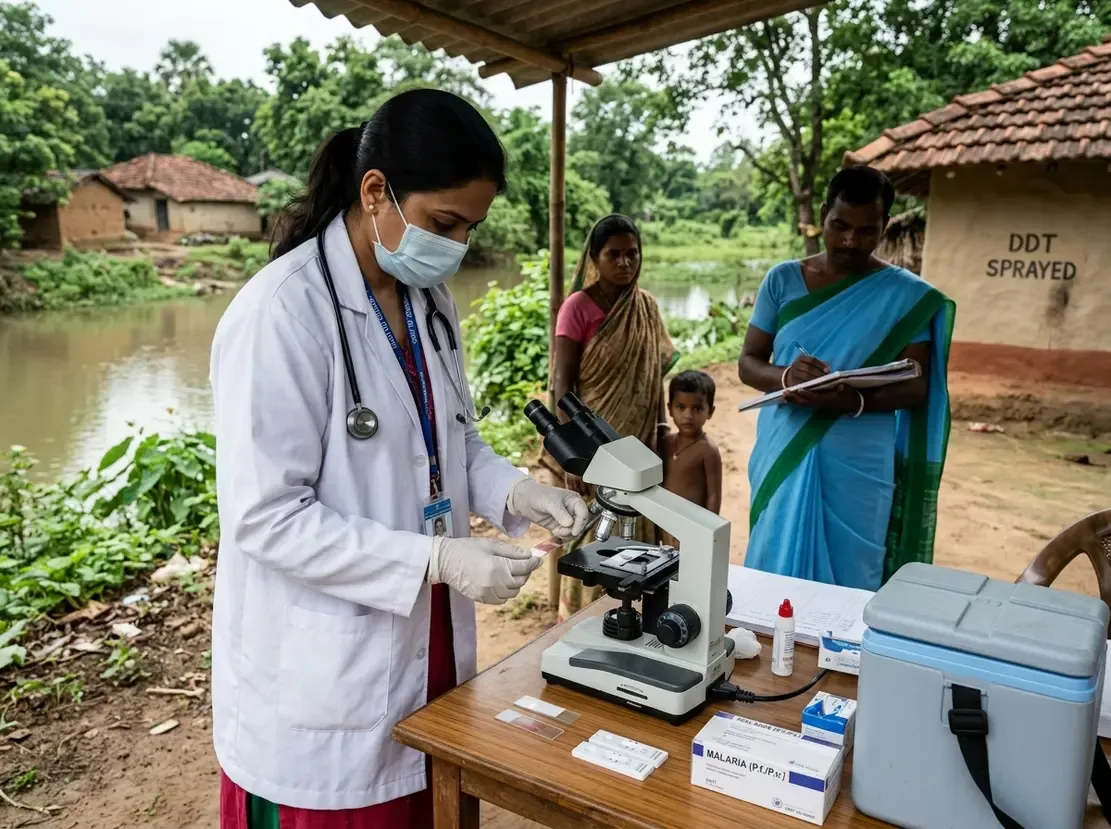
The Health and Family Welfare Department has mobilized field teams starting from the primary sub-centre level. Furthermore, grassroots health workers actively screen all patients presenting with unexplained fever or chills. Field staff utilize rapid diagnostic test kits to confirm cases on site. Once clinicians establish a diagnosis, they promptly initiate appropriate anti-malarial chemotherapy. In addition, state logistics networks ensure uninterrupted supplies of essential antimalarial drugs and test consumables. As a result, peripheral clinics can manage febrile patients without administrative delays.
Simultaneously, district administrations are scaling up comprehensive vector-control measures. Teams are accelerating the distribution and regular use of long-lasting insecticidal nets. Additionally, local workers conduct extensive community education drives in vulnerable tribal hamlets. Public health leaders emphasize that early consultation remains the cornerstone of disease containment. Ultimately, rapid detection disrupts local transmission chains and prevents life-threatening complications through effective emergency care.
Frequently Asked Questions
Q1: Why has Odisha intensified malaria surveillance recently?
The state intensified surveillance after identifying 37,899 cases and nine deaths up to August. Consequently, officials deployed targeted interventions to contain transmission in endemic tribal pockets.
Q2: What proportion of national malaria cases does Odisha represent?
Odisha accounted for approximately 26.6% of India's 142,000 recorded malaria cases through August. Therefore, the state remains a critical priority for national elimination campaigns.
Q3: How are healthcare workers managing suspected cases at the grassroots level?
Health workers screen individuals with fever using rapid diagnostic test kits at local sub-centres. Subsequently, they provide immediate antimalarial treatment to confirmed patients to prevent severe complications.
References
- Odisha intensifies malaria surveillance after 37,899 cases, 9 deaths - ETHealthworld
- National Center for Vector Borne Diseases Control (NCVBDC) Guidelines - Ministry of Health and Family Welfare, Government of India
- Epidemiology of Malaria in Koraput District, Odisha: A Descriptive Analysis of NVBDCP Surveillance Data - Indian Journal of Public Health