Can We Still Eradicate Measles Amid Vaccine Hesitancy?
The Retreat from Measles Eradication
Global eradication of measles has long represented an ambitious public health milestone. However, growing measles vaccine hesitancy in wealthy nations has officially removed global eradication from active philanthropic targets. Bill Gates recently noted that deep skepticism in high-income countries prevents reaching the strict immunity thresholds needed to stop viral transmission. Consequently, international agencies must shift their immediate focus toward outbreak mitigation and localized elimination.
Measles ranks among the most infectious airborne human pathogens. Therefore, preventing community transmission requires sustained vaccination coverage of at least 95% with two doses. Although low-income nations continue to welcome childhood immunization, falling coverage in wealthier states creates continuous reservoirs for infection. Furthermore, these persistent immunity gaps undermine worldwide disease control initiatives.
Root Causes of Measles Vaccine Hesitancy
Decades of targeted misinformation have degraded public confidence in routine pediatric vaccines. In particular, vocal skepticism in prominent Western nations has fueled parental distrust. As a result, coverage in kindergarten cohorts has fallen below the protective 95% threshold across several regions. In addition, routine immunization systems suffered substantial disruptions during recent pandemic waves.
Fortunately, lower-income nations have largely resisted this trend. Nevertheless, these countries remain vulnerable because international aid cutbacks restrict routine primary care delivery. Gates warned that funding reductions by major donor governments severely threaten frontline childhood health programs. Consequently, medical leaders must confront ideological hesitancy alongside acute logistical deficits.
Clinical and Immunological Ramifications for India
This global scenario offers vital lessons for healthcare professionals in India. The Ministry of Health and Family Welfare is currently pursuing the National Zero Measles-Rubella Elimination Campaign. Therefore, clinicians must maintain vigilant surveillance for fever-rash presentations across primary care practices. Furthermore, pediatricians must proactively identify zero-dose and undervaccinated children during every clinical encounter.
Measles infection causes severe immunosuppression, often referred to as immune amnesia. Thus, measles predisposes children to secondary bacterial pneumonia and severe diarrhea. Clinicians in India already achieve over 90% coverage through the Universal Immunization Programme. However, closing the remaining gap to 95% requires relentless provider advocacy to counter localized hesitancy, which can be further mastered through specialized paediatrics speciality courses.
Strategies to Overcome Measles Vaccine Hesitancy
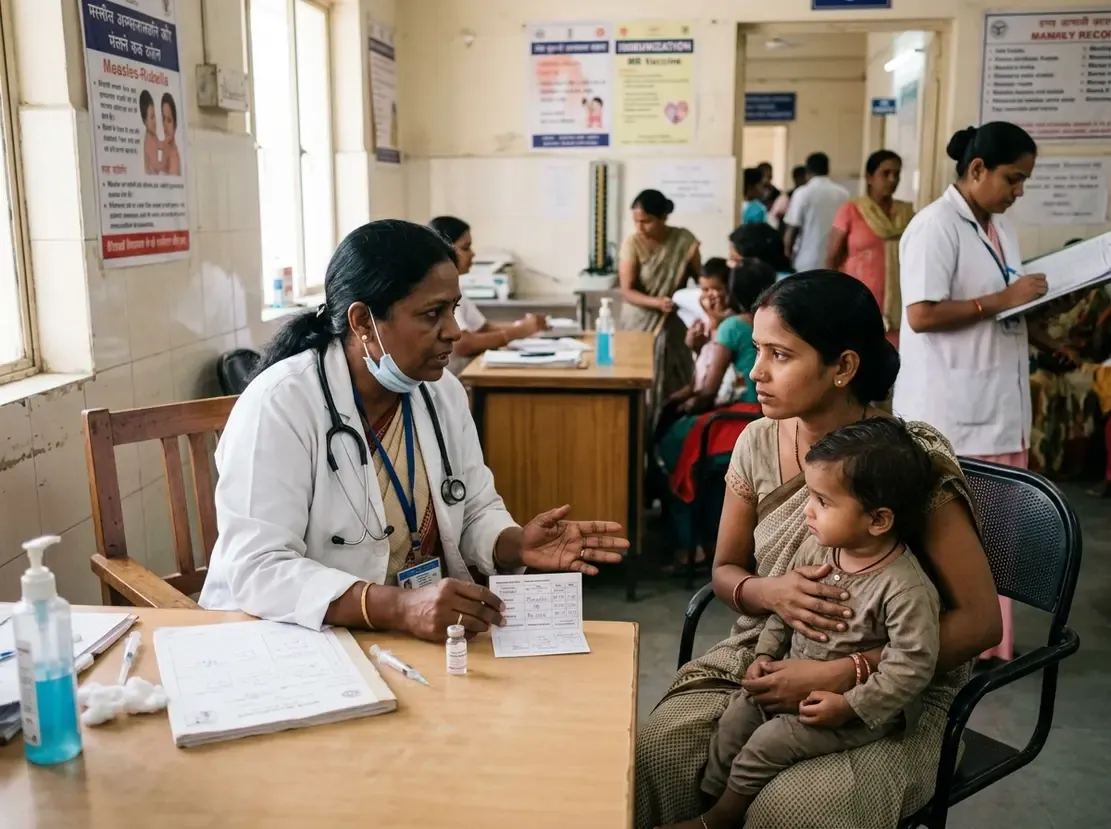
Direct physician communication serves as the strongest countermeasure against immunization skepticism. When parents hesitate, doctors should listen with empathy and address specific safety concerns directly. Additionally, clinicians should emphasize that two doses of the measles-rubella vaccine provide lasting life-saving protection. Transparent counseling builds lasting parental trust.
Moreover, healthcare systems must optimize digital platforms like U-WIN to track missed vaccination appointments. Active community engagement helps dispel unscientific myths before hesitancy takes root. By combining robust surveillance with proactive communication, healthcare providers can protect children from preventable morbidity.
Frequently Asked Questions
Q1: Why is measles eradication currently deemed unachievable globally?
Global eradication requires sustained 95% two-dose vaccination coverage worldwide. However, rising vaccine hesitancy in wealthy nations has reduced coverage, allowing the virus to circulate continuously and trigger recurring outbreaks.
Q2: What is the primary target for measles coverage in India?
India targets at least 95% coverage with two doses of the measles-rubella vaccine across every district. This milestone forms the core objective of the National Zero Measles-Rubella Elimination Campaign.
Q3: How does measles vaccine hesitancy impact child health beyond the primary viral infection?
Measles induces prolonged immune amnesia by destroying memory lymphocytes. Consequently, affected children suffer heightened vulnerability to secondary bacterial infections and life-threatening complications for months following recovery.
References
- Wiping out measles impossible due to vaccine hesitancy in rich countries, saysGates - ETHealthworld
- World Health Organization. Measles Vaccination Coverage and Global Strategic Priorities.
- Press Information Bureau, Government of India. National Zero Measles-Rubella Elimination Campaign.