
Boosting Local Value in India's Medical Device Ecosystem
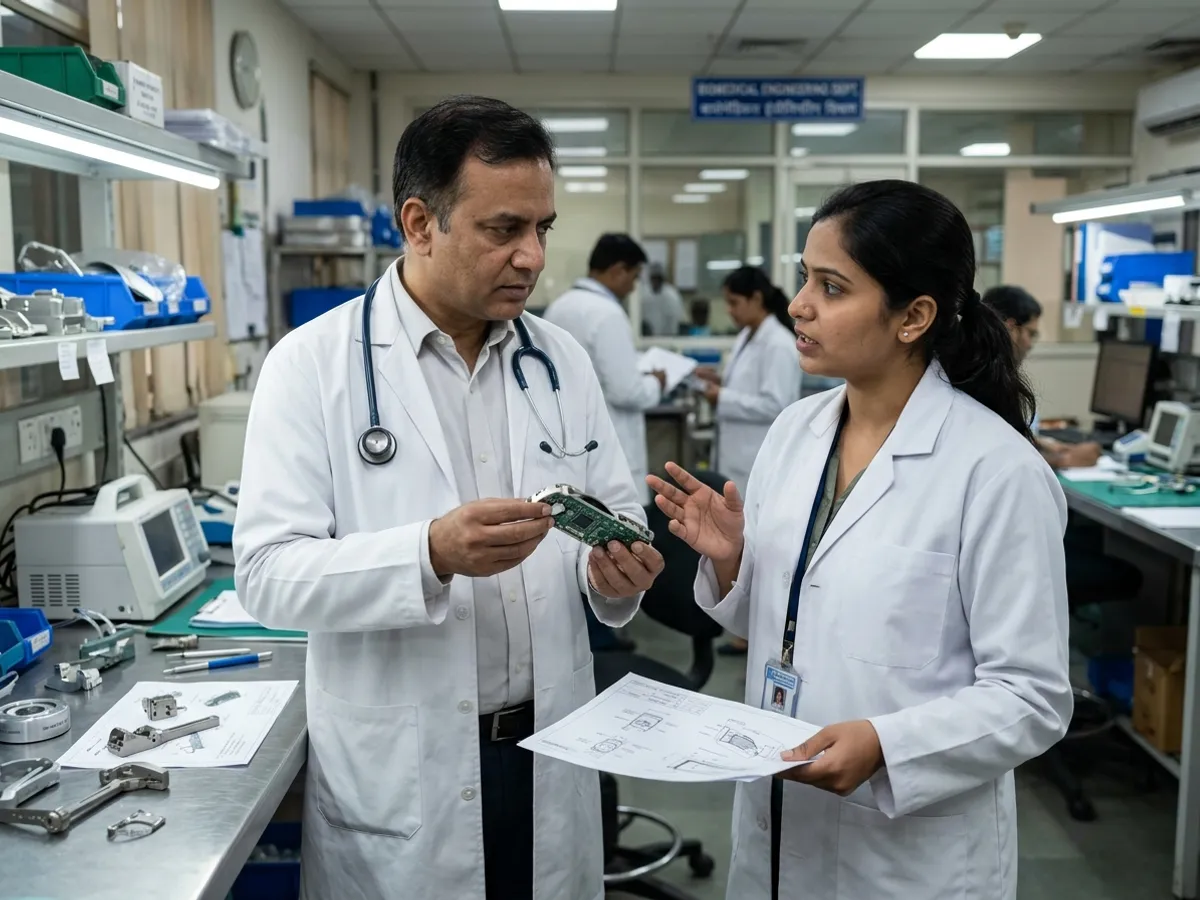
India is actively revamping its strategy for medical device manufacturing to advance beyond simple assembly. Recently, Department of Pharmaceuticals Secretary Manoj Joshi addressed leaders at the CII Global MedTech Summit. He urged industry stakeholders to accelerate local component manufacturing and increase domestic value addition.
The Push for Medical Device Manufacturing and Component Localization
Currently, several manufacturing facilities across the country operate primarily as assembly units. Consequently, the government aims to lift domestic value addition from baseline levels to nearly 40 to 45 percent. Furthermore, authorities plan to offer stronger financial incentives to component producers rather than basic assembly setups.
Additionally, import trends show that many raw components enter the country under varied classifications. Therefore, developing a robust indigenous supply chain will significantly enhance supply security. This shift also ensures that clinical facilities gain uninterrupted access to essential diagnostic equipment.
Refining the PLI Framework for Sustainable Growth
The Production Linked Incentive scheme for medical devices originally allocated Rs 3,420 crore to support four target segments. However, while many companies invested capital, only a limited number successfully claimed financial incentives. Hence, the government is reviewing policy mechanisms to assist compliant investors who missed out on disbursements.
Moreover, officials are considering timeline extensions to accommodate ongoing infrastructure projects. Officials also welcome constructive suggestions from MedTech industry leaders. This collaborative approach helps build a predictable regulatory environment for healthcare innovators.
Enhancing Product Testing and Quality Standards
Besides manufacturing components, robust testing protocols remain essential for patient safety. Secretary Joshi highlighted that systematic evaluation of prototypes and commercial devices must expand across Indian laboratories. Therefore, regulators are prioritizing dedicated infrastructure to validate high-precision MedTech hardware.
Frequently Asked Questions
Q1: Why is the government focusing on component manufacturing in MedTech?
Transitioning from assembly to component production increases domestic value addition to 40-45 percent. Consequently, this strengthens supply chains and lowers import reliance for healthcare providers.
Q2: What is the current financial outlay for the medical device PLI scheme?
The scheme has a total financial outlay of Rs 3,420 crore covering four key target segments from FY23 to FY27.
Q3: How does the government plan to support existing PLI investors?
Officials are evaluating scheme timeline extensions and seeking industry feedback to support companies that met investment criteria but could not claim incentives.
References
- Medical devices industry needs to focus more on local value addition: PharmaSecy - ETHealthworld
- Production Linked Incentive (PLI) Scheme for Promoting Domestic Manufacturing of Medical Devices - Department of Pharmaceuticals, Government of India
- India Medical Device 2026: Building India as a Global MedTech Hub - Press Information Bureau


