Is Menopausal Hormone Therapy Cost-Effective for Women?
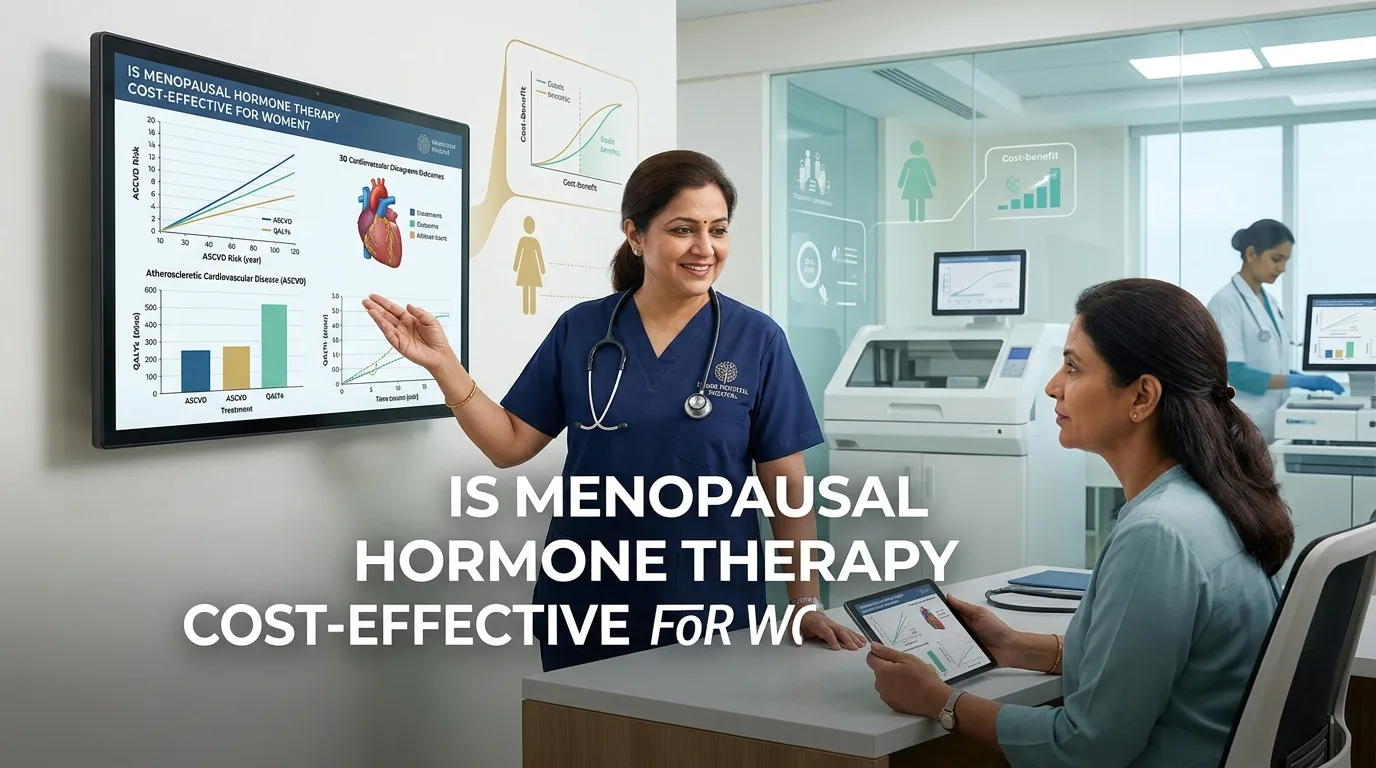
Clinicians increasingly recognize that menopausal hormone therapy offers critical clinical and financial benefits for symptomatic women. A new Markov decision-analytic model evaluated the lifetime value of modern regimens in 50-year-old women with vasomotor symptoms. Specifically, researchers examined transdermal estradiol alone and transdermal estradiol combined with micronized progesterone over five years of use.
Clinical and Economic Value of Menopausal Hormone Therapy
The economic evaluation demonstrated absolute dominance over no therapy across both treatment strategies. Therefore, menopausal hormone therapy saved substantial costs while improving quality-adjusted life years (QALYs).
Per 10,000 patients over a lifetime, transdermal estradiol alone saved $135,396,560 compared with no therapy. In addition, it generated an extra 33,196 QALYs. For women with an intact uterus, the combination of estradiol and micronized progesterone saved $127,738,990. Moreover, this combination yielded 33,083 additional QALYs. Consequently, both regimens provided superior health outcomes at lower net costs.
Cardiovascular and Chronic Disease Risk Reductions
The model highlighted meaningful reductions in atherosclerotic cardiovascular disease (ASCVD) and mortality. For instance, estradiol alone prevented 259 ASCVD cases and 181 hip fractures per 10,000 women. Furthermore, it averted 647 deaths and 105 colon cancer cases, despite 87 additional breast cancer cases.
Similarly, combined therapy averted 285 ASCVD cases, 183 hip fractures, and 615 deaths. However, researchers noted 18 additional colon cancer cases and 46 extra breast cancer cases. Sensitivity analyses confirmed that ASCVD risk reduction drove the cost-effectiveness model. Thus, initiating therapy early in menopause confers substantial long-term cardiovascular and survival advantages.
Frequently Asked Questions
Q1: Why is menopausal hormone therapy considered cost-effective?
It achieves absolute dominance by reducing long-term cardiovascular events and fractures. Consequently, it lowers healthcare expenditures while increasing quality-adjusted life years.
Q2: Which hormone therapy regimens were evaluated in this study?
The model evaluated transdermal estradiol alone for women without a uterus. Additionally, it assessed transdermal estradiol combined with oral micronized progesterone for women with an intact uterus.
Q3: How long should symptomatic women use menopausal hormone therapy?
The analyzed model evaluated a five-year duration initiated at age 50 years. However, clinicians should tailor treatment duration based on individual symptom severity and health risks.
References
- Gill E et al. Cost-Effectiveness Analysis of Menopausal Hormone Therapy. Obstet Gynecol. 2026 Aug 13. doi: 10.1097/AOG.0000000000006404. PMID: 42594384.
- Abdelrazeq SY, Hsieh SC, Kelly SE, et al. Comparative Evidence Between Transdermal and Oral Menopausal Hormone Therapy. CADTH Health Technology Review. 2025 May.
- Vinogradova Y, Coupland C, Hippisley-Cox J. Use of hormone replacement therapy and risk of venous thromboembolism: nested case-control studies using the QResearch and CPRD databases. BMJ. 2019;364:k4810.