Next-Gen Ankle Implants Offer Hope for Young Arthritis
Next-Gen Ankle Implants Offer Hope for Young Arthritis
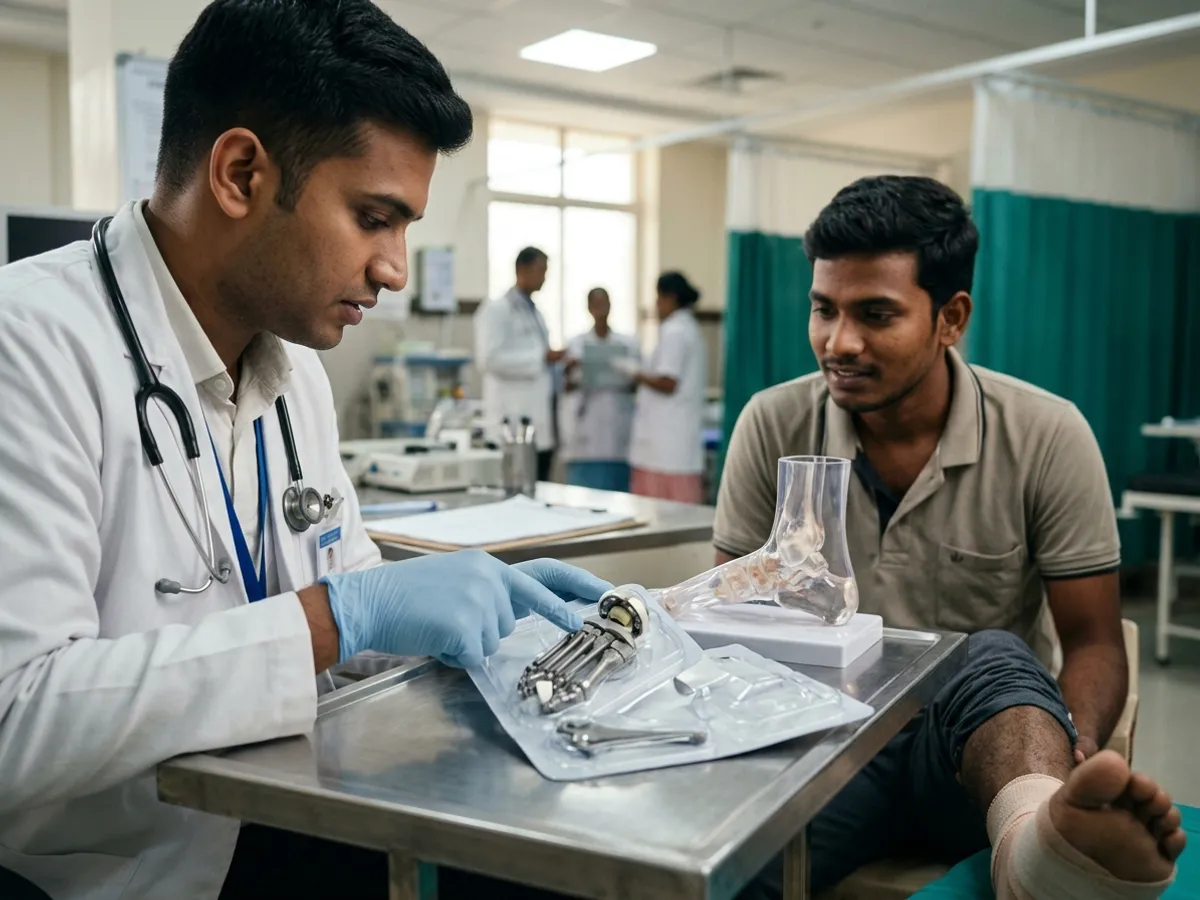
An international research consortium is designing advanced ankle implants to help young patients regain active mobility and overcome debilitating joint disease. Unlike degenerative hip or knee conditions, ankle osteoarthritis predominantly follows acute trauma such as sports injuries, severe sprains, or fractures. Consequently, the disease frequently strikes individuals during their most productive decades.
The Clinical Burden of Post-Traumatic Ankle Osteoarthritis
Post-traumatic ankle osteoarthritis causes severe pain, progressive stiffness, and persistent functional impairment. Indeed, validated quality-of-life surveys show that advanced ankle arthritis imposes physical and emotional tolls comparable to congestive heart failure. However, traditional treatment pathways remain limited for younger cohorts. Conservative strategies like physiotherapy, bracing, and steroid injections only offer temporary symptomatic relief. When conservative therapies fail, patients face difficult surgical trade-offs.
Limitations of Current Surgical Options and Ankle Implants
Historically, surgeons have relied on either arthrodesis or conventional total ankle arthroplasty. Arthrodesis fuses the joint bones together and successfully relieves pain. Nevertheless, fusion permanently eliminates joint motion and accelerates adjacent joint degeneration over time. In contrast, existing ankle implants preserve motion but carry significant failure rates in active individuals. In fact, approximately one in ten conventional prostheses fails within ten years. Therefore, younger patients frequently postpone intervention and endure decades of pain.
The EASE-Ankle OA Engineering Initiative
To address these mechanical challenges, researchers launched the five-year EASE-Ankle OA project. The initiative secured a £12 million grant from the Engineering and Physical Sciences Research Council. Led by the University of Sheffield, the consortium unites clinicians and biomedical engineers across the UK, Belgium, and the United States. Specifically, the team aims to engineer biomimetic ankle implants that replicate natural kinematics, withstand high physiological loads, and last a lifetime.
Frequently Asked Questions
Q1: Why is ankle osteoarthritis more common in younger adults than hip or knee arthritis?
Most ankle osteoarthritis cases develop secondary to physical trauma, such as severe fractures or ligament tears sustained during sports or accidents.
Q2: What is the main drawback of traditional ankle arthrodesis?
Although arthrodesis eliminates pain, it permanently restricts joint motion and increases mechanical stress on surrounding foot joints.
Q3: How will next-generation ankle implants improve patient outcomes?
These new prostheses aim to mimic natural joint mechanics closely, improve implant longevity, and allow active individuals to maintain functional mobility.
References
- Next-gen ankle implants to help young arthritis sufferers regain mobility - ETHealthworld
- University of Sheffield. Next-generation of ankle replacements given major award boost at Sheffield. Published June 18, 2026.
- Anastasio AT, Kim BI, Wixted CM, et al. Younger Patients Undergoing Total Ankle Arthroplasty Experience Higher Complication Rates and Worse Functional Outcomes. J Bone Joint Surg Am. 2024;106(1):10-20.
- Brockett CL, Chapman GJ. Biomechanics of the ankle. Orthop Trauma. 2016;30(3):232-238.