How Dim Light at Night Silently Harms Your Heart Health
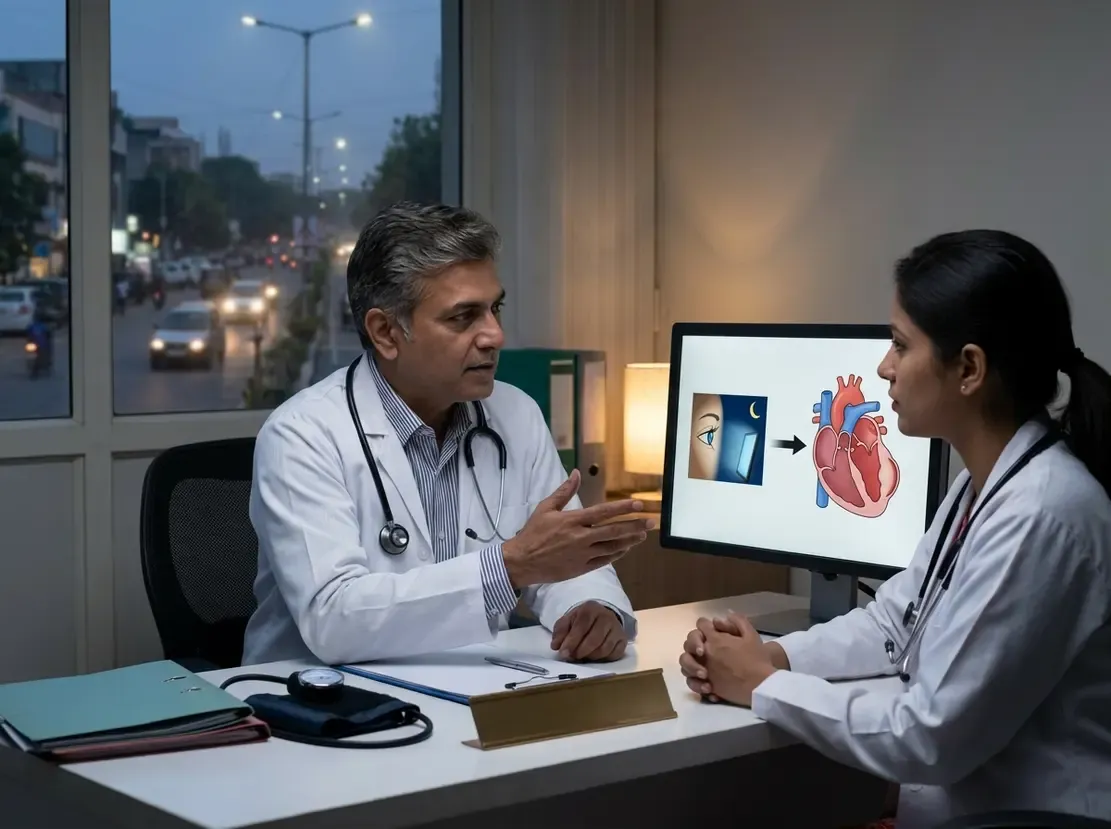
Indeed, recent clinical research links minimal nighttime light exposure to adverse changes in cardiac structure. A large cohort study published in the European Heart Journal investigated over eleven thousand adults. The participants wore wrist sensors for one week to record nocturnal ambient illumination precisely. Consequently, clinicians must now recognize nocturnal illumination as a subtle yet significant cardiovascular stressor.
How Nighttime Light Exposure Alters Cardiac Morphology
Researchers evaluated cardiovascular magnetic resonance scans obtained three years after baseline measurements. Specifically, exposure exceeding three lux correlated with concentric left ventricular hypertrophy. This low threshold equals the faint illumination of a smartphone screen or a cracked hallway door. Furthermore, participants exposed to this level exhibited 2.4 percent higher left ventricular mass index. Their left ventricular walls also showed a 1.5 percent increase in mean thickness. In addition, myocardial contraction fraction declined by 1.9 percent among these individuals. Therefore, nocturnal light exposure directly impairs the heart muscle's ability to contract efficiently, an area of focus explored extensively in programs dedicated to heart failure and heart valve disease.
Pathophysiological Drivers Behind Cardiac Changes
Light pollution disrupts central circadian rhythms by suppressing normal nocturnal melatonin production. Consequently, this disruption triggers sustained autonomic activation and elevates resting blood pressure. Furthermore, researchers observed that reduced sleep duration mediated up to 49 percent of these cardiac alterations. Chronic environmental stress forces the myocardium to adapt through progressive concentric remodelling. However, sustained remodelling eventually stiffens the ventricular chambers and weakens contractile performance. Over eight to ten years of follow-up, high exposure increased heart failure risk by 29 percent.
Actionable Strategies for Patient Counseling
Fortunately, nighttime light represents an easily modifiable cardiovascular risk factor. Physicians should routinely counsel patients regarding bedroom darkness and sleep hygiene as part of comprehensive general practice care. Specifically, patients can install blackout curtains to block penetrating streetlights. Moreover, individuals should eliminate glowing chargers, nightlights, and television screens from the bedroom. Wearing a comfortable, contoured eye mask offers an affordable and highly effective intervention. Ultimately, adopting complete darkness at night protects cardiac morphology and long-term hemodynamic health.
Frequently Asked Questions
Q1: What intensity of nighttime light exposure triggers these structural cardiac changes?
Even dim illumination above three lux correlates with detectable structural cardiac changes. For example, this low intensity matches a smartphone charging nearby or ambient hallway lighting.
Q2: How does nighttime light exposure increase the risk of heart failure?
Nocturnal illumination suppresses melatonin, elevates sympathetic tone, and fragments restorative sleep cycles. As a result, chronic mechanical strain prompts progressive myocardial hypertrophy and eventual ventricular stiffening.
Q3: Can simple lifestyle modifications reverse or prevent this cardiac remodelling?
Yes, eliminating nocturnal light sources substantially lowers unnecessary autonomic stress on the myocardium. Thus, utilizing blackout curtains and eye masks serves as an accessible cardioprotective habit.
References
- Low night-time light exposure linked to harmful heart changes, study shows - ETHealthworld
- Dai J, Dai W, Heianza Y, Qi L. Nighttime light exposure and cardiac structure and function. European Heart Journal. 2026;ehag563.
- European Society of Cardiology. Too much light at night changes the shape and working of the heart. Press Release, September 2026.