How BMI and Chronic Inflammation Alter PCOS ART Success
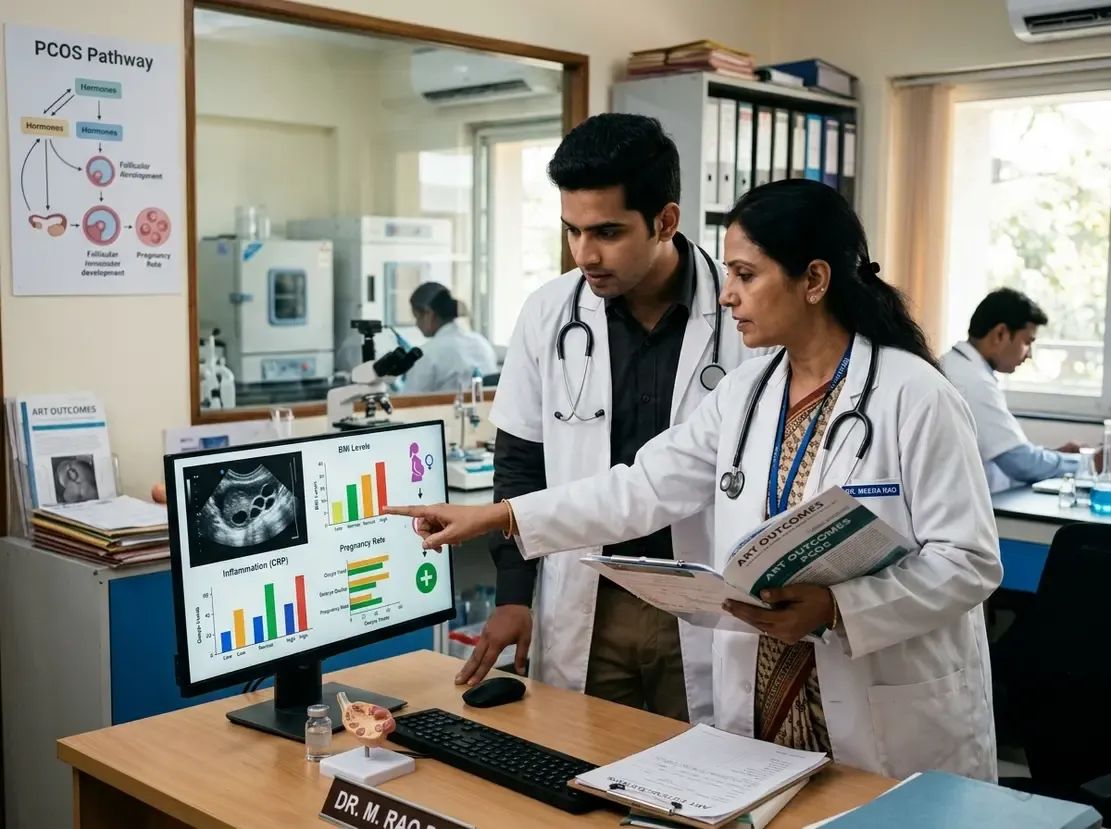
Polycystic ovary syndrome presents major hurdles for reproductive medicine specialists in clinical practice. In particular, body mass index and systemic low-grade inflammation heavily influence PCOS ART outcomes. A recent study evaluated 966 women with polycystic ovary syndrome undergoing assisted reproductive treatments. Consequently, researchers investigated how body weight and hematologic inflammatory markers interact during ovarian stimulation and embryogenesis. Clinicians often observe poorer reproductive performance in overweight patients. Therefore, understanding this bidirectional relationship provides crucial insights for personalising in vitro fertilization protocols.
Impact of Obesity on PCOS ART Outcomes
The cohort included patients categorized into four standard body mass index categories. Specifically, investigators evaluated underweight, normal weight, overweight, and obese individuals. Notably, the number of retrieved oocytes decreased significantly as patient adiposity increased. Underweight women achieved a median of 14.5 oocytes, whereas obese women yielded only 12.0 oocytes. Furthermore, elevated adiposity correlated with a reduced count of high-quality embryos. Consequently, obesity diminished the overall available embryo rate across treatment cycles. In addition, excessive adipose tissue increases peripheral aromatization and insulin resistance. These metabolic perturbations disrupt follicular development and alter granulosa cell dynamics. Thus, increased body mass index directly compromises follicular recruitment and oocyte maturation.
The Role of Systemic Inflammatory Biomarkers
Investigators assessed three primary complete blood count indices to quantify systemic inflammation. These indices included the neutrophil-to-lymphocyte ratio, the platelet-to-lymphocyte ratio, and the systemic immune-inflammation index. Crucially, the researchers used advanced causal mediation analysis with 1000 Quasi-Bayesian simulations. They explored whether inflammation mediated the adverse reproductive effects of excess body weight. Alternatively, they examined whether adiposity mediated the effects of inflammation on embryo competence. Interestingly, systemic inflammatory indices rose substantially in patients with elevated adiposity. Moreover, chronic inflammation impaired endometrial receptivity and compromised embryo development. Therefore, low-grade systemic inflammation acts as an active biological driver rather than a passive bystander.
Clinical Takeaways for Reproductive Specialists
In clinical practice, reproductive medicine teams should assess baseline inflammatory markers alongside metabolic profiling. Routine hemograms provide affordable insight into systemic immune activation through simple leukocyte ratios. Furthermore, preconception lifestyle interventions can lower both adipose burden and circulating inflammatory cytokines. Weight reduction improves insulin sensitivity and optimizes the ovarian follicular environment before stimulation. Similarly, pharmacological adjuncts such as metformin or insulin sensitizers may attenuate chronic low-grade inflammation. Consequently, targeted pre-treatment optimization could improve blastocyst formation and embryo transfer outcomes. Physicians must adopt an integrated approach addressing adiposity and chronic inflammatory cascades simultaneously.
Frequently Asked Questions
Q1: How does an elevated BMI affect oocyte retrieval in women with PCOS?
Excessive body weight correlates with fewer retrieved oocytes and a lower available embryo rate. Furthermore, adiposity exacerbates endocrine disruptions, which impairs follicular responsiveness during controlled ovarian stimulation.
Q2: What inflammatory markers did the study evaluate?
The investigators assessed the neutrophil-to-lymphocyte ratio, platelet-to-lymphocyte ratio, and systemic immune-inflammation index. Consequently, these complete blood count markers provided accessible metrics for quantifying systemic immune activation.
Q3: Why is bidirectional mediation analysis clinically valuable in PCOS?
It clarifies whether inflammation causes poor outcomes directly or through adiposity, and vice versa. Therefore, clinicians can design targeted preconception interventions that address both metabolic and immunological drivers of subfertility.
References
- Li X et al. Bidirectional Mediation Effects of Body Mass Index and Inflammatory Markers on Assisted Reproductive Outcomes in Women With Polycystic Ovary Syndrome. BJOG. 2026 Oct 09. doi: 10.1111/1471-0528.70344. PMID: 42851074.
- Beydoun HA, Stadtmauer L, Beydoun MA, Russell H, Zhao Y, Oehninger S. Polycystic ovary syndrome, body mass index and outcomes of assisted reproductive technologies. Reprod BioMed Online. 2009;18(6):856-863.
- Li H, Wang M, Chen X, Guan H, Zhao J, Song H, et al. Synergistic Impact of Obesity and PCOS on Immune Dysregulation: A Review of Systemic and Local Inflammatory Profiles. J Inflamm Res. 2026;19:245-258.