
How PM-ABHIM's 19,983 Units Transform Indian Healthcare
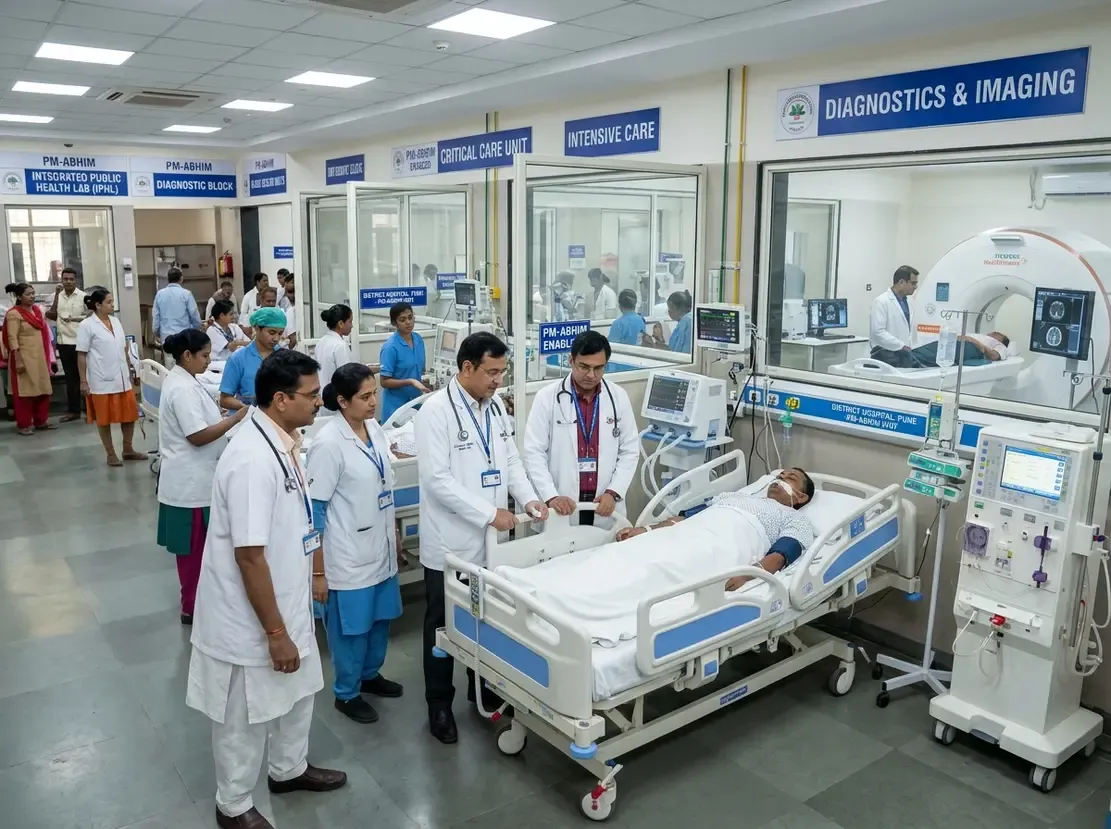
The Ministry of Health and Family Welfare has approved 19,983 PM-ABHIM health infrastructure units across India. Union Health Secretary Punya Salila Srivastava announced this major milestone during a national orientation workshop in Bengaluru. Consequently, this initiative bridges long-standing gaps between primary facilities and tertiary referral centers. Healthcare professionals will soon witness expanded diagnostic networks and robust critical care capacities. Furthermore, the central government aims to build resilient public health systems against future biological emergencies.
Expanding PM-ABHIM Health Infrastructure Across Districts
The Pradhan Mantri Ayushman Bharat Health Infrastructure Mission launched in October 2021 with an outlay of Rs 64,180 crore. Under this program, the government has sanctioned 2,151 Block Public Health Units and 744 Integrated Public Health Laboratories. Additionally, authorities approved 631 Critical Care Blocks to manage emergency cases locally. These dedicated blocks will significantly relieve pressure on crowded tertiary medical colleges. Therefore, clinicians in district hospitals can deliver prompt life-saving interventions for severe emergencies.
Strengthening Grassroots Healthcare and Diagnostic Capabilities
Grassroots healthcare delivery is receiving substantial targeted reinforcement under the mission. Specifically, authorities approved 11,001 Ayushman Arogya Mandir-Sub Health Centres at previously building-less locations. In addition, 5,456 Urban Ayushman Arogya Mandirs will serve densely populated metropolitan clusters. These centers leverage the Free Drugs and Diagnostics Initiative to deliver essential medicines directly to vulnerable patients. Moreover, the network integrates 48 Virus Research and Diagnostic Laboratories to accelerate real-time disease detection.
Surveillance Networks and Emergency Preparedness
PM-ABHIM also establishes extensive central surveillance networks to detect emerging infectious threats. For instance, the government is expanding National Centre for Disease Control branches across various states. Furthermore, twenty major cities will establish dedicated metropolitan surveillance units to monitor outbreak patterns. Quarantine infrastructure at international airports and sea ports will also undergo comprehensive modern upgrades. As a result, epidemiologists and frontline physicians can coordinate rapid public health responses to prospective pandemics.
Synergy with Digital Health and National Health Mission
The health ministry emphasizes strong coordination between PM-ABHIM and the National Health Mission. While NHM improves routine primary care delivery, PM-ABHIM builds specialized crisis resilience. Additionally, officials highlighted crucial technical linkages with the Ayushman Bharat Digital Mission and the Aarogya Setu platform. Digital tracking ensures seamless data flow between peripheral health centers and centralized laboratories. Ultimately, these integrated investments enhance clinician workflows and elevate standard patient outcomes nationwide.
Frequently Asked Questions
Q1: What is the primary purpose of PM-ABHIM?
PM-ABHIM strengthens primary, secondary, and tertiary public health infrastructure across India. It enhances disease surveillance, builds critical care units, and establishes pandemic preparedness networks.
Q2: How do Critical Care Blocks benefit district hospitals?
Critical Care Blocks provide dedicated intensive care and emergency beds at the district level. Consequently, they allow clinicians to manage severe medical emergencies locally, reducing out-of-pocket costs and unnecessary tertiary referrals.
Q3: How many health infrastructure units were approved under PM-ABHIM?
The Union Health Ministry has approved 19,983 health infrastructure units across India. These include primary health centers, block units, diagnostic laboratories, and specialized critical care blocks.
References
- - ETHealthworld
- Press Information Bureau. Union Health Secretary Smt. Punya Salila Srivastava highlights investment in the health sector.
- National Health Systems Resource Centre. Guidelines on Critical Care Hospital Block under PM-ABHIM.


