
Can Prenatal cfDNA Screening Replace Traditional Tests?
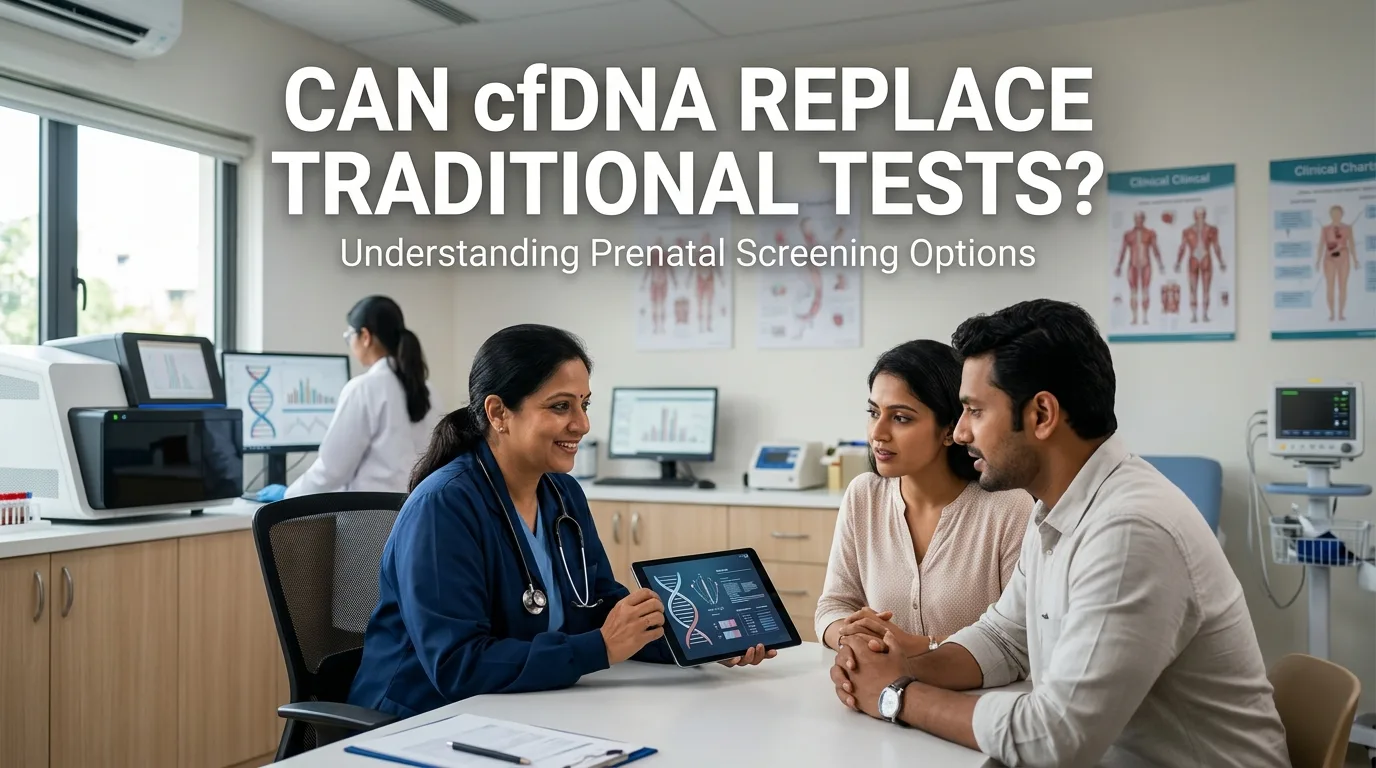
Traditional carrier screening identifies whether expectant parents carry mutations for severe genetic disorders. However, prenatal cfDNA screening now offers a direct way to evaluate fetal risk early in pregnancy. A prospective multi-center study evaluated the real-world performance of reflex cell-free DNA testing for common autosomal recessive conditions. Consequently, clinicians can now assess fetal risk without requiring paternal genetic samples.
Performance of Prenatal cfDNA Screening in Practice
The multi-site study included 2,212 pregnant carriers with singleton pregnancies across nine institutions. Specifically, researchers analyzed 2,403 cfDNA test results covering cystic fibrosis, spinal muscular atrophy, and hemoglobinopathies. Furthermore, the team obtained confirmed neonatal or fetal outcomes for 98.6% of the tested cohort. The screening identified high fetal risk in only 1.3% of the cases. In addition, the assay demonstrated an exceptional specificity of 99.5% and a negative predictive value of 99.9%. The overall sensitivity reached 94.4%, while the positive predictive value was 58.6%.
Overcoming the Paternal Sample Barrier
Traditional reproductive carrier screening requires testing both biological parents to estimate fetal disease risk. Unfortunately, obtaining a biological father’s sample is often impossible or delayed in clinical settings. Therefore, many carrier mothers face diagnostic uncertainty and unnecessary anxiety throughout gestation. By analyzing circulating placental DNA directly from maternal blood, reflex cfDNA testing bypasses paternal testing. As a result, obstetricians can pinpoint high-risk pregnancies with significantly greater positive predictive accuracy.
Clinical Implications for Prenatal Care
These findings validate single-gene cfDNA technology as an effective primary risk assessment tool. Moreover, early risk stratification helps clinicians guide timely invasive diagnostic testing like amniocentesis. In low-resource regions, this approach can streamline screening for high-prevalence disorders like thalassemia. Ultimately, integrating reflex cfDNA screening into prenatal care improves precision and reduces unnecessary interventions.
Frequently Asked Questions
Q1: What conditions does single-gene cfDNA screening evaluate?
The test evaluates common autosomal recessive conditions, including cystic fibrosis, spinal muscular atrophy, alpha-thalassemia, and beta-hemoglobinopathies.
Q2: Why is prenatal cfDNA screening advantageous over traditional carrier screening?
It directly assesses fetal risk from maternal blood, eliminating the need to obtain and test a paternal DNA sample.
Q3: Does a high-risk cfDNA screening result confirm a genetic disorder?
No, cfDNA remains a screening test. Therefore, clinicians must confirm high-risk results using diagnostic procedures such as chorionic villus sampling or amniocentesis.
References
- McElwee ER et al. A Prospective, Multi-Site Study of Performance of Cell-Free DNA Testing for Recessive Conditions in a Large, General-Risk Pregnancy Population. Obstet Gynecol. 2026 Aug 13. doi: 10.1097/AOG.0000000000006403. PMID: 42594382.
- American College of Obstetricians and Gynecologists. Carrier screening for genetic conditions. Committee Opinion No. 691. Obstet Gynecol. 2017;129(3):e41-e55.
- American College of Medical Genetics and Genomics. Screening for autosomal recessive and X-linked conditions during pregnancy and preconception. Genet Med. 2021;23(10):1793-1806.


