How Robotic Systems Deliver Unmatched Surgical Accuracy
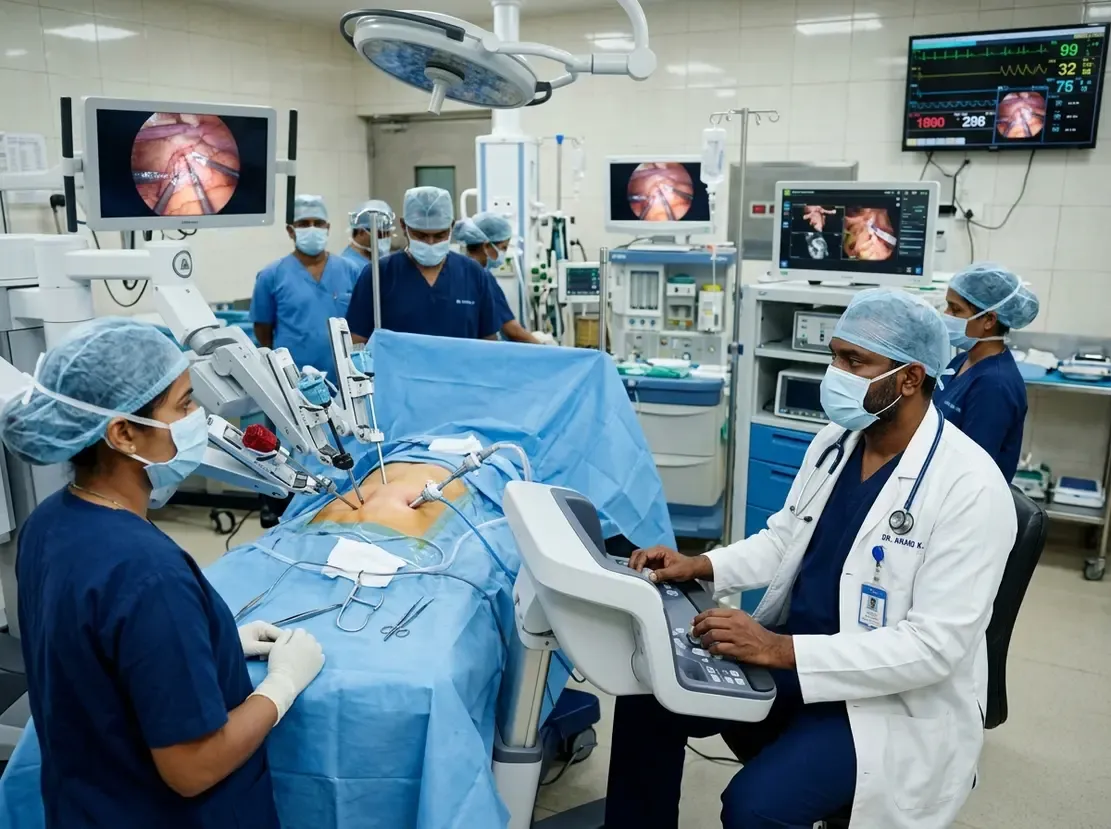
Modern surgical practice is evolving rapidly from traditional laparotomy toward precise, minimally invasive techniques. Today, robotic-assisted surgery provides surgeons with superior dexterity, three-dimensional visualization, and remarkable control during intricate operative interventions. Consequently, tertiary hospitals across India are increasingly adopting robotic platforms to deliver safer clinical care and faster patient recovery.
Expanding Frontiers of Robotic-Assisted Surgery
Robotic platforms have transitioned from experimental tools into everyday hospital solutions. For instance, surgical teams at Narayana RN Tagore Hospital routinely utilize robotics across diverse clinical disciplines. These domains include thoracic surgery, complex urology, gynaecologic oncology, cardiac care, and renal transplantation.
Furthermore, surgeons leverage robotic platforms in general surgery for complicated abdominal-wall reconstructions and hernia repairs. In addition, surgeons achieve optimal tissue alignment during complex renal transplants through tiny incisions. As a result, patients experience significantly lower risks of surgical site infections, which particularly benefits obese or diabetic individuals.
Transforming Cardiac and Thoracic Care
Historically, cardiac surgery required large median sternotomies that caused major physical and psychological trauma. However, robotic systems now allow cardiac surgeons to access the chest cavity through miniature intercostal ports. Therefore, surgeons can perform coronary artery bypass grafting and valve repairs without breaking the sternum.
Similarly, thoracic specialists perform complex lobectomies and mediastinal tumour resections with extraordinary accuracy. The robotic camera provides high-definition views around delicate vascular structures and lung tissue. Consequently, patients recover in days rather than spending months managing debilitating sternal wound pain.
Precision Oncology and Pelvic Interventions
In abdominal and urological oncology, robotic technology offers substantial technical advantages. Specifically, the stable console filters physiological tremors and provides ten-fold optical magnification. Surgeons can manoeuvre articulated robotic wrists in tight pelvic spaces that human fingers cannot easily reach.
Moreover, this dexterity proves vital during radical prostatectomy and nephron-sparing partial nephrectomy. It allows precise tumour excision while preserving surrounding neurovascular bundles for urinary continence. Similarly, gynaecologic oncologists treat endometrial and ovarian malignancies while maintaining sound oncological resection margins. Clinicians also utilize integrated Firefly fluorescence imaging to identify sentinel lymph nodes quickly.
The Human Element Behind Surgical Robotics
Despite popular misconceptions, robotic platforms do not perform surgical operations independently. Instead, qualified surgical specialists control every movement directly from an ergonomic master console. Therefore, surgical skill, clinical judgment, and anatomical knowledge remain the true drivers of clinical outcomes.
In addition, robotic technology simply amplifies the surgeon's capabilities rather than replacing professional human decision-making. As robotic access expands across India, structured surgical training and prudent patient selection will remain paramount. Ultimately, the success of modern surgery reflects how swiftly patients return to healthy daily routines.
Frequently Asked Questions
Q1: Does the robotic console perform surgery autonomously?
No, the robotic system never operates autonomously. The surgeon remains in total control at the console, directly guiding every instrument movement throughout the procedure.
Q2: What are the main benefits of robotic-assisted surgery for patients?
Patients typically experience smaller incisions, reduced blood loss, less postoperative pain, lower infection risks, and shorter hospital stays.
Q3: In which surgical specialties is robotic surgery commonly utilized?
Surgeons widely employ robotics in urology, gynaecologic oncology, gastrointestinal surgery, thoracic surgery, cardiac procedures, and renal transplantation.
References
- Robotics takes surgery into a new era of precision - ETHealthworld
- Unveiling the landscape of robotic surgery: Insights into Indian medical perspectives - PMC
- Next-Generation Surgical Robots Entering the Indian Market: What It Means for Patients and Providers - MediCircle