Offline Smartphone AI Accurately Screens Eye Diseases
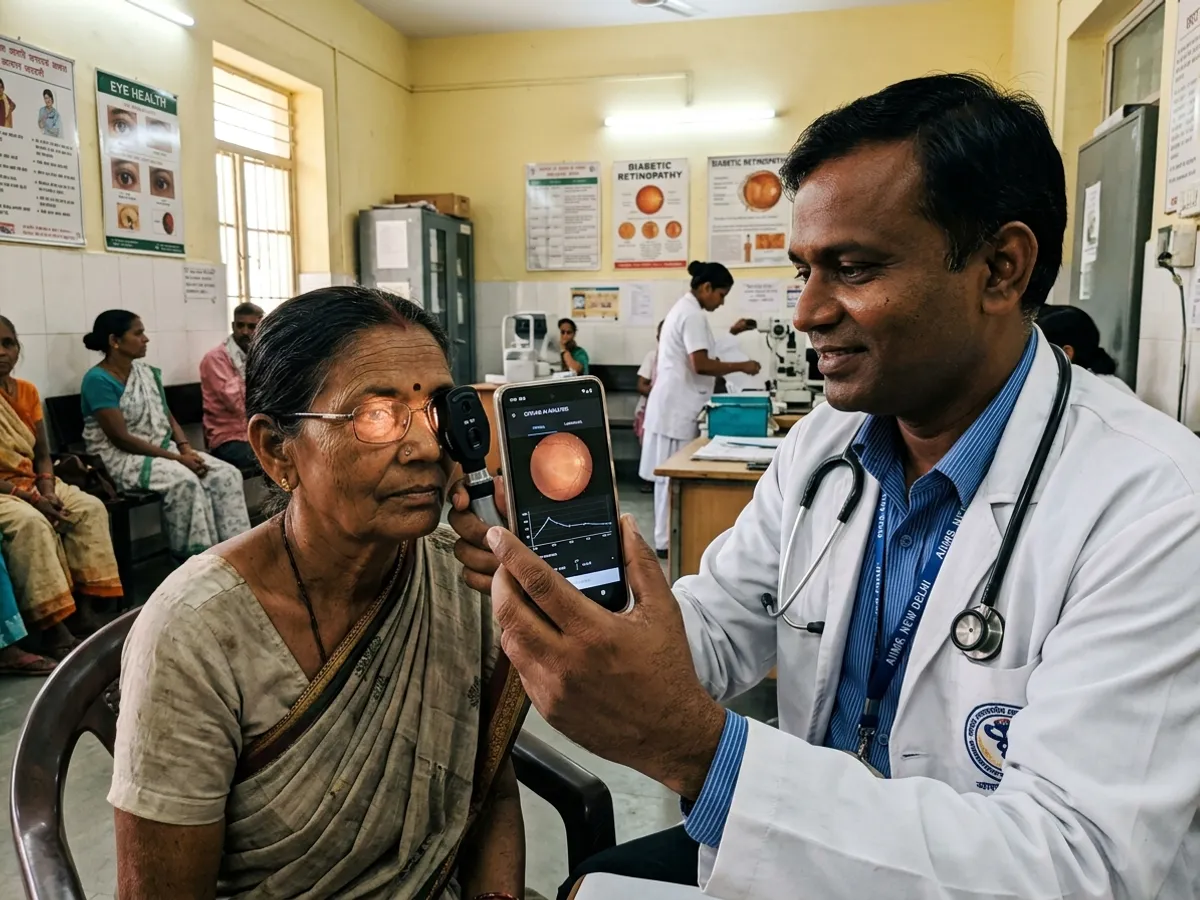
Clinicians in resource-limited settings often face significant hurdles when screening for vision-threatening conditions. Fortunately, modern smartphone-based AI screening provides a reliable solution for point-of-care diagnostics. Researchers from NIO Super Specialty Hospital recently evaluated an offline platform called Medios-AI. This breakthrough technology accurately detects diabetic retinopathy, glaucoma, and age-related macular degeneration. Consequently, healthcare workers can expand primary eye care without requiring internet access, building essential expertise relevant to those specializing in ophthalmology.
Diagnostic Accuracy of Smartphone-Based AI Screening
The clinical trial evaluated the diagnostic performance of Medios-AI integrated into a handheld fundus camera. In this real-world study, the algorithm demonstrated an impressive overall sensitivity of 99.3% and specificity of 95.7%. Moreover, the system evaluated retinal images for three distinct blinding diseases simultaneously. Specifically, it flagged diabetic retinopathy, glaucoma, and age-related macular degeneration with remarkable precision. Therefore, practitioners can trust the algorithmic findings during frontline triaging.
Clinical Benefits and Regulatory Approvals in India
Importantly, the offline architecture makes this device exceptionally valuable for rural outreach camps and teleophthalmology programs. Most commercial artificial intelligence tools require active cloud connectivity. In contrast, this platform processes images entirely on the mobile device. Additionally, the Central Drugs Standard Control Organisation (CDSCO) has granted regulatory approval for clinical use in India. Furthermore, the device holds European Class II medical device certification. Thus, clinicians gain an approved and scalable diagnostic tool.
Future Directions in Retinal Disease Detection
Currently, the system detects three major sight-threatening diseases. However, researchers plan to expand its diagnostic capabilities to cover additional vitreoretinal pathologies. Lead investigators emphasize that each new clinical indication demands independent algorithm training, rigorous validation, and regulatory clearance. Nonetheless, this portable technology bridges critical diagnostic gaps across underserved healthcare landscapes.
Frequently Asked Questions
Q1: What eye conditions does this smartphone AI system detect?
The Medios-AI system detects diabetic retinopathy, glaucoma, and age-related macular degeneration.
Q2: Does the AI system require an active internet connection?
No, the system operates completely offline on a smartphone-based fundus camera.
Q3: Has the technology received regulatory approval in India?
Yes, the Central Drugs Standard Control Organisation (CDSCO) has approved it for clinical use.
References
- Smartphone-based AI shows high accuracy in detecting eye diseases: Study - ETHealthworld
- Kelkar A, Kelkar J, Garg Y, Jain H, Sengupta S. Smartphone-based offline AI for multi-disease retinal screening: Real-world accuracy. Eur J Ophthalmol. 2026.
- The Hindu. AI systems in smartphones may help detect eye diseases: study. Published August 19, 2026.