Tamil Nadu Launches India's First Dengue Vaccine Study
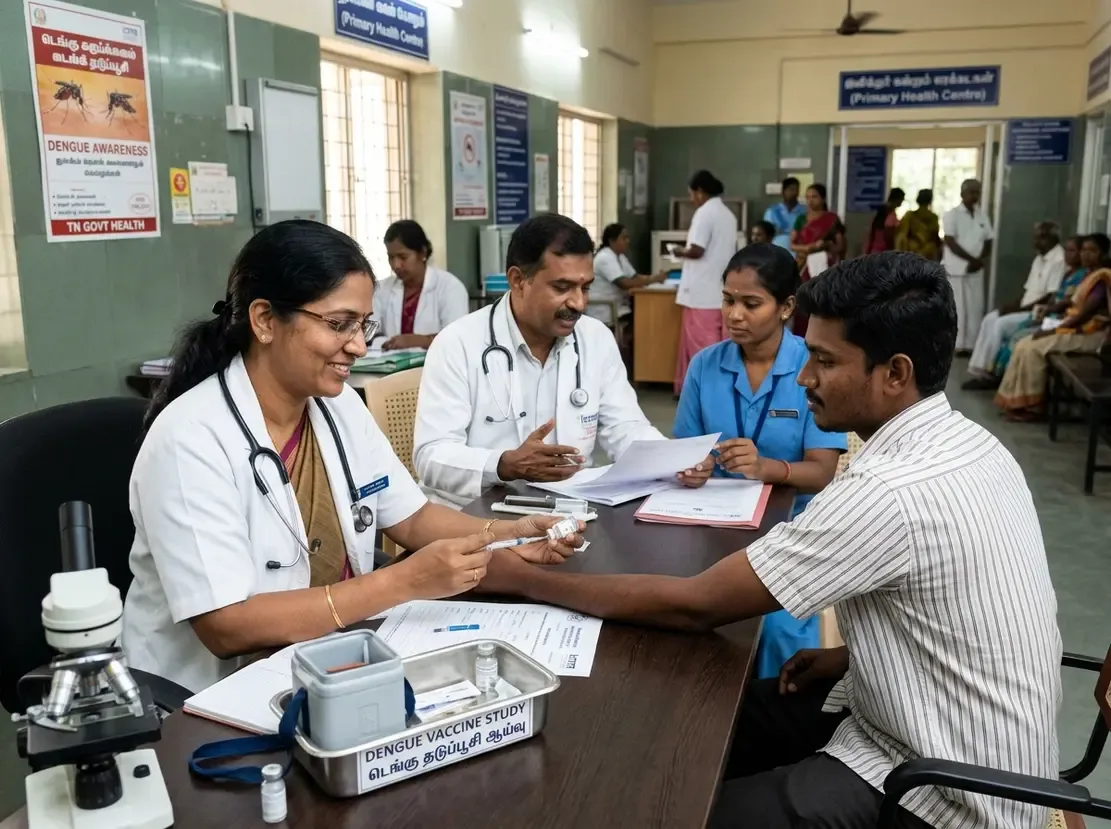
Tamil Nadu has launched India's first dengue vaccine pilot study in Tenkasi district under Indian Council of Medical Research oversight. Consequently, state health authorities aim to evaluate vaccine real-world performance under diverse Indian epidemiological conditions. The initiative marks a pivotal milestone in arboviral disease prevention across vulnerable tropical regions. Furthermore, public health teams seek to lower hospitalization burdens before seasonal outbreaks intensify.
Significance of the Dengue Vaccine Pilot Study
Currently, dengue remains a major clinical challenge across several Indian states during post-monsoon months. Therefore, evaluating this live-attenuated tetravalent vaccine offers promising protection for at-risk populations. The trial closely monitors local immunogenicity and tolerability among enrolled participants in Tenkasi. In addition, researchers will assess serotype-specific immune responses against all four circulating dengue serotypes. Thus, health administrators can generate vital operational data for prospective state-wide immunization rollouts.
Clinical Efficacy and International Experience
Notably, Brazil's national immunization programme already incorporates this vaccine for young populations. Real-world data demonstrate an impressive 80 to 90 percent efficacy against severe disease and hospital admissions. However, clinical efficacy can vary depending on baseline serostatus and prevailing regional strains. Hence, the Indian Council of Medical Research emphasizes rigorous field validation before broader licensing. Additionally, clinicians must monitor rare adverse events following immunization through established pharmacovigilance networks.
Monsoon Preparedness and Fever Management Protocol
Although current dengue caseloads remain manageable, monsoon rains typically trigger substantial vector surges. Consequently, state health officials urge citizens to prevent freshwater stagnation around domestic premises. Moreover, physicians must actively discourage self-medication and unverified home remedies during acute febrile illnesses. For example, non-steroidal anti-inflammatory drugs increase hemorrhagic risks during acute dengue infection. Instead, healthcare providers recommend prompt hospital evaluation, paracetamol for antipyresis, and strict fluid monitoring.
Frequently Asked Questions
Q1: What is the main objective of the pilot trial in Tenkasi?
The trial evaluates vaccine efficacy and field safety under Indian conditions before larger deployment.
Q2: How effective is the vaccine against severe dengue?
Clinical evidence reveals 80 to 90 percent protection against severe complications and inpatient hospitalization.
Q3: Why should patients avoid self-medication during fever episodes?
Specifically, unprescribed medicines like NSAIDs can trigger life-threatening gastrointestinal hemorrhage in suspected dengue cases.
References
- TN conducting India's first dengue vaccine pilot study, says Minister Arunraj - ETHealthworld
- World Health Organization. Dengue vaccines: WHO position paper – May 2024. Weekly Epidemiological Record. 2024;99(18):217-236.
- Indian Council of Medical Research. Clinical Development and Evaluation Protocols for Arboviral Vaccines. New Delhi: ICMR; 2024.