Traumatic Dental Injuries: Urgent Insights from AIIMS
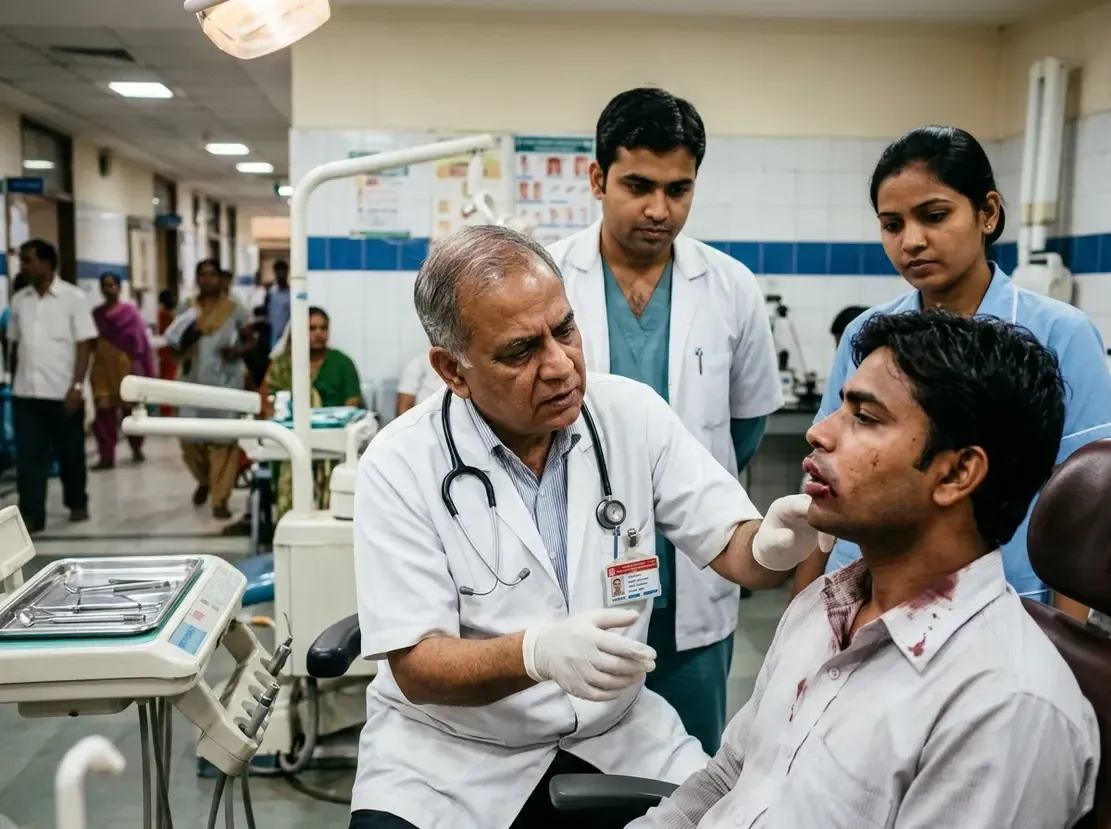
More than one billion people worldwide have sustained traumatic dental injuries during their lifetime. Consequently, healthcare providers must treat this widespread crisis with urgent clinical attention. Faculty members from AIIMS New Delhi emphasized this message on Global Dental and Oral Trauma Day. In fact, traumatic injuries to teeth rank among the most prevalent physical conditions globally. Unfortunately, many patients still view dental trauma as a purely cosmetic concern. This common misconception often delays essential clinical evaluation and compromises long-term tooth survival.
Understanding Traumatic Dental Injuries and Global Burden
Recent epidemiological reviews show that dental trauma affects over one billion living individuals. Therefore, researchers now rank oral trauma as the fifth most frequent acute and chronic health issue worldwide. Common causes include accidental falls, road traffic collisions, sports contact, and interpersonal violence. Furthermore, dental trauma can trigger a protracted cycle of complex restorative procedures. Dr Ajay Logani from AIIMS noted that trauma is never just a chipped tooth. Instead, structural injuries can destabilize the dental pulp and alveolar bone. Consequently, untreated trauma frequently leads to chronic pain, pulp necrosis, and premature tooth loss. Moreover, timely intervention preserves natural dentition and reduces lifelong reconstructive expenses.
Critical Immediate First Aid for Dental Emergencies
Clinical outcomes depend heavily on the actions taken during the first few minutes after injury. For instance, an avulsed permanent tooth requires prompt, correct handling to save the periodontal ligament cells. A caregiver or bystander should hold the tooth only by the crown and avoid touching the root. Additionally, the rescuer must rinse the tooth gently with cold milk or saline if it is dirty. If immediate reimplantation is not feasible, the tooth should travel in cold milk or a balanced salt solution. However, individuals should never transport an avulsed tooth dry or wrapped in tissue paper. Dr Sidhartha Sharma highlighted that basic first-aid education must expand beyond dental operatories. Thus, training teachers, sports coaches, and emergency personnel directly improves tooth preservation rates.
Prevention Strategies for High-Risk Groups
Children remain particularly susceptible to dental injuries because of active play and developing motor coordination. Dr Nitesh Tewari pointed out that early trauma can disrupt facial development and trigger severe psychological distress. Hence, clinicians must educate parents that pediatric oral injuries demand comprehensive clinical assessments. Furthermore, primary prevention requires targeted interventions across educational and athletic environments. Schools and sports leagues should mandate protective mouthguards during contact athletics. Similarly, enforcing strict road safety protocols and helmet usage lowers maxillofacial trauma substantially. In addition, prompt professional referral ensures accurate diagnostics and prevents avoidable endodontic complications, which is a core focus when you are advancing your clinical expertise in dentistry.
Frequently Asked Questions
Q1: Why is immediate first aid so critical for an avulsed permanent tooth?
Immediate action preserves periodontal ligament cells attached to the root surface. Consequently, reimplantation within sixty minutes dramatically improves the long-term prognosis of the permanent tooth.
Q2: What is the best storage medium if a knocked-out tooth cannot be reimplanted immediately?
Cold bovine milk is the most accessible and effective transport medium. Alternatively, Hank's Balanced Salt Solution or sterile saline maintains cellular viability effectively during transit.
Q3: Why do pediatric dental injuries require long-term monitoring?
Trauma to primary teeth can directly damage developing permanent tooth buds underneath. Therefore, regular clinical follow-up ensures normal dental eruption and monitors symmetrical facial growth.
References
- Dental trauma affects over a billion globally, remains overlooked healthconcern: AIIMS experts - ETHealthworld
- Petti S, Glendor U, Andersson L. World traumatic dental injury prevalence and incidence, a meta-analysis-One billion living people have had traumatic dental injuries. Dent Traumatol. 2018;34(2):71-86.
- Levin L, Day PF, Hicks L, et al. International Association of Dental Traumatology guidelines for the management of traumatic dental injuries: General introduction. Dent Traumatol. 2020;36(4):309-313.