
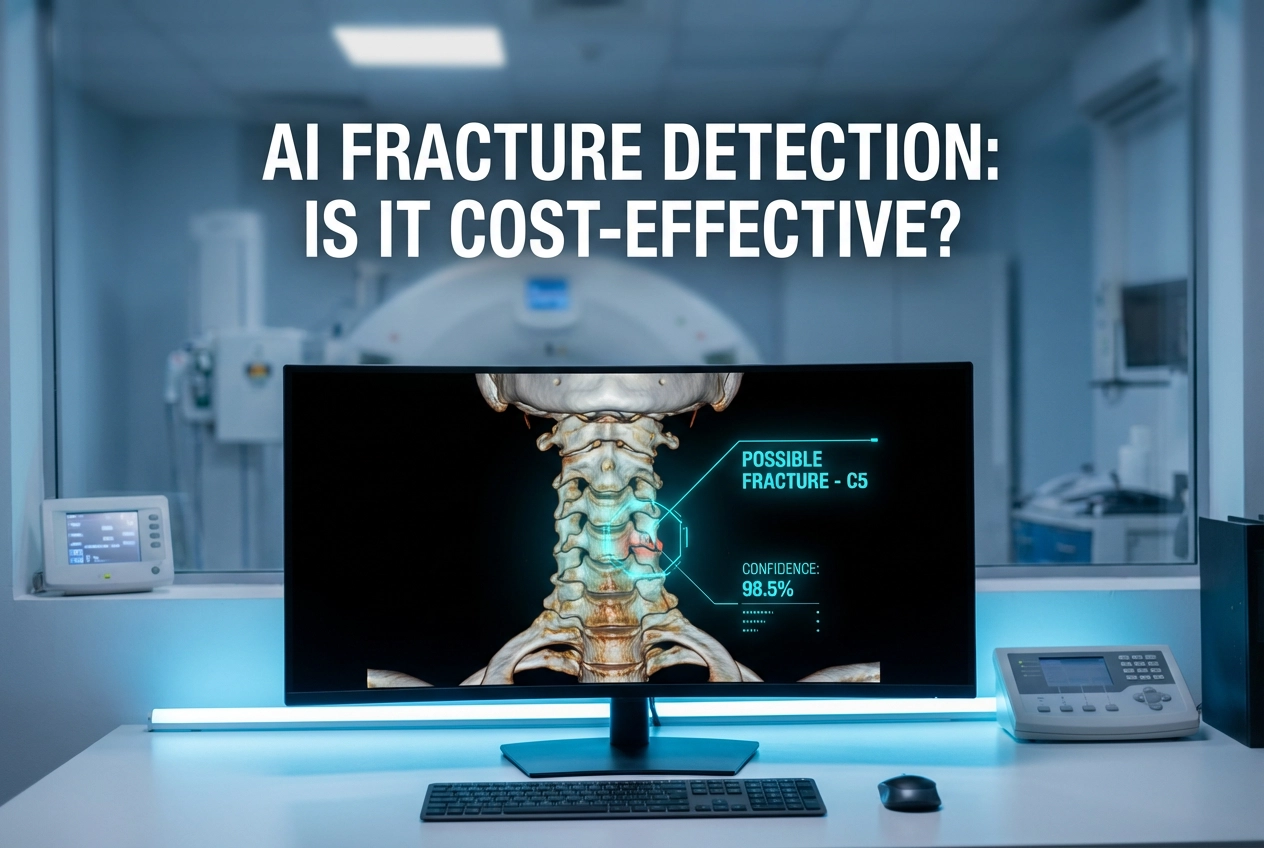
Integrating artificial intelligence (AI) tools into radiology workflows offers significant potential to boost diagnostic accuracy, particularly in high-stakes trauma cases. A recent early health technology assessment explored the potential change in in-hospital healthcare costs and diagnostic performance when utilizing an AI fracture detection algorithm as a concurrent reader for cervical spine (C-spine) CT scans. The findings suggest that this technological addition could lead to near-perfect accuracy for a minimal increase in overall expenditure, a highly relevant consideration for overburdened healthcare systems.
AI’s Impact on Diagnostic Accuracy
The retrospective study analyzed CT scans from 2321 consecutive patients screened for C-spine fractures. Importantly, 219 patients in the cohort had confirmed fractures. Initially, radiologists identified 193 of the 219 fractures. Subsequently, the AI algorithm flagged 23 fractures and 16 non-fracture scans that radiologists had misclassified.
Consequently, the combined, AI-assisted scenario demonstrated a remarkable improvement in diagnostic performance. The potential sensitivity increased to 98.6% (216/219 fractures detected). This represents a substantial 10.5% increase compared to the radiologists working alone. Moreover, specificity also saw an increase, reaching 100.0% (2101/2102 non-fracture scans correctly identified). This was an approximately 0.8% rise over the radiologists’ standalone performance. Studies consistently show that AI tools can successfully identify C-spine fractures that human readers may miss, thus enhancing patient safety and reducing the risk of complications from delayed diagnosis.
Cost-Effectiveness of AI Fracture Detection
One of the primary questions surrounding AI implementation is the impact on healthcare costs. For instance, increased sensitivity could lead to more detected fractures, which in turn might require more downstream in-hospital resources for evaluation and treatment. This study meticulously calculated costs based on diagnostic categories, including true positive, true negative, false positive, and false negative outcomes. The final analysis revealed that the total in-hospital cost for the AI-assisted scenario was only 0.3% (€60,862) higher than the cost for radiologists working without AI support.
Therefore, the clinical relevance is clear: a minimal increase in cost is associated with a significant jump in diagnostic accuracy. Consequently, implementing AI as a concurrent reader promises to deliver high diagnostic precision for C-spine fractures, which is especially critical in trauma settings. Considering the well-documented shortage of radiologists in countries like India, such AI solutions could revolutionize the triage and diagnostic process, particularly in remote or underserved communities. AI-powered systems can streamline workflows, reduce turnaround times, and potentially mitigate the high legal costs associated with missed diagnoses.
Frequently Asked Questions
Q1: What change in diagnostic accuracy did AI as a concurrent reader offer?
The addition of the AI algorithm was estimated to potentially increase sensitivity by 10.5%, reaching 98.6%, and increase specificity by 0.8%, reaching 100.0%.
Q2: How did the total cost change with the addition of AI?
The total in-hospital cost for the AI-assisted scenario was only 0.3% higher than for the radiologists working alone, primarily due to more fractures being accurately detected.
Q3: Why is AI-assisted cervical spine fracture detection clinically relevant?
Using AI as a concurrent reader could increase diagnostic accuracy to nearly 100% with only a minimal increase in in-hospital healthcare resource costs, ensuring more timely and appropriate treatment for critical injuries.
References
- van den Wittenboer GJ et al. Potential change in healthcare costs of implementing artificial intelligence for detecting cervical spine fractures on CT: an early health technology assessment. Eur Radiol. 2026 Jan 05. doi: 10.1007/s00330-025-12255-z. PMID: 41489842.
- Smit H et al. Diagnostic accuracy of an artificial intelligence algorithm versus radiologists for fracture detection on cervical spine CT. Eur Radiol. 2024 Jan 11.
- Hong Y et al. Machine Learning to Detect Cervical Spine Fractures Missed by Radiologists on CT. AJR Am J Roentgenol. 2023 Dec 27.
- AI Powers India’s Healthcare from Radiology to Hospitals. The CSR Journal. 2025 Dec 25.