
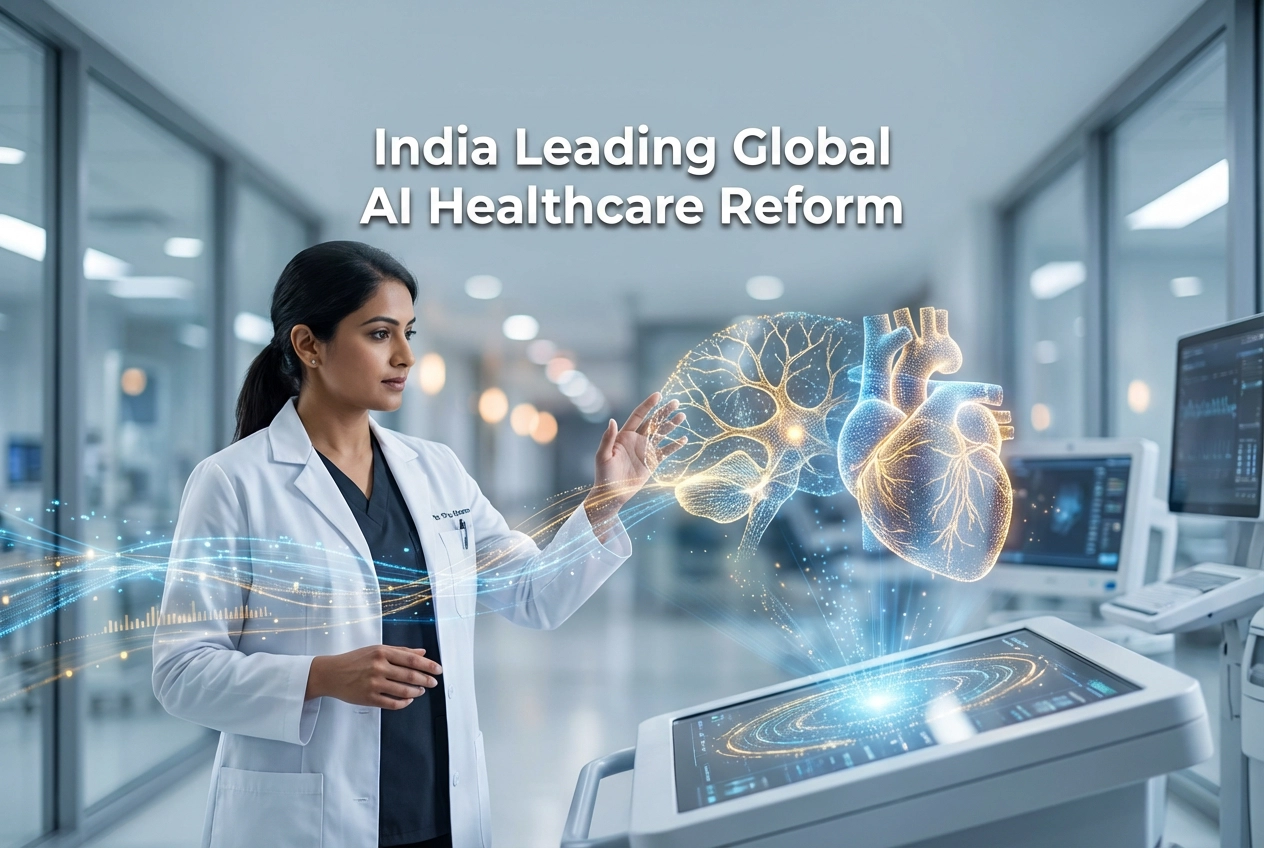
AI in Indian healthcare currently serves as a primary driver for reforming global medical standards. Royal Philips CEO Roy Jakobs recently emphasised this potential during the AI India Summit in New Delhi. He highlighted that India represents a unique intersection of skill, ambition, and digital infrastructure. Consequently, the innovations coming from this ecosystem provide a blueprint for resilient solutions worldwide. As the sector matures, it moves from reactive treatment toward predictive and continuous care models. For those interested in the cutting edge of medical advancement, exploring courses in Multispecialty Courses can provide a broader context.
Digital Foundations and the Ayushman Bharat Mission
India’s digital infrastructure remains a cornerstone of this technological evolution. Specifically, initiatives like the Ayushman Bharat Digital Mission (ABDM) create the necessary framework for interoperable health records. These registries allow for the seamless flow of longitudinal patient data across public and private systems. Therefore, developers build AI models on high-quality, structured information that reflects diverse real-world complexities. This capability matters because predictive systems require robust data to shape the future health of billions.
Impact of AI in Indian Healthcare on Global Models
The innovation occurring in India does not remain confined to local markets. Instead, teams at Philips’ Bengaluru and Pune centres develop algorithms that improve healthcare robustness across various geographies. For example, clinical workflow solutions co-created with Indian partners now scale to address global workforce shortages. Since India faces unparalleled scale and constraints, its solutions are inherently resilient and cost-effective. Furthermore, these tools help clinicians manage rising chronic disease demands by streamlining diagnostic imaging and patient monitoring, areas covered extensively in our Certification Course In Clinical Imaging.
Prioritising Trust and Regulatory Governance
However, successful adoption relies heavily on maintaining clinical and patient trust. Jakobs stressed that healthcare providers must ensure AI is transparent and continuously validated. Moreover, innovation and governance must advance together at the same speed. If they move out of alignment, trust erodes, and adoption slows down. Regulators require confidence that systems monitor safety constantly, while patients deserve absolute data protection. Consequently, a strong regulatory framework is essential to ensure that AI-driven recommendations remain safe and effective. Professionals looking to enhance their governance knowledge in drug application might find the Postgraduate Diploma In Clinical Drug Development relevant.
Frequently Asked Questions
Q1: How does the Ayushman Bharat Digital Mission facilitate AI in healthcare?
The mission provides a standardized digital infrastructure for health records and registries, enabling the creation of high-quality data sets required for training predictive AI models.
Q2: Why are India-made AI solutions relevant for global healthcare markets?
India’s unique scale and diverse medical challenges force developers to create highly resilient and cost-effective solutions that are easily adaptable to other global health systems.
Q3: What role does trust play in the adoption of medical AI?
Trust is the foundation of healthcare; therefore, AI systems must be transparent and validated continuously to ensure clinicians and patients feel confident in their recommendations.
References
- India-made AI solutions for healthcare have potential to reform global models:Royal Philips CEO – ETHealthworld
- Ayushman Bharat Digital Mission: Building a Digital Health Ecosystem – National Health Authority
- Transforming Healthcare Delivery Through Artificial Intelligence – PIB India
Disclaimer: This article was automatically generated from publicly available sources and is provided for informational and educational purposes only. OC Academy does not exercise editorial control or claim authorship over this content. It is not a substitute for professional medical advice, diagnosis, or treatment. Always consult a qualified healthcare provider and refer to current local and national clinical guidelines.