
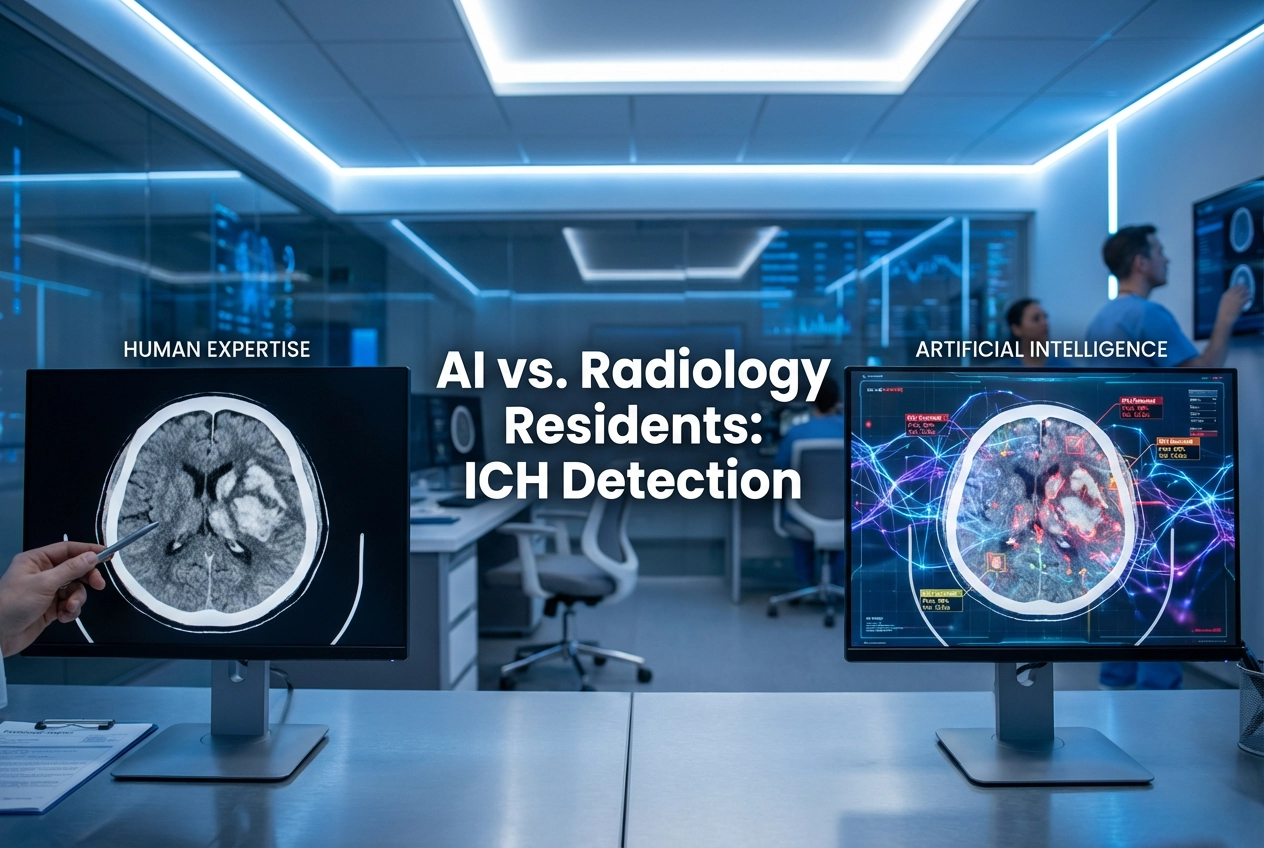
Identifying brain bleeds quickly is vital for saving lives in emergency departments. Recently, a study evaluated the efficacy of AI for ICH detection compared to radiology residents on-call. Researchers analyzed over 2,000 CT scans to determine if commercial software could match human expertise. Consequently, the findings provide a clear picture of where technology stands in the clinical hierarchy.
Evaluating AI for ICH Detection Performance
The study analyzed 2,153 unenhanced cerebral CT scans over three months. This analysis showed an intracranial hemorrhage prevalence of 15.4%. Although the software identified many cases, the radiology residents achieved significantly higher scores. For instance, the AI software reached a sensitivity of 84% and a specificity of 94.4%. In contrast, the residents achieved a sensitivity of 96.4% and a specificity of 99.6%. Therefore, the human radiologists maintained a substantial lead in diagnostic accuracy during emergency shifts.
The Role of Human Expertise in Radiology
Modern technology offers many benefits, but clinical judgment remains irreplaceable in acute settings. Moreover, the study reported p-values below 0.001, highlighting the statistical significance of the performance gap. However, AI still serves a purpose as a secondary screening tool. Because residents work under intense pressure, digital assistance might help flag potential issues during high-volume periods. Nevertheless, doctors must still verify every scan to ensure the highest level of patient safety. Additionally, supporting studies suggest that combining human insight with AI generates the best outcomes for patients.
Frequently Asked Questions
Q1: Was the AI software more sensitive than the radiology residents?
No, the radiology residents demonstrated a much higher sensitivity of 96.4% compared to the 84% achieved by the AI software.
Q2: Is AI ready to replace human radiologists in detecting brain bleeds?
Current research suggests that AI is not yet ready to replace humans. Instead, it functions best as a supportive tool to assist residents in high-pressure environments.
Q3: What was the specificity of the AI software in this study?
The AI software achieved a specificity of 94.4%, which was lower than the 99.6% specificity recorded by the radiology residents.
References
- Pedrini Q et al. Performance of AI vs radiology residents in the detection of intracranial hemorrhage on emergency CT: a real-world analysis. Eur Radiol. 2026 Feb 21. doi: 10.1007/s00330-026-12385-y. PMID: 41721849.
- Reschke P, et al. AI assistance improves radiology resident reader performance in CT diagnosis of intracranial hemorrhage. La Radiologia Medica. 2025.
- Standalone AI Versus AI-Assisted Radiologists in Emergency ICH Detection: A Prospective, Multicenter Diagnostic Accuracy Study. MDPI. 2025.
“