AIIMS Delhi Director Race: Critical Institutional Hurdles

The selection of the next AIIMS Delhi director reaches a critical stage as the interim tenure of Professor Nikhil Tandon concludes. An official memorandum assigned Professor Tandon administrative responsibilities for six months in April 2026. Meanwhile, the government received more than 60 applications for the top leadership position. Consequently, the Appointments Committee of the Cabinet will finalize the regular appointment soon.
Leadership Transition and the Next AIIMS Delhi Director
The incoming AIIMS Delhi director faces urgent institutional challenges that require swift administrative action. For instance, the institute recently concluded a major faculty recruitment drive to address ongoing staffing shortages. The administration selected 214 doctors against 265 advertised teaching posts. However, data presented in Parliament revealed that 436 out of 1,313 sanctioned faculty positions remain vacant. Therefore, bridging this persistent human resource gap represents a vital priority for the institution.
In addition, faculty housing shortages worsen the retention problem. Specifically, only 250 out of 850 faculty members currently reside in campus accommodations. Consequently, senior doctors must navigate long daily commutes, which intensifies work fatigue and professional burnout.
Addressing Senior Faculty Exodus and Workplace Strain
Institutional stability has suffered from an unprecedented loss of veteran specialists over the past three years. Between 2023 and 2025, fifteen senior faculty members opted for voluntary retirement from the medical institute. Notably, at least thirteen of these clinicians subsequently joined private hospitals across the country.
The departures included legendary department heads who served the institute for three decades. For example, Dr Rajesh Malhotra from orthopaedics and Dr M V Padma from neurology departed during 2023. Furthermore, Dr S V S Deo, Dr Balram Bhargava, and Dr Shiv Kumar Choudhary retired during 2024. Although official records cite personal reasons, ex-faculty highlighted procedural delays and heavy administrative workloads. Many doctors also reported frustrations regarding procurement hurdles and limited professional autonomy. Thus, preserving clinical leadership and mentorship structures requires immediate operational reforms.
Optimizing Clinical Infrastructure and Capacity
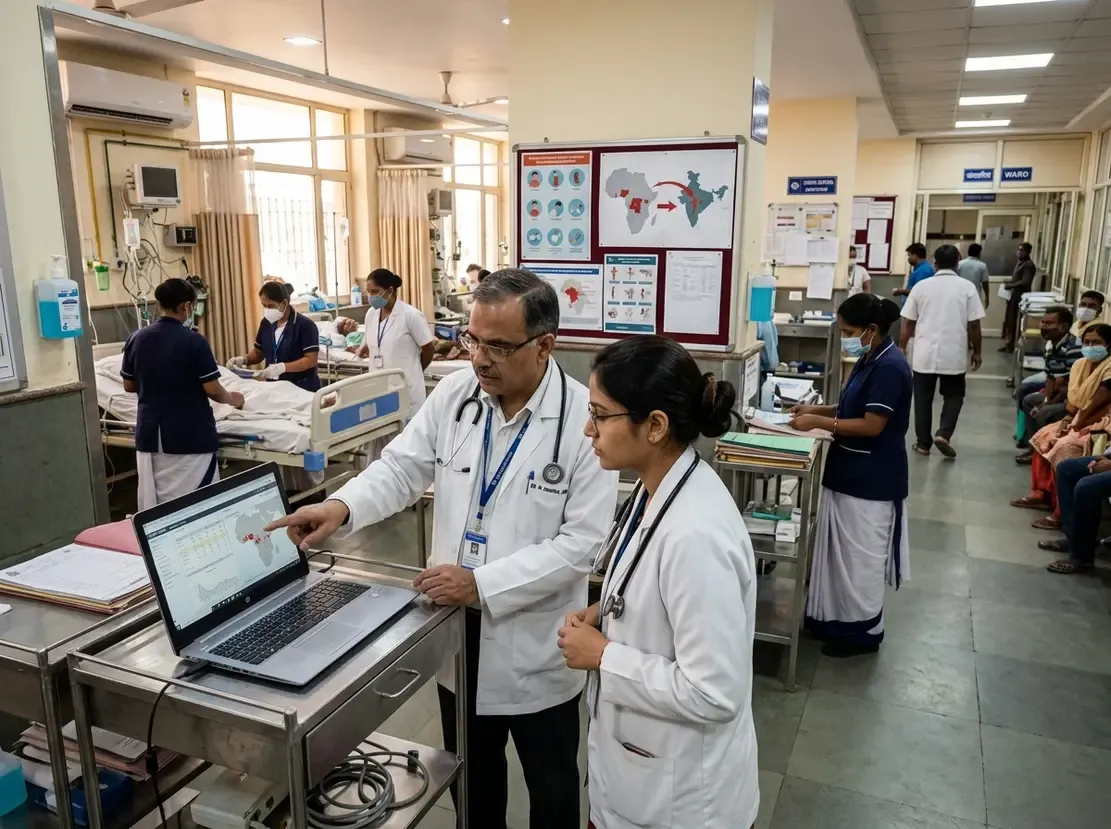
Beyond staffing hurdles, clinical infrastructure underutilization heavily limits everyday patient care delivery. A parliamentary standing committee recently flagged that 26 of 112 major operation theatres remain non-functional. Moreover, the panel discovered that 81 of 433 intensive care unit beds currently stay out of service. Overall, 843 of 4,178 sanctioned hospital beds lie completely unutilized despite soaring patient footfall.
Consequently, patients frequently encounter prolonged waiting times for critical tertiary surgical procedures. The parliamentary panel urged authorities to expedite the comprehensive campus redevelopment master plan without delay. Additionally, hospital administrators must streamline procurement pipelines to make dormant operating rooms operational. Modernizing equipment maintenance and standardizing surgical protocols will restore complete clinical capacity for public healthcare.
Strategic Outlook for Healthcare Professionals
The forthcoming appointment holds profound implications for medical education and clinical research in India. AIIMS Delhi functions as the benchmark for clinical governance across all national healthcare institutions. Therefore, stabilizing the workforce will establish stronger training environments for resident doctors and postgraduate fellows. Furthermore, competitive incentives and reduced administrative friction could encourage senior clinicians to remain in academic medicine. Ultimately, effective governance will ensure that India's premier hospital maximizes both its clinical capacity and academic excellence.
Frequently Asked Questions
Q1: Why is the AIIMS Delhi director selection gaining widespread attention?
The selection comes at a critical juncture when AIIMS Delhi faces persistent faculty vacancies, senior doctor attrition, and unutilized clinical infrastructure.
Q2: How many faculty positions are currently vacant at AIIMS Delhi?
Health ministry data submitted to Parliament revealed that 436 out of 1,313 sanctioned faculty posts remain vacant despite recent recruitment rounds.
Q3: What key infrastructure challenges did the parliamentary panel identify?
The panel reported that 26 major operation theatres and 81 ICU beds remain non-functional, leaving 843 hospital beds unutilized.
References
- AIIMS awaits full-time director as interim chief's term nears end - ETHealthworld
- Department-Related Parliamentary Standing Committee on Health and Family Welfare Report on Working of AIIMS, New Delhi - Sansad
- Centre invites applications for full-time AIIMS director - Docthub