IIT Madras Develops Bacteria-Killing Polymer Technology
A Novel Mechanical Approach to Infection Control
Hospital-acquired infections remain a major threat across clinical environments in India. To combat this persistent threat, researchers at IIT Madras have patented a groundbreaking antibacterial polymer technology. This novel surface physically eliminates harmful pathogens without relying on chemical antibiotics, disinfectants, or radiation. Consequently, the material offers healthcare facilities a robust defense against lethal superbugs.
Mechanisms of the Antibacterial Polymer Technology
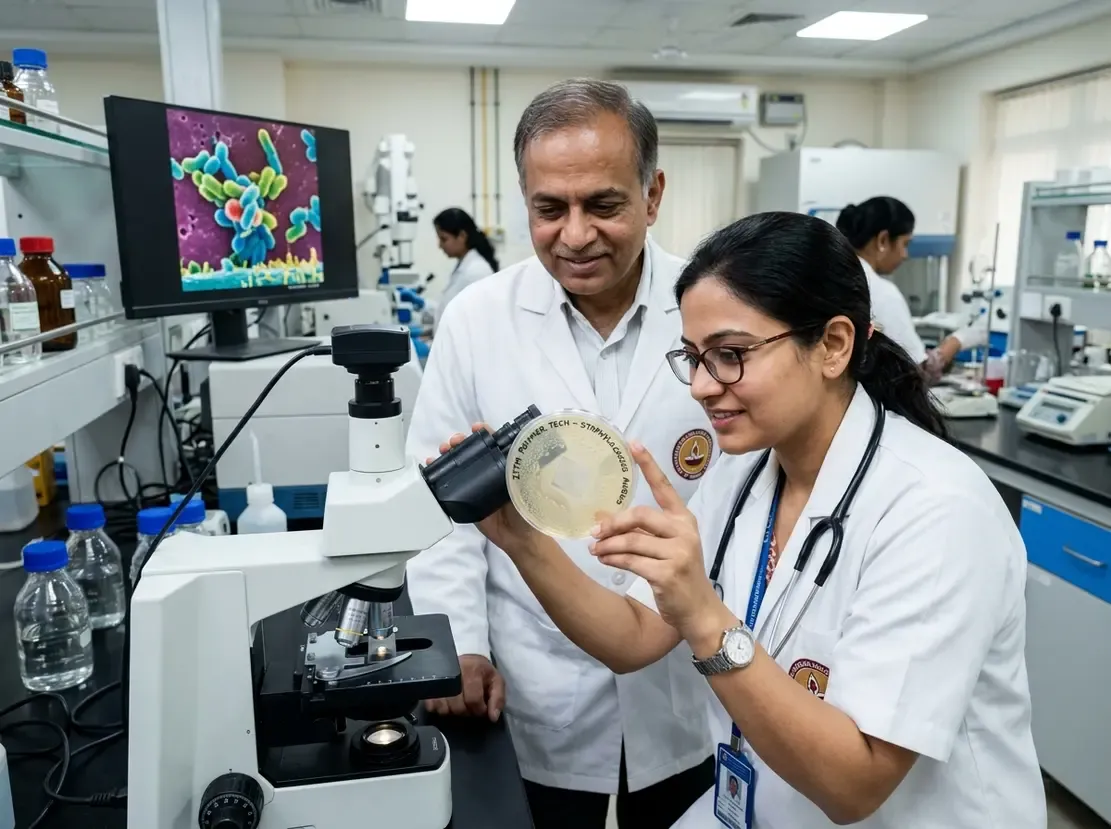
Unlike traditional coatings that leach chemical substances, this biomimetic platform operates through direct mechanical forces. Specifically, researchers used reactive ion etching to sculpt flexible silicone into dense nanoscale protrusions termed nanograss. When microbial cells touch these engineered nanostructures, they immediately experience intense mechanical stress. Therefore, the bacteria suffer catastrophic cell wall rupture and rapid disintegration.
Furthermore, the manufacturing plasma treatment creates a distinct stiff oxyfluorinated outer layer on the silicone substrate. This unique architecture efficiently concentrates physical stress against invading microorganisms. In laboratory evaluations, the surfaces achieved over 68 percent biofilm inhibition against both Gram-positive and Gram-negative pathogens. Hence, the platform thwarts persistent colonization before biofilm shields can fully form.
Safety and Clinical Implications for Medical Devices
Biocompatibility remains paramount when introducing novel materials into operative medicine. Fortunately, mammalian cells behave very differently from single-celled bacteria on these micro-textured interfaces. In vitro viability assays utilizing human fibroblast cultures demonstrated up to 91 percent cell survival. Because human cells possess greater elasticity and size, they comfortably adhere and multiply across the nanograss arrays.
Consequently, this innovation presents significant utility across surgical and critical care settings. Clinicians frequently encounter catheter-associated urinary tract infections and hardware colonizations. Therefore, applying this process to urinary catheters, surgical drainage tubes, and implants can dramatically curtail nosocomial morbidity, aligning with advanced protocols taught in an accredited Certification Course In Intensive Care Medicine. Moreover, because the bactericidal action relies entirely on physics, pathogens cannot easily develop biological resistance.
Frequently Asked Questions
Q1: How does this surface destroy bacteria without drugs?
The surface features rigid nanoscale protrusions that mimic dragonfly wings. When bacteria land, mechanical tension ruptures their outer cell walls upon direct contact.
Q2: Why does the nanostructure spare human tissue cells?
Human cells are considerably larger and mechanically more pliable than bacterial cells. Consequently, mammalian cells spread safely over the structures without experiencing fatal envelope stress.
Q3: What medical equipment could incorporate this material?
Manufacturers can apply the technique to urinary catheters, wound dressings, endotracheal tubes, prosthetic components, and high-touch hospital surfaces.
References
- IIT Madras patents polymer tech that disintegrates bacteria on surfaces withoutharming human cells - ETHealthworld
- ACS Applied Biomaterials - American Chemical Society
- The Daily Pioneer - IIT Madras patents chemical-free antibacterial surface