
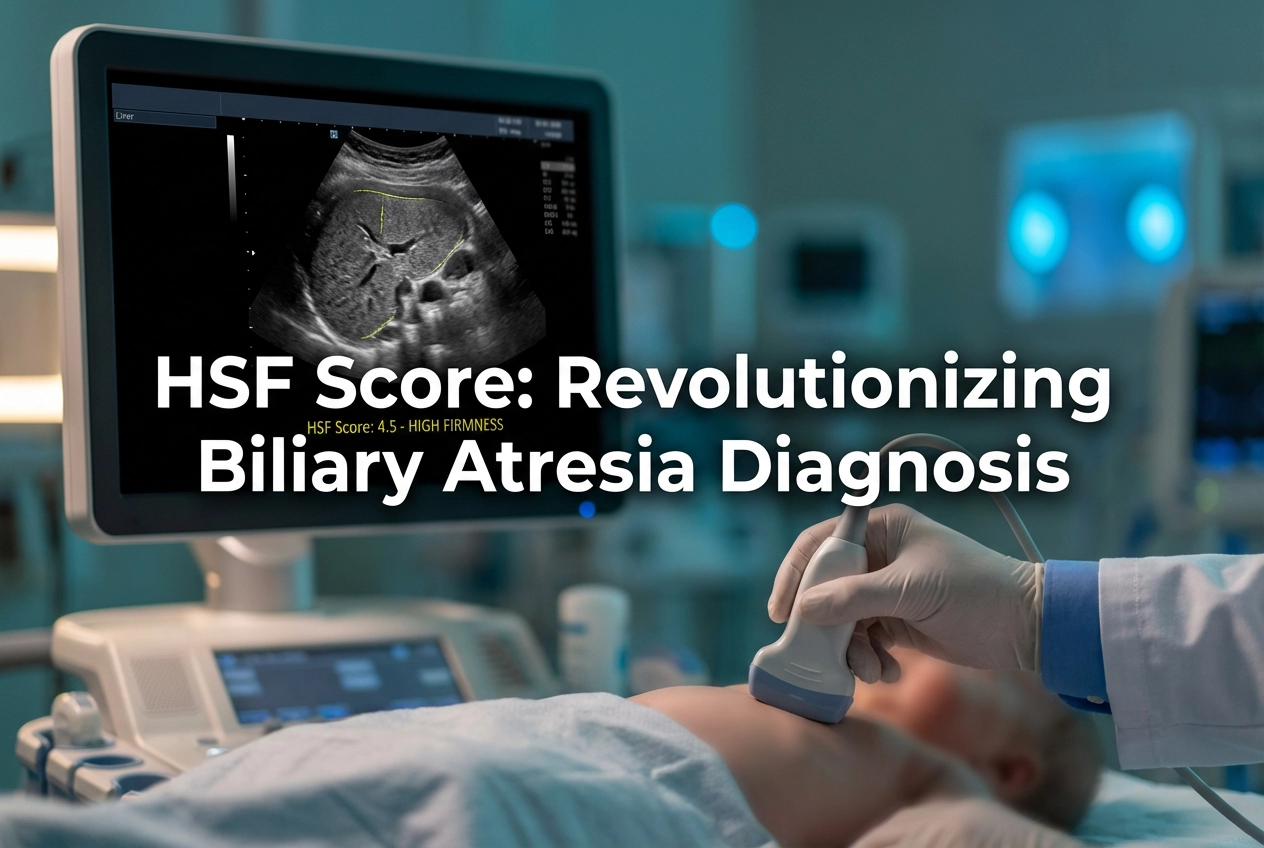
New Ultrasound Score Sharpens Biliary Atresia Diagnosis
Early Biliary Atresia Diagnosis is critical for favorable outcomes in neonates. Clinicians often struggle to differentiate this condition from other types of neonatal cholestasis. Therefore, researchers recently evaluated a new semi-quantitative scoring system. This method utilizes color Doppler ultrasonography to measure hepatic subcapsular flow. Furthermore, the study investigated the hepatic capsular retraction sign as a diagnostic marker.
Enhancing Biliary Atresia Diagnosis Using HSF Scores
The study prospectively recruited 170 infants with suspected liver issues. Specifically, 35 infants received a confirmed diagnosis of biliary atresia. Researchers found that an HSF score of 2 or higher provides exceptional accuracy. This score achieved an area under the curve of 0.950. Consequently, it outperformed many established markers currently used in clinical practice. Additionally, combining the HSF score with the triangular cord sign raised the diagnostic accuracy to 0.979. This combination offers a powerful tool for pediatric radiologists.
Correlation with Liver Fibrosis and HCR
Beyond diagnosis, these ultrasound markers provide insight into the severity of liver damage. Both the HSF score and the HCR sign show significant correlation with liver fibrosis indicators. Specifically, higher HSF scores often correspond with increased serum markers of fibrosis. Moreover, the HCR sign effectively reflects histopathological changes in the liver capsule. While the HCR sign showed lower diagnostic sensitivity than the HSF score, it remains a valuable indicator. As a result, integrating these multimodal ultrasound features allows for a more comprehensive assessment. This approach helps doctors prioritize infants for surgical intervention.
Frequently Asked Questions
Q1: What is the optimal cutoff for the HSF score in biliary atresia?
The study identifies an HSF score cutoff of 2 or higher as the most effective threshold for diagnosing biliary atresia, yielding an AUC of 0.950.
Q2: Can ultrasound scores predict the severity of liver fibrosis?
Yes, both the HSF score and the HCR sign correlate significantly with serum and histopathological indicators of liver fibrosis in infants.
References
- Ling W et al. Prospective evaluation of the semi-quantitative hepatic subcapsular flow score and hepatic capsular retraction sign in the diagnosis of biliary atresia. Eur Radiol. 2026 Mar 15. doi: 10.1007/s00330-026-12392-z. PMID: 41832932.
- National Health Portal of India. Biliary Atresia: Clinical Overview. 2024.
- AIIMS. Guidelines for the Management of Neonatal Cholestasis. 2023.