
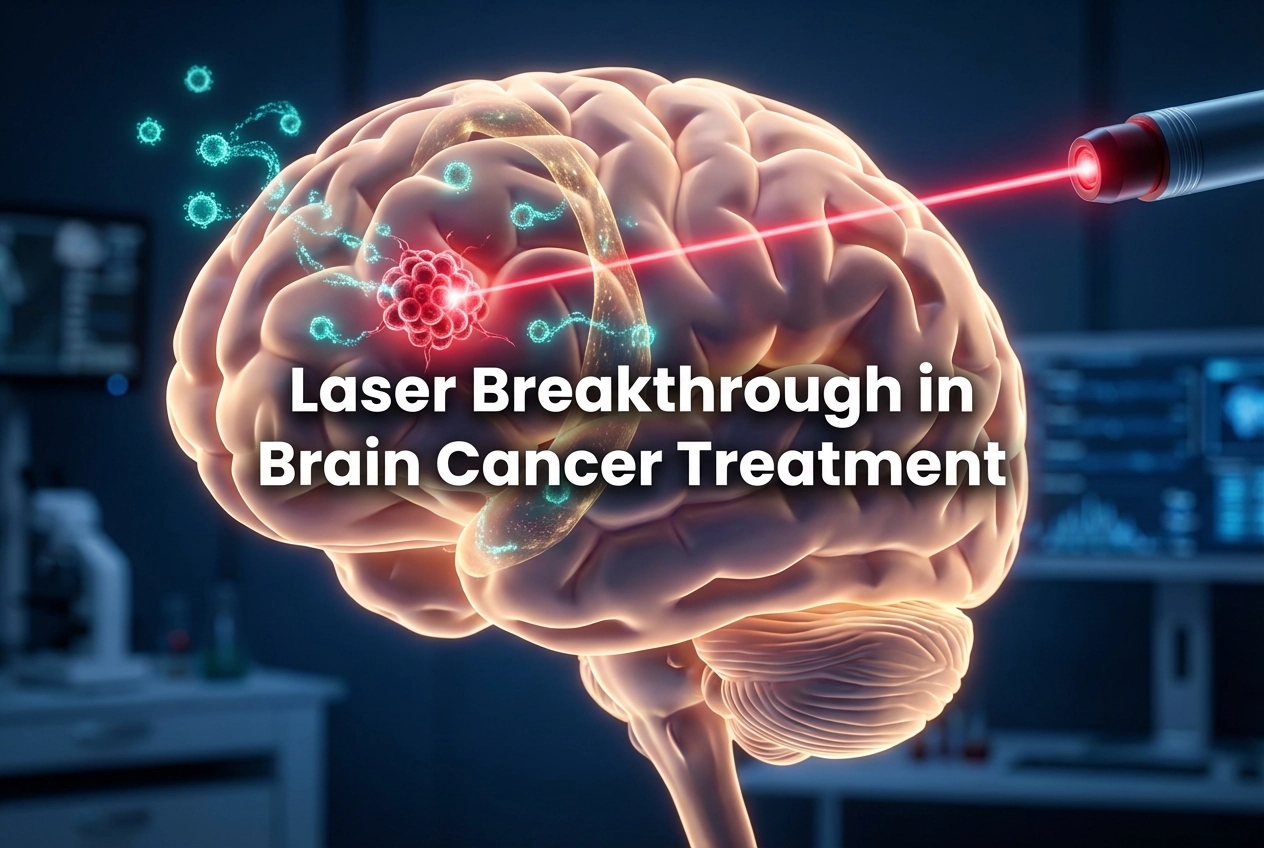
Brain cancer laser treatment, when combined with immunotherapy, has demonstrated a significant survival benefit for patients with recurrent high-grade astrocytoma. This aggressive brain cancer frequently returns after initial surgery, and patients typically face a survival window of only four to five months. However, a groundbreaking clinical trial published in Nature Communications suggests that this innovative approach could provide much-needed hope. Specifically, the trial combined laser interstitial thermal therapy (LITT) with the immune checkpoint inhibitor pembrolizumab to achieve superior outcomes. This area is critical for specialists in Oncology.
The study involved 45 patients suffering from advanced recurrent high-grade astrocytoma. Among the 33 patients who received LITT followed by pembrolizumab, 42% were still alive at the 18-month mark. Furthermore, over one-third of these patients survived for more than three years. In stark contrast, none of the patients in the control group, who received conventional surgery and immunotherapy, survived to 18 months. Consequently, the independent data and safety monitoring committee halted the randomized study early because the benefits of LITT were undeniable. This decision ensures that all participants can now access this potentially life-saving intervention.
Overcoming the Blood-Brain Barrier
Standard immunotherapies often fail in brain tumor cases because the blood-brain barrier blocks T cells from reaching their target. Nevertheless, researchers discovered that the heat generated during LITT disrupts this barrier for several weeks. This duration is sufficient for activated T cells to penetrate the brain and attack cancer cells. Additionally, LITT acts as a minimally invasive procedure that shrinks tumors while priming the immune system. Although larger studies are required to establish this as a standard of care, the initial data are remarkably encouraging for neuro-oncologists.
Identifying Risk Factors for Pediatric Diabetes
Beyond neuro-oncology, recent research published in PLoS Global Public Health reveals alarming trends in adolescent metabolic health. Nearly one-third of U.S. adolescents now have prediabetes or type 2 diabetes. While body mass index (BMI) remains a common screening tool, the study identified central adiposity as a much stronger predictor. Specifically, the waist-to-height ratio was the most significant independent indicator of diabetes risk. Therefore, clinicians should consider integrating this measure into routine pediatric assessments. Doing so might improve early diagnosis and facilitate timely intervention before complications arise. Professionals looking to deepen their expertise in this area should explore the Certification Course In Diabetes And Metabolic Disorder Care.
For continuous professional development in managing youth metabolic conditions, the Certification Course in Managing Type 2 Diabetes in Children and Young People is highly relevant.
Molecular Mechanisms of Post-COVID Taste Loss
Finally, scientists have identified the molecular cause behind persistent taste loss following COVID-19. Research in the journal Chemical Senses points to reduced levels of the PLC beta2 protein in taste buds. This protein functions as a molecular amplifier, strengthening taste signals before they reach the brain. When levels of PLC beta2 drop, the resulting signal becomes too weak for the brain to process accurately. Moreover, some patients exhibited structural changes in their taste buds, suggesting that both molecular and architectural damage contribute to long-term dysfunction. Future therapies may target these specific pathways to restore normal taste signaling.
Frequently Asked Questions
Q1: How does brain cancer laser treatment improve immunotherapy effectiveness?
The laser procedure generates heat that temporarily disrupts the blood-brain barrier. This process allows immunotherapy-activated T cells to cross into the brain and target tumor cells that were previously unreachable.
Q2: Why is the waist-to-height ratio a better predictor than BMI for diabetes?
The waist-to-height ratio specifically measures central adiposity, which is more closely linked to metabolic dysfunction than general body mass. It provides a more accurate assessment of risk in adolescents who may have varying muscle-to-fat ratios. For advanced study in this field, consider the International Post Graduate Program In Diabetes Mellitus Management.
References
- Laser treatment before immunotherapy helps brain cancer patients live longer – ETHealthworld
- Campian, J.L., et al. (2026). Laser interstitial thermal therapy and adjuvant pembrolizumab in recurrent high-grade astrocytoma. Nature Communications.
- Peprah Osei, E. (2026). Prevalence and predictors of prediabetes/type 2 diabetes mellitus among adolescents in the United States: NHANES (2021–2023). PLoS Global Public Health.
- Finger, T., et al. (2026). Molecular and structural changes in taste buds after COVID-19. Chemical Senses.
Disclaimer: This article was automatically generated from publicly available sources and is provided for informational and educational purposes only. OC Academy does not exercise editorial control or claim authorship over this content. It is not a substitute for professional medical advice, diagnosis, or treatment. Always consult a qualified healthcare provider and refer to current local and national clinical guidelines.