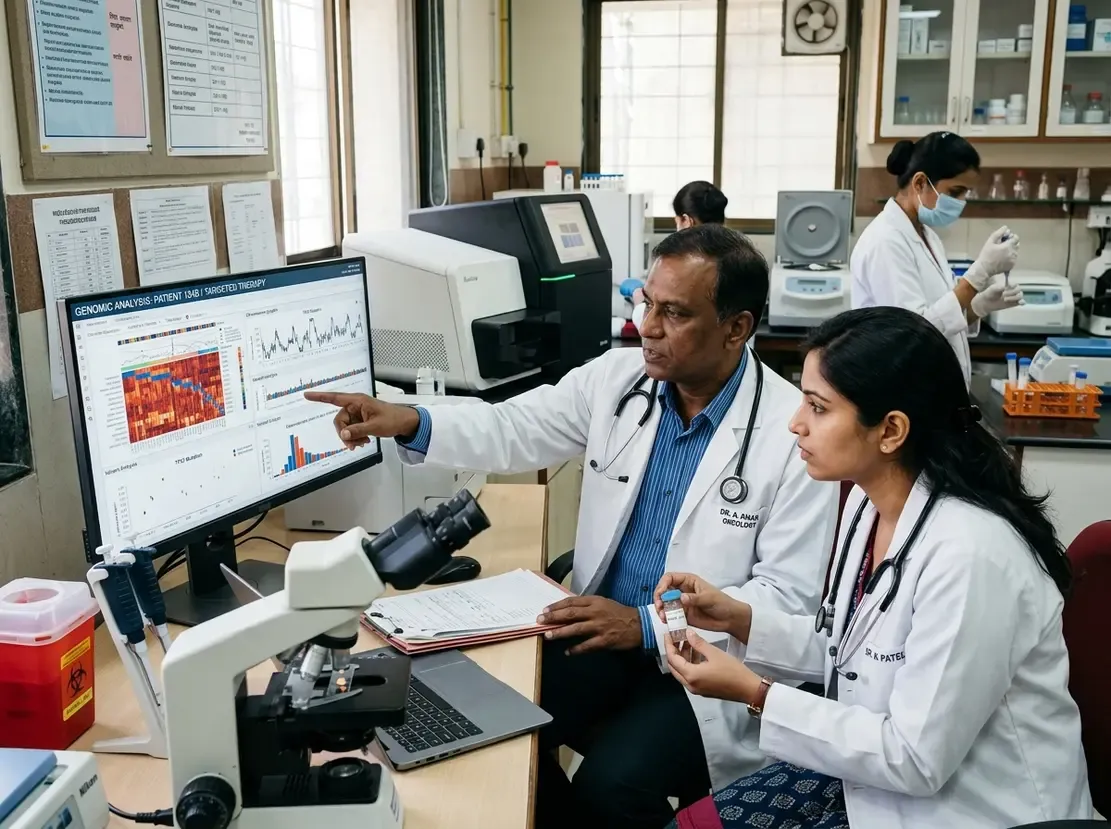
How Brain and Gut Signals Predict Antidepressant Success

Major depressive disorder affects millions of people across India and poses significant therapeutic challenges. However, clinicians often struggle because standard pharmacological interventions take four to six weeks to show efficacy. Predicting an early antidepressant treatment response can prevent prolonged suffering and reduce unnecessary drug trials. Therefore, researchers from IIT Kanpur and GSVM Medical College have developed a breakthrough electrophysiological assessment method.
Early Biomarkers for Antidepressant Treatment Response
Up to thirty percent of depressed individuals do not respond adequately to first-line pharmacotherapy. Consequently, patients endure multiple medication adjustments over several months before finding therapeutic relief. In this new collaborative study, researchers examined non-invasive brain and gastric electrical signals. Specifically, the team recorded these objective signals within the first seven to ten days of starting treatment. Moreover, early changes in neural and gastric rhythms reliably signaled whether an individual would improve.
Electrophysiology of the Brain-Gut Axis
The researchers combined electroencephalography with electrogastrography to evaluate brain-gut interactions simultaneously. Furthermore, they paired these electrophysiological markers with detailed clinical symptom evaluations. The study recruited 206 participants, including 144 treatment-naive patients diagnosed with major depression. As a result, the authors identified distinct biological subtypes that correspond to specific clinical symptom profiles. These distinct subtypes explain why individuals experience varying clinical outcomes from identical medications.
Clinical Utility and Machine Learning Accuracy
The research team trained a predictive model to classify potential non-responders rapidly. During model development, the tool demonstrated 84 percent sensitivity and 78 percent specificity. Additionally, validation on an independent cohort achieved 77.3 percent overall diagnostic accuracy. In that validation cohort, the model maintained 80 percent specificity and 71.4 percent sensitivity. Thus, psychiatrists can identify non-responders within ten days rather than waiting six full weeks.
Implications for Indian Psychiatric Practice
In India, psychiatric clinics face massive patient loads and limited monitoring resources. Consequently, scalable and non-invasive diagnostic tools offer substantial value in everyday clinical practice. Brain and gastric electrophysiology provides an objective, affordable avenue for personalized treatment algorithms. However, larger multicentric validation trials will further establish the generalizability of these findings. Ultimately, this approach promises to revolutionize clinical decision-making and enhance depressive disorder management.
Frequently Asked Questions
Q1: How does electrogastrography help predict antidepressant response?
Electrogastrography measures electrical stomach activity that reflects systemic autonomic regulation along the gut-brain axis. Consequently, changes in gastric slow waves highlight biological subtypes that influence psychiatric medication metabolism and response.
Q2: How quickly can the model identify non-responders?
The predictive algorithm assesses combined brain and gut signals within 7 to 10 days of starting medication. Therefore, clinicians can modify treatment plans weeks earlier than the standard six-week observation window.
Q3: Is the electrophysiological test non-invasive?
Yes, the protocol relies entirely on surface EEG and cutaneous EGG electrodes placed on the scalp and abdomen. Furthermore, the recording procedure causes no pain and presents minimal burden for outpatient clinical practice.
References
- Brain, stomach signals may help predict response to antidepressant treatment:IIT-K study - ETHealthworld
- Francis AJA, Bajpai A, Balasubramani NP, Tiwari HP, Singh S, Chawla K, et al. Subtyping depression using brain–gastric electrophysiology for early prediction of antidepressant response: a multicentric clinical study. Frontiers in Psychiatry. 2026;17:1823806.
- World Health Organization. Depressive disorder (depression). Fact sheet. Published 2023.