
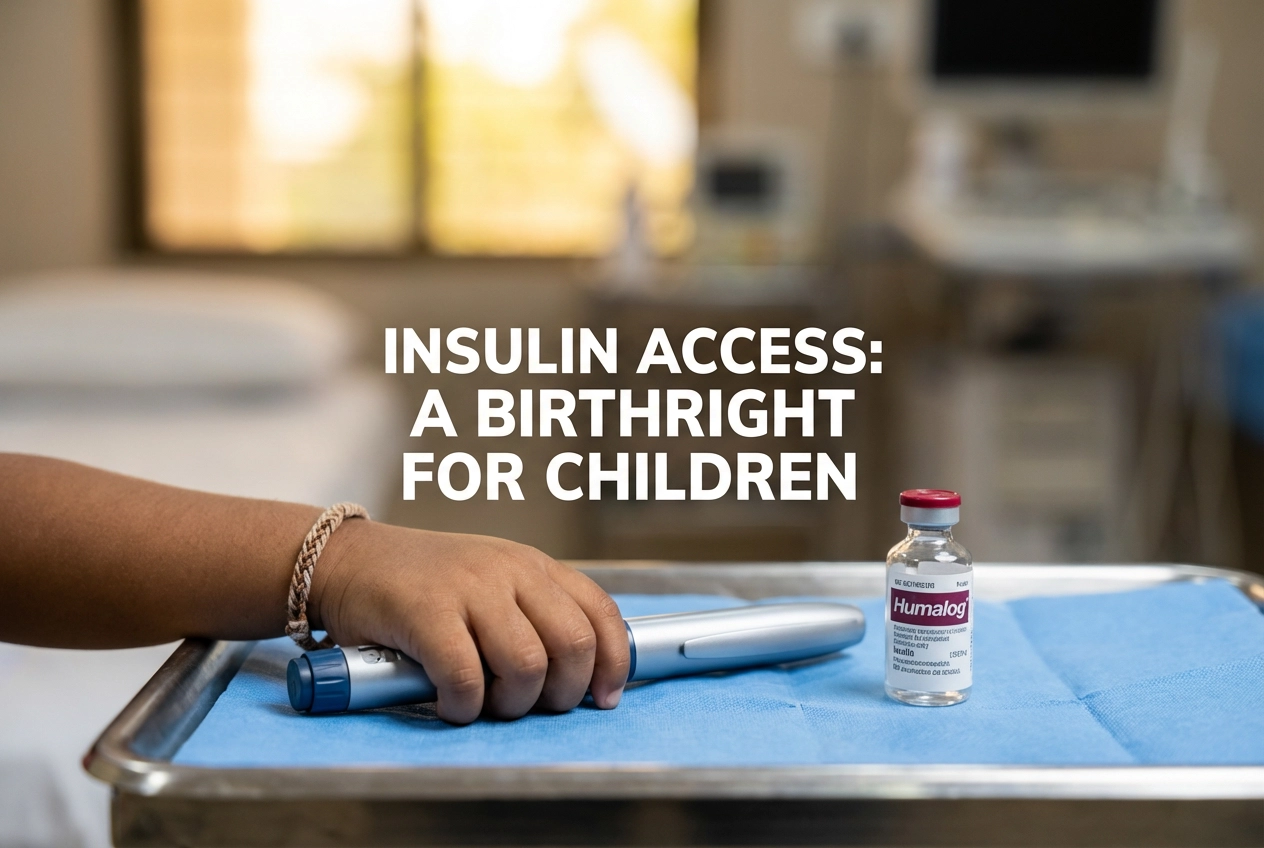
India is at a critical juncture regarding its approach to childhood Type 1 Diabetes (T1D). While the nation improves its healthcare system, T1D in children often remains a neglected chronic condition. T1D is an autoimmune disease that immediately stops the body’s insulin production. Children with this condition need uninterrupted insulin access and regular glucose monitoring for survival. Furthermore, ensuring reliable Childhood T1D care is crucial for the over 430,000 affected children and adolescents in India, a country which has the highest number of children living with T1D globally.
The current system places a heavy, often unsustainable financial burden on families. For instance, the average annual cost for insulin, glucose test strips, and routine diagnostics reaches nearly ₹55,000 per child. Many families, particularly those in the “missing middle,” find themselves excluded from government support and consequently cannot afford this recurring expense. Nearly 40% of children with T1D drop out of consistent care, a consequence resulting from structural deficiencies, not parental neglect. This lack of access leads to predictable and entirely avoidable outcomes, including frequent hospitalizations, long-term complications, diabetic ketoacidosis, and, tragically, loss of life.
Systemic Roadblocks to Effective Childhood T1D Care
There are three major systemic roadblocks that contribute to this challenge. First, public health programs mainly concentrate on adult Type 2 Diabetes, which means the availability of pediatric insulin is inconsistent and support for monitoring supplies is limited. The government’s primary non-communicable disease program has been noted as “adult-centric” with few initiatives addressing juvenile NCDs, a significant barrier to comprehensive Childhood T1D care. Second, glucose test strips, which are fundamental for safe insulin dosing, remain too expensive for many households. Therefore, the lack of targeted subsidies for these monitoring tools substantially reduces the effectiveness of insulin therapy itself. Third, most health insurance policies only begin coverage after complications develop, a condition that ultimately inflates long-term costs for both families and the entire healthcare system.
The situation highlights failures in enabling equitable access, not failures of medical science. Therefore, India must adopt a structured and well-planned approach to address these gaps. A Basic Minimum Support System must be established for every child with T1D. This necessary framework must be constructed upon four critical pillars.
Universal Access to Paediatric Insulin
Insulin, syringes, and safe-disposal materials must be made widely available across all public health facilities. Integrating these essentials into dedicated distribution points and the essential medicine supply chains can significantly ensure consistency and reduce inequity.
Affordable and Accessible Glucose Monitoring
Effective T1D treatment is impossible without daily monitoring. Thus, subsidizing glucose test strips and gradually enabling access to continuous glucose monitoring (CGM) devices will greatly reduce emergency episodes and enhance overall health outcomes.
Psychosocial, School-based, and Community Support
Children spend the majority of their time in schools. Consequently, it is paramount to train school staff, outline clear emergency protocols, and strengthen psychosocial support. Dedicated counseling and peer groups will further enhance adherence and help reduce social stigma and the considerable emotional stress faced by these children.
Enhanced Clinical Capacity and Emergency Readiness
India needs more pediatric endocrinologists and standardized T1D treatment pathways. Furthermore, a national “red alert” protocol is essential for the timely detection and effective management of diabetic ketoacidosis.
Executing this structured support system is estimated to cost about ₹1,000 crore annually. This represents a modest investment when compared against the substantial long-term human, economic, and social costs of poorly managed T1D. Ultimately, India has a unique opportunity to build a globally relevant, rights-based model for childhood diabetes care, making reliable access to insulin and monitoring tools a national priority. Professionals seeking to advance their expertise in managing chronic metabolic conditions can benefit from an International Post Graduate Program In Diabetes Mellitus Management.
Frequently Asked Questions
Q1: What is the primary difference between Type 1 and Type 2 Diabetes?
Type 1 Diabetes (T1D) is an autoimmune condition that abruptly halts the body’s insulin production, requiring lifelong insulin therapy. Unlike this, Type 2 Diabetes typically involves insulin resistance and is more commonly associated with lifestyle factors in adults.
Q2: What is the approximate annual cost burden for a child with T1D in India?
The average annual cost for essentials like insulin, glucose test strips, and routine diagnostics is estimated to be nearly ₹55,000 per child, which is often unaffordable for the “missing middle,” leading to high dropout rates from consistent care.
Q3: What critical outcomes result from the structural deficiencies in T1D care?
The care gaps lead to predictable, avoidable outcomes, including frequent hospitalizations, long-term complications, diabetic ketoacidosis, and, tragically, loss of life, highlighting a failure in equitable access.
References
- Bridging the care gap and making insulin access a birth right for every child – ETHealthworld
- India’s childhood diabetes crisis: The struggles and treatment – India Today
- Type 1 diabetes in India: Overall insights – PMC – NIH
- Incidence trends for childhood type 1 diabetes in India – PMC – PubMed Central
- Type 1 diabetes rising among kids: National study – Times of India
- Model of care for Type 1 diabetes in India: Integrated approach for its incorporation in future national health care policy – PMC – PubMed Central
Disclaimer: This article was automatically generated from publicly available sources and is provided for informational and educational purposes only. OC Academy does not exercise editorial control or claim authorship over this content. It is not a substitute for professional medical advice, diagnosis, or treatment. Always consult a qualified healthcare provider and refer to current local and national clinical guidelines.