How Doctors Actually Use AI at the Point of Care Today
Adoption Surge of the Clinical AI Platform
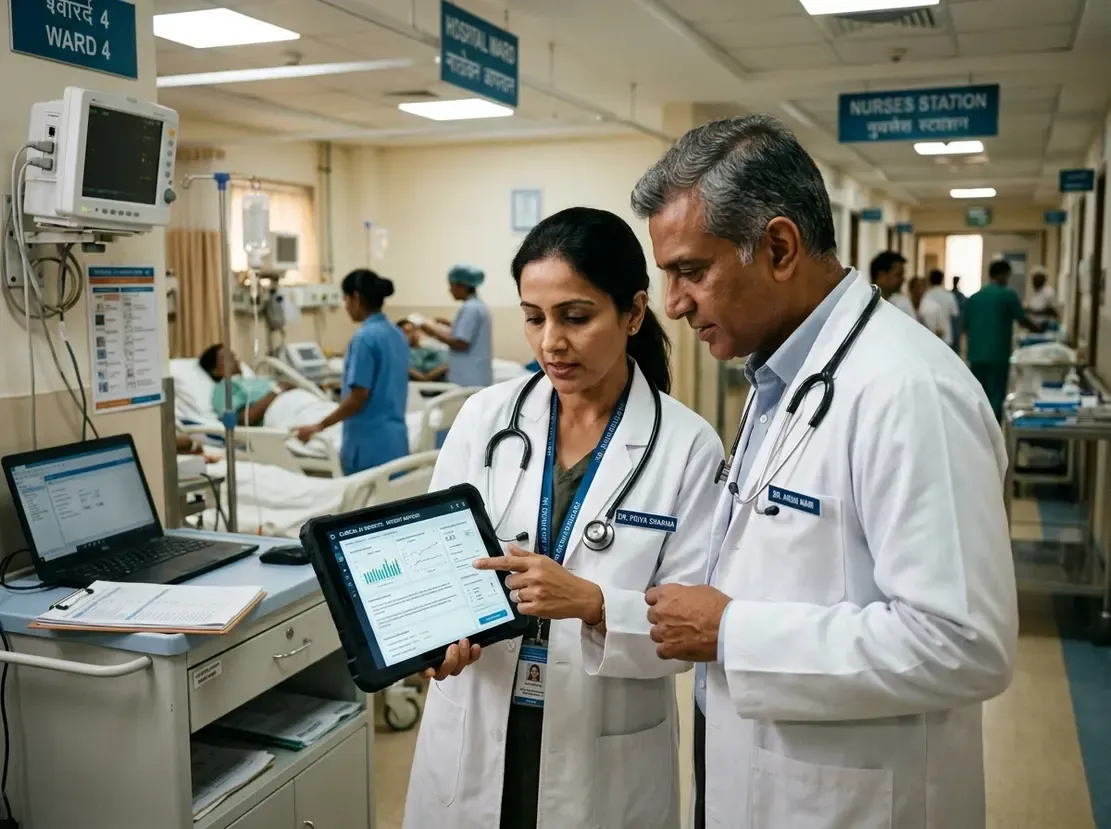
Modern healthcare providers increasingly rely on a clinical AI platform to navigate complex clinical literature at the bedside. In a landmark JAMA investigation, researchers tracked nearly one million licensed clinicians using OpenEvidence over two and a half years. The study monitored over 271 million queries submitted between January 2024 and June 2026. Consequently, this investigation offers an unprecedented real-world view into how healthcare professionals integrate artificial intelligence into daily practice. Furthermore, monthly active users escalated dramatically from just 355 to over 703,000 clinicians during this window.
User engagement intensified alongside overall platform growth. Specifically, active clinicians increased their average monthly query volume from 18.0 to 39.5 queries. In addition, nurse practitioners and physician assistants averaged 44.5 monthly queries each, outpacing physicians who averaged 37.1 queries. Thus, frontline providers rely heavily on automated synthesis to address everyday clinical dilemmas.
Workforce Patterns and Career Stage Differences
Adoption rates varied substantially across distinct professional roles and medical training stages. For example, early-career physicians within a decade of graduation demonstrated an exceptional use ratio of 2.54. Similarly, resident physicians and clinical fellows adopted the technology at high rates, recording a use ratio of 1.84. Senior clinicians also utilized the system, but younger physicians integrated digital assistants far more rapidly.
Medical specialties also displayed marked differences in platform engagement. In particular, oncologists, hematologists, internists, and family medicine physicians queried the tool most heavily. Conversely, clinicians in procedural or diagnostic specialties utilized the system much less frequently. For instance, ophthalmologists, radiologists, and orthopedic surgeons recorded use ratios between 0.23 and 0.24. Therefore, non-procedural cognitive specialties drive the highest demand for rapid evidence retrieval.
Primary Clinical Intent: Treatment Over Diagnosis
Contrary to popular expectations, clinicians rarely queried the system to establish novel medical diagnoses. Instead, more than half of all queries focused squarely on clinical decision-making. Treatment and patient management questions accounted for 33.1% of all activity. Meanwhile, diagnostic inquiries represented only 13.9% of user prompts. Clinicians clearly view generative tools as therapeutic advisors rather than primary diagnostic engines.
Furthermore, clinicians frequently consulted the system for guidance outside their primary areas of expertise. For example, emergency physicians queried outside topics in 88% of instances. Similarly, oncologists consulted non-oncology topics in 35% of their inquiries. Consequently, point-of-care intelligence helps clinicians manage secondary comorbidities and unfamiliar organ systems safely.
Relevance for Frontline Practitioners
These findings carry immense relevance for physicians managing heavy outpatient loads and complex multisystem pathology. Point-of-care digital tools synthesize evidence-based guidelines in seconds, saving valuable time during busy clinical shifts. Nevertheless, clinicians must maintain rigorous oversight and cross-check high-stakes recommendations against standard protocols. As digital assistants mature, structured validation will ensure patient safety remains paramount.
Frequently Asked Questions
Q1: Why do clinicians use an AI clinical information platform more for treatment than diagnosis?
Clinicians usually confirm diagnoses through clinical exams, but they require rapid guidance on evolving pharmacotherapies and drug interactions.
Q2: Which medical specialists use clinical AI platforms most frequently?
Oncologists, hematologists, internists, and family medicine physicians report the highest usage rates, whereas procedural specialists use them far less.
Q3: How often do doctors query topics outside their specialty?
Out-of-specialty inquiries range from 35% among oncologists to 88% among emergency medicine physicians who frequently manage multisystem presentations.
References
- Patel VR et al. Clinician Use of an Artificial Intelligence-Enabled Clinical Information Platform. JAMA. 2026 Oct 15. doi: 10.1001/jama.2026.21868. PMID: 42879271.
- Miller J. First Large-Scale Study Shows How Doctors Use AI in Medicine. Harvard Medical School News. 2026 Oct 15.
- Patel MR, Balu S, Pencina MJ. Translating AI for the Clinician. JAMA. 2024;332(20):1701-1702.