Delhi Vector-Borne Disease Surge: Key Clinical Updates
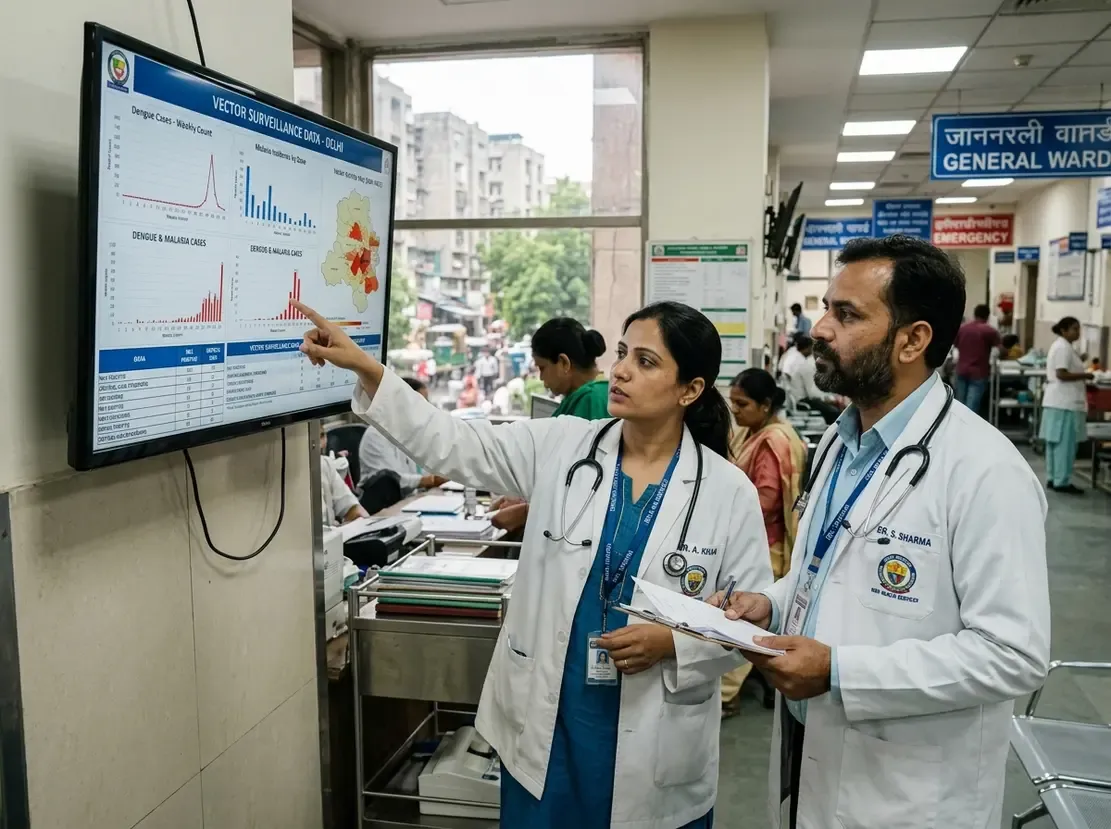
Recent municipal surveillance indicates a marked seasonal rise in dengue cases in Delhi. As the post-monsoon transmission window expands, primary care physicians and emergency room teams face higher patient inflows. Therefore, clinicians must maintain high diagnostic suspicion for vector-borne infections during routine outpatient evaluations.
Current Trends in Dengue Cases in Delhi
According to the Municipal Corporation of Delhi, the national capital recorded 799 dengue cases and 294 malaria cases so far this year. Furthermore, the civic agency documented 202 dengue and 51 malaria infections within the first ten days of October alone. Weekly trends showed a rise from 98 cases to 104 dengue cases between early October weeks. In addition, health authorities confirmed 32 cases of chikungunya across the city this year. Fortunately, the civic administration confirmed zero disease-related mortalities during this monitoring period. Meanwhile, civic teams inspected over 29 lakh domestic premises to eliminate potential breeding sites. Consequently, field officers identified active mosquito breeding across nearly 1.98 lakh households.
Clinical Distinction and Early Triage Strategies
Seasonal vector overlap complicates early clinical distinction between dengue, malaria, and chikungunya. Consequently, physicians must obtain a detailed travel history and chronologic symptom profile. Dengue fever typically presents with high temperature, retro-orbital headache, and severe myalgia. In contrast, malaria classically produces cyclical chills, paroxysmal fevers, and profound drenching diaphoresis. Chikungunya infection predominantly triggers symmetrical peripheral polyarthralgia and debilitating joint stiffness. Therefore, clinicians should order simultaneous rapid diagnostic tests and peripheral blood smears promptly. However, doctors must avoid non-steroidal anti-inflammatory drugs like ibuprofen due to hemorrhage risks.
Recognizing Critical Warning Signs and Monitoring
Most patients experience self-limiting viral illness under supportive home care. However, clinicians must watch for plasma leakage warning signs between day three and day seven. Persistent vomiting, abdominal pain, mucosal bleeding, and sudden lethargy require emergency evaluation. Furthermore, an abrupt rise in hematocrit paired with plummeting platelets indicates dangerous hemoconcentration. Clinicians must initiate judicious isotonic crystalloid resuscitation in such decompensating individuals. Moreover, healthcare teams should reserve platelet concentrates exclusively for severe active hemorrhagic emergencies. Consequently, routine prophylactic platelet transfusions remain counterproductive and clinically unnecessary.
Frequently Asked Questions
Q1: What are the primary warning signs of severe dengue that require urgent hospitalization?
Patients who present with persistent vomiting, intense abdominal pain, mucosal bleeding, lethargy, or fluid accumulation require immediate hospital admission. These clinical indicators typically emerge during the critical defervescence phase and signal plasma leakage.
Q2: Why should clinicians avoid NSAIDs when managing undifferentiated febrile illness during peak season?
Non-steroidal anti-inflammatory drugs compromise platelet aggregation and exacerbate gastrointestinal mucosal ulceration. Therefore, clinicians should prescribe paracetamol for antipyresis while awaiting laboratory confirmation.
Q3: How do municipal inspections mitigate the risk of vector-borne disease outbreaks?
Civic field inspections locate domestic stagnant water reservoirs and interrupt the vector lifecycle through source reduction. Consequently, eliminating domestic breeding reservoirs prevents rapid secondary disease transmission across dense communities.
References
- Delhi records 799 dengue, 294 malaria cases so far this year - ETHealthworld
- National Center for Vector Borne Diseases Control (NCVBDC), Directorate General of Health Services, Ministry of Health and Family Welfare, Government of India. National Guidelines for Clinical Management of Dengue Fever.
- World Health Organization. Guidelines for Malaria Vector Control and Case Management.