
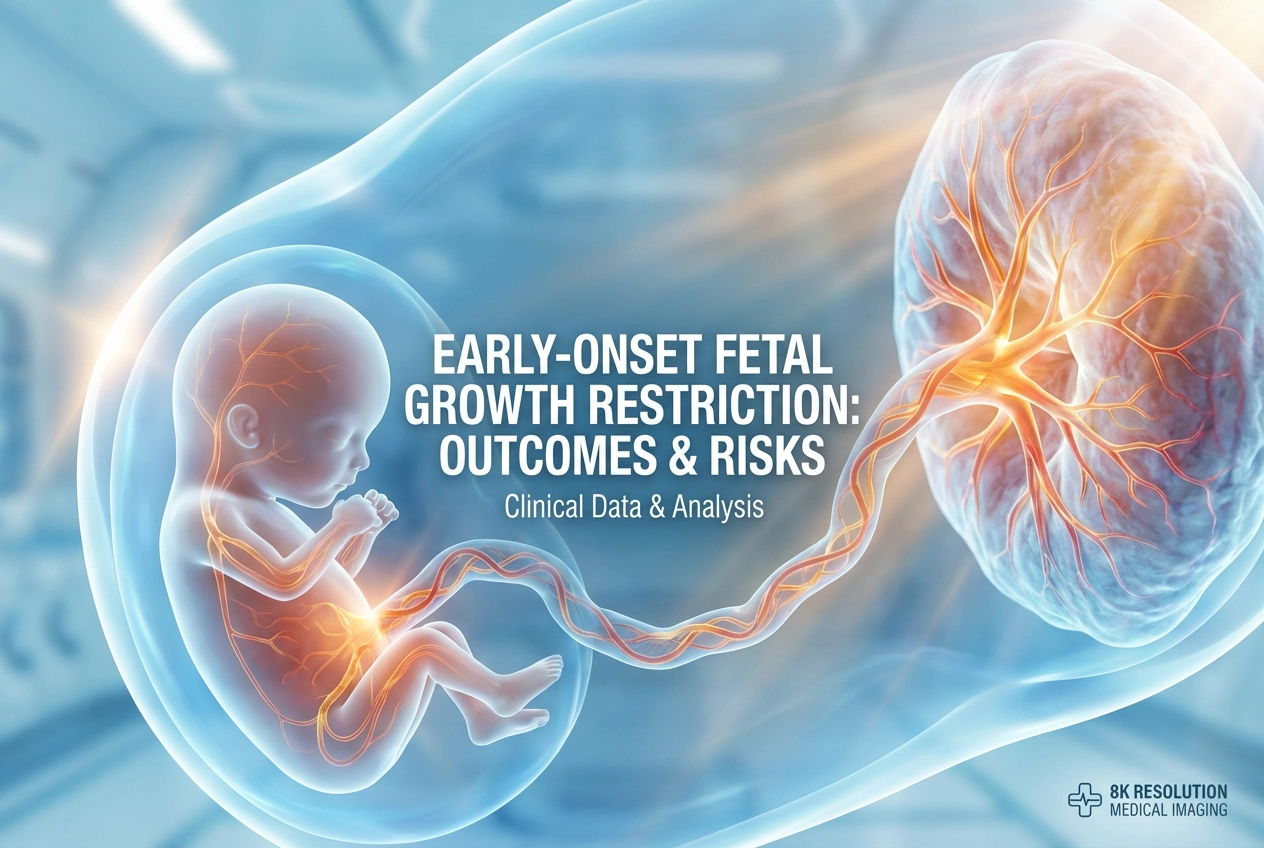
Early-onset fetal growth restriction presents significant challenges for clinicians managing high-risk pregnancies in India. Traditionally, doctors relied heavily on fetal Doppler to assess risks. However, recent research highlights the role of angiogenic factors like sFlt-1 and PlGF. These biomarkers help identify fetuses at risk for adverse perinatal outcomes. Interestingly, this predictive value remains strong even in cases without pre-eclampsia.
Improving Early-Onset Fetal Growth Restriction Outcomes
Furthermore, the study analyzed how sFlt-1/PlGF ratios compare to Doppler findings. Both tools offer distinct advantages. For instance, Doppler measures blood flow changes. Conversely, angiogenic factors reflect placental health. Therefore, combining these methods provides a more comprehensive risk profile. This approach is particularly useful for predicting outcomes before 34 weeks of gestation. Additionally, it helps doctors determine the best time for delivery.
Clinical Implications for High-Risk Pregnancies
Moreover, the research suggests that angiogenic factors are not just markers for pre-eclampsia. They also indicate placental insufficiency directly. Consequently, clinicians can better stratify patients. Early identification allows for timely intervention. This ultimately improves neonatal health. Patients with low PlGF or high sFlt-1/PlGF ratios require closer monitoring. Finally, using these markers alongside Doppler significantly enhances diagnostic accuracy.
Frequently Asked Questions
Q1: Can angiogenic factors predict outcomes without pre-eclampsia?
Yes, biomarkers like the sFlt-1/PlGF ratio help predict adverse outcomes in small fetuses regardless of whether the mother has pre-eclampsia.
Q2: How does fetal Doppler compare to angiogenic factors?
Both tools provide essential predictive value. However, angiogenic factors specifically reflect placental dysfunction, offering a complementary assessment to Doppler measurements.
Q3: Why is early detection important in growth restriction?
Early detection allows for improved surveillance and timely delivery. Consequently, this reduces the risk of serious complications for both the mother and the newborn.
References
- Bonacina E et al. Angiogenic factors and fetal Doppler for predicting adverse pregnancy outcome in early-onset small fetuses with and without pre-eclampsia. Ultrasound Obstet Gynecol. 2026 Feb 22. doi: 10.1002/uog.70188. PMID: 41723869.
- Agrawal S, et al. Prevalence of hypertension and pre-eclampsia in India. Journal of Mid-life Health. 2014;5(4):172-178.
- Herraiz I, et al. Angiogenic factors in the management of fetal growth restriction. Fetal Diagn Ther. 2018;44(1):1-10.