
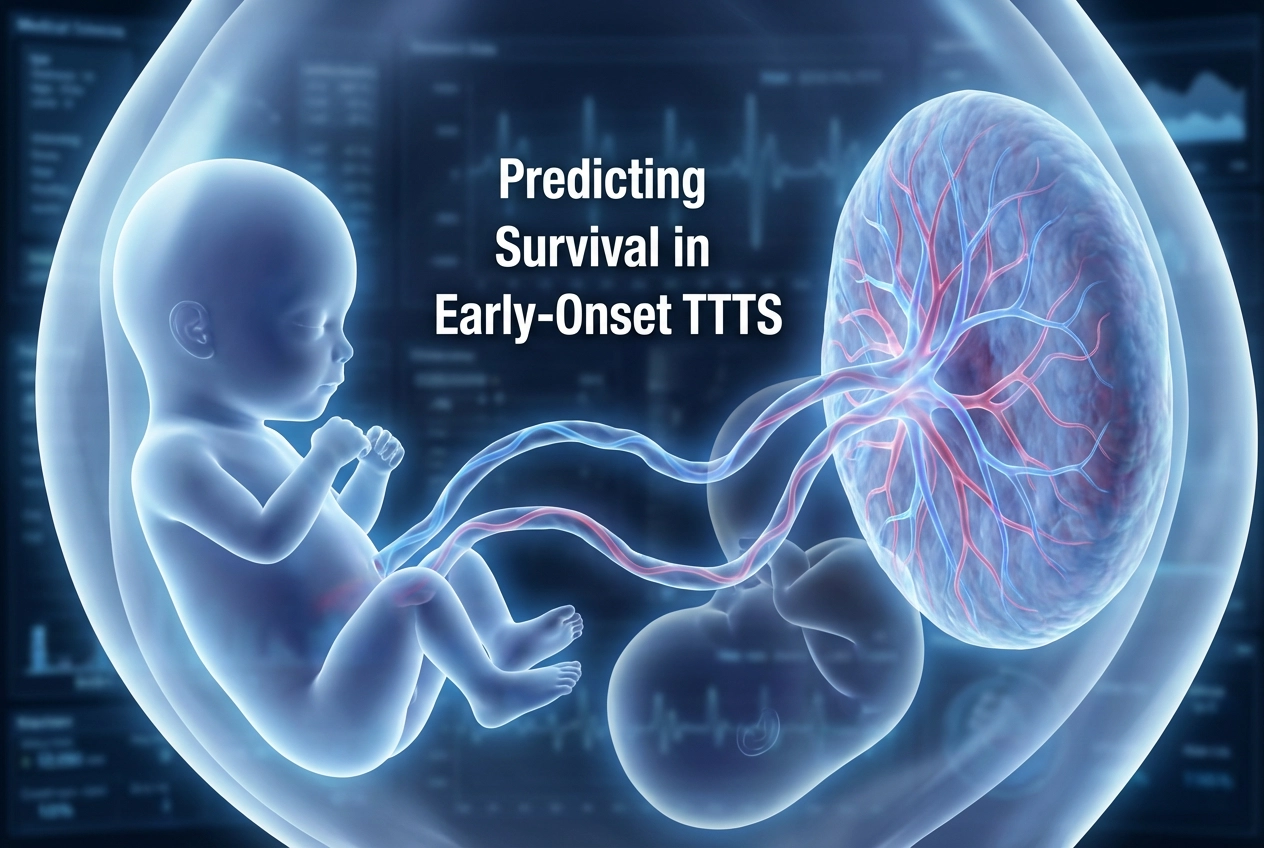
Early-onset twin-to-twin transfusion syndrome (TTTS) represents a major challenge for fetal medicine specialists. Consequently, understanding early-onset TTTS survival rates is critical for effective parental counselling. A recent international multicenter study examined the survival outcomes of pregnancies diagnosed before 18 weeks. The research specifically focused on outcomes after fetoscopic laser surgery (FLS). Specifically, researchers evaluated how preoperative Doppler findings influence neonatal survival.
Factors Influencing Early-onset TTTS Survival
The study identified key clinical indicators that predict the likelihood of survival. For instance, researchers noted that abnormal flow in the donor twin’s blood vessels significantly affects outcomes. Specifically, absent or reversed end-diastolic flow (AREDF) in the donor umbilical artery lowers the chances of dual-twin survival. Furthermore, an absent or reversed a-wave in the donor ductus venosus acts as an independent adverse predictor. Therefore, specialists must monitor these Doppler parameters closely during the initial assessment. These findings allow for more personalized risk assessment in complex monochorionic pregnancies.
Gestational Age and Survival Outcomes
The analysis included 485 cases of early-onset TTTS treated with fetoscopic laser surgery. Results showed that the dual-twin survival rate reached 51.5% at 28 days post-birth. Moreover, at least one twin survived in over 76% of these pregnancies. However, approximately 23% of cases resulted in the loss of both twins. Interestingly, survival odds improved significantly with higher gestational age at birth. Therefore, prolonging the pregnancy after surgery remains a primary goal for clinicians. Each additional week of gestation provides a substantial benefit to neonatal survival odds.
Clinical Implications for Fetal Medicine
Fetal therapy centers in India are increasingly adopting advanced surgical techniques for TTTS. Surgeons should consider these predictive markers when managing early-onset cases. Additionally, future research should explore how different surgical methods impact long-term survival. Counseling families about the risks of early-onset disease requires precise, evidence-based data. This study provides a valuable framework for predicting neonatal outcomes after laser therapy. Ultimately, improved preoperative screening and surgical precision will enhance the prognosis for these high-risk twins.
Frequently Asked Questions
Q1: What are the main predictors of dual-twin survival in early TTTS?
The primary predictors include Doppler findings in the donor twin, such as absent or reversed flow in the umbilical artery and ductus venosus. These markers indicate cardiovascular stress and correlate with lower survival rates.
Q2: How does gestational age affect the survival of twins after surgery?
A higher gestational age at birth significantly increases the odds of survival. Specifically, every additional week in the womb improves the chances for both dual-twin survival and the survival of at least one twin.
References
- Prasad S et al. Prediction of survival after fetoscopic laser surgery for early-onset twin-to-twin transfusion syndrome. Ultrasound Obstet Gynecol. 2026 Feb 15. doi: 10.1002/uog.70178. PMID: 41691618.
- D’Antonio D et al. Survival rates in pregnancies complicated by twin-to-twin transfusion syndrome undergoing laser therapy: a systematic review and meta-analysis. Am J Obstet Gynecol MFM. 2024 Oct.
- Mustafa HJ et al. Perinatal outcomes following fetoscopic laser surgery for early twin‐to‐twin transfusion syndrome: Systematic review and meta‐analysis. Ultrasound Obstet Gynecol. 2024.