
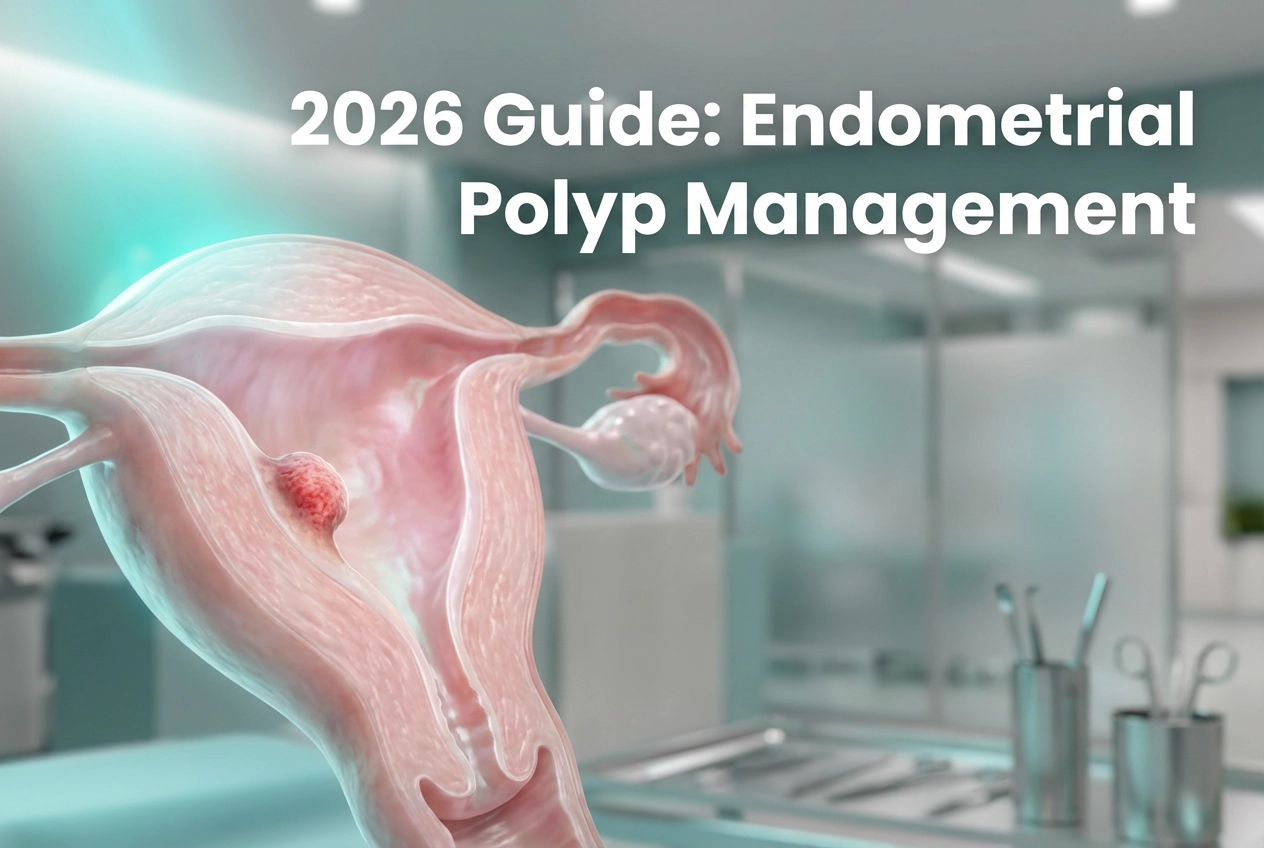
Endometrial polyps management involves clinical vigilance and precision diagnostic imaging. These intrauterine lesions represent a focal overgrowth of glands and stroma. Furthermore, the prevalence of these polyps typically increases with age and obesity. Although some women remain asymptomatic, many experience abnormal uterine bleeding. Consequently, doctors must prioritize thorough evaluations to identify underlying pathology.
Advanced Diagnostics for Endometrial Polyps Management
Clinicians usually begin the diagnostic process with transvaginal ultrasonography (TVUS). However, sonohysterography provides a more specific confirmation for most endometrial lesions. This office-based technique allows gynaecologists to visualise the uterine cavity clearly. Moreover, color Doppler imaging helps practitioners differentiate between benign and malignant histology. Therefore, combining these modalities ensures a highly sensitive diagnostic workflow. Additionally, histopathologic evaluation remains the only way to rule out cancer definitively.
Surgical and Medical Treatment Strategies
Small, asymptomatic polyps may only require expectant management. Nevertheless, surgeons often recommend hysteroscopic polypectomy for symptomatic cases. Performing this procedure in an office environment significantly reduces healthcare costs. Furthermore, avoiding systemic anesthesia enhances patient safety and recovery speed. Medical treatments, such as levonorgestrel-releasing devices, may reduce the risk of recurrence. However, surgical removal remains the gold standard for most patients.
Frequently Asked Questions
Q1: Are all endometrial polyps cancerous?
Most endometrial polyps are benign, especially in premenopausal women. However, the risk of malignancy increases with age and postmenopausal status. Consequently, doctors recommend histopathologic testing for any removed polyp.
Q2: Can polyps cause infertility?
Polyps may interfere with embryo implantation or sperm transport. Therefore, removing these lesions often improves pregnancy rates in women undergoing fertility treatments. Furthermore, hysteroscopy provides a safe way to restore the uterine cavity.
References
- Han MN et al. Endometrial Polyps. Obstet Gynecol. 2026 Mar 12. doi: 10.1097/AOG.0000000000006232. PMID: 41818771.
- Bougie O et al. Guideline No. 447: Diagnosis and Management of Endometrial Polyps. J Obstet Gynaecol Can. 2024;46(3):102402.
- Stevenson H. Endometrial polyps. CMAJ. 2024;196(8):E269.