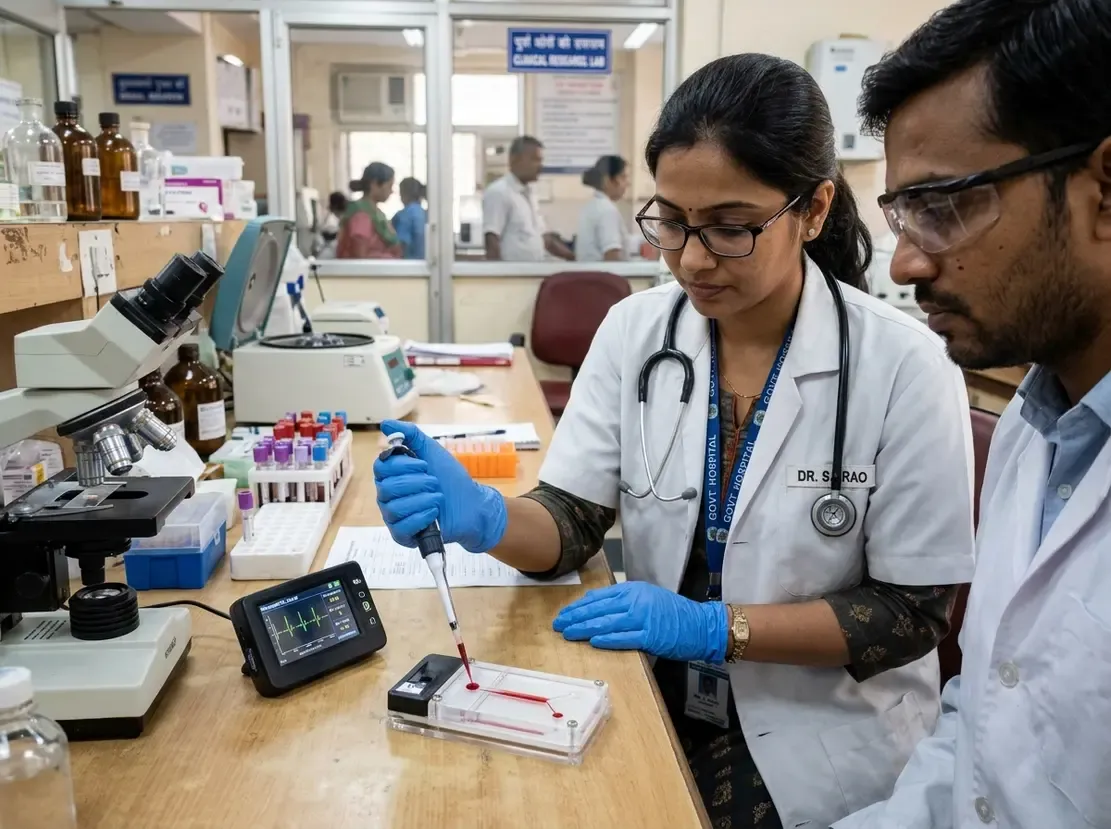
First Indian Genome Study Reveals Endometriosis Risk

A landmark study has uncovered critical insights into endometriosis genetic risk among Indian women. Researchers from the Indian Council of Medical Research conducted this nationwide genome-wide investigation. Consequently, the findings offer new hope for addressing diagnostic delays in reproductive healthcare. Endometriosis affects nearly five crore women across India. However, clinicians frequently struggle to identify the condition early because societal stigma normalises menstrual pain.
Mapping Endometriosis Genetic Risk Across Indian Cohorts
The investigation analysed genomic data from 2,523 women across 18 clinical centres nationwide. Specifically, researchers identified 21 suggestive genetic loci linked to the disorder. The most prominent signal emerged near the LINC00415 and SHISA2 region on chromosome 13. Furthermore, the analysis confirmed shared susceptibility signals at well-established loci such as WNT4 and CDKN2B-AS1. Therefore, Indian women share broad biological pathways with global cohorts while harbouring distinct population-specific signals.
Clinical Implications for Early Diagnosis and Care
Currently, affected individuals endure years of debilitating symptoms before receiving a definitive diagnosis. Patients experience chronic pelvic pain, severe dysmenorrhoea, fatigue, and infertility. In addition, the study revealed a median participant age of 29.2 years. This finding underscores an exceptionally heavy burden among adolescents and young reproductive-age women. Scientists also tested European-derived polygenic risk scores within the Indian cohort. Interestingly, these scores proved relevant, supporting future non-invasive screening models. While these genomic tools are not yet ready for routine bedside testing, they establish vital biological benchmarks. Consequently, future clinical algorithms may combine polygenic scores with clinical markers to facilitate early fertility preservation.
Aligning with Global Guidelines and Future Directions
Historically, global genomic databases largely excluded South Asian populations. Therefore, this multi-centre study fills an urgent scientific void. The data arrive as the World Health Organization prepares updated management guidelines for endometriosis. Dr. Rahul Gajbhiye and colleagues emphasise that recognising genetic risk helps dismantle stigma. Moreover, targeted research will refine precision medicine strategies for diverse demographic groups. Clinicians should maintain a high index of suspicion when evaluating persistent pelvic pain. Ultimately, early recognition can protect ovarian reserve and enhance long-term patient wellbeing.
Frequently Asked Questions
Q1: What did the nationwide genetic study discover about endometriosis in Indian women?
The study identified 21 suggestive genetic regions associated with endometriosis, including a prominent signal near chromosome 13. Additionally, it confirmed shared susceptibility loci like WNT4 and CDKN2B-AS1.
Q2: Can doctors use these genetic findings for routine clinical testing right now?
No, the authors state that the results are not meant for immediate diagnostic testing. However, they establish an essential baseline to develop future polygenic screening tools and risk prediction algorithms.
Q3: Why is this genomic research particularly significant for Indian healthcare?
South Asian women have remained underrepresented in international genomic research despite experiencing a high disease burden. Therefore, this dataset bridges critical evidence gaps and supports targeted clinical strategies.
References
- First Indian genome-wide study sheds light on genetic risk of endometriosis - ETHealthworld
- Anand S, Sachdeva G, Montgomery GW, Mishra GD, Mortlock S, Gajbhiye R. Genome-wide association analysis of endometriosis in Indian women supports shared genetic susceptibility and suggestive population specific signals. Scientific Reports, Springer Nature.
- Gajbhiye R, Anand S, et al. Protocol for a case–control study investigating the clinical phenotypes and genetic regulation of endometriosis in Indian women: the ECGRI study. BMJ Open.