How UP Arogya Mandirs Connect Rural Patients to Experts

Strengthening Rural Care Through Digital Hubs
Primary healthcare delivery across Uttar Pradesh is undergoing a substantial upgrade. The state government is integrating Arogya Mandir telemedicine workflows with a coordinated hub-and-spoke network to bridge persistent rural-urban specialist gaps. Consequently, rural residents can now consult senior medical consultants without travelling extensive distances to district headquarters or tertiary teaching centres.
Under this structured framework, tertiary medical colleges and large district hospitals serve as central hubs. Meanwhile, primary health facilities and peripheral health posts at the village level function as spokes. Therefore, peripheral healthcare professionals can seamlessly escalate complicated presentations through rapid digital channels, making foundational training essential for general practice in remote settings.
The Hub-and-Spoke Teleconsultation Process
Patients initially present to their local primary care facility with acute or chronic symptoms. During the encounter, the community health officer records comprehensive vital signs and logs clinical findings directly onto the national e-Sanjeevani portal. Furthermore, the officer uploads point-of-care screening results to establish an objective baseline before specialist triage.
Specialist physicians stationed at the central hub hospital then initiate real-time video consultations. For instance, Colvin Hospital in Prayagraj actively functions as a designated hub for surrounding primary spokes. Ultimately, the attending specialist reviews the findings, discusses therapeutic targets with the patient, and issues an authenticated digital prescription.
Advanced Point-of-Care Diagnostics
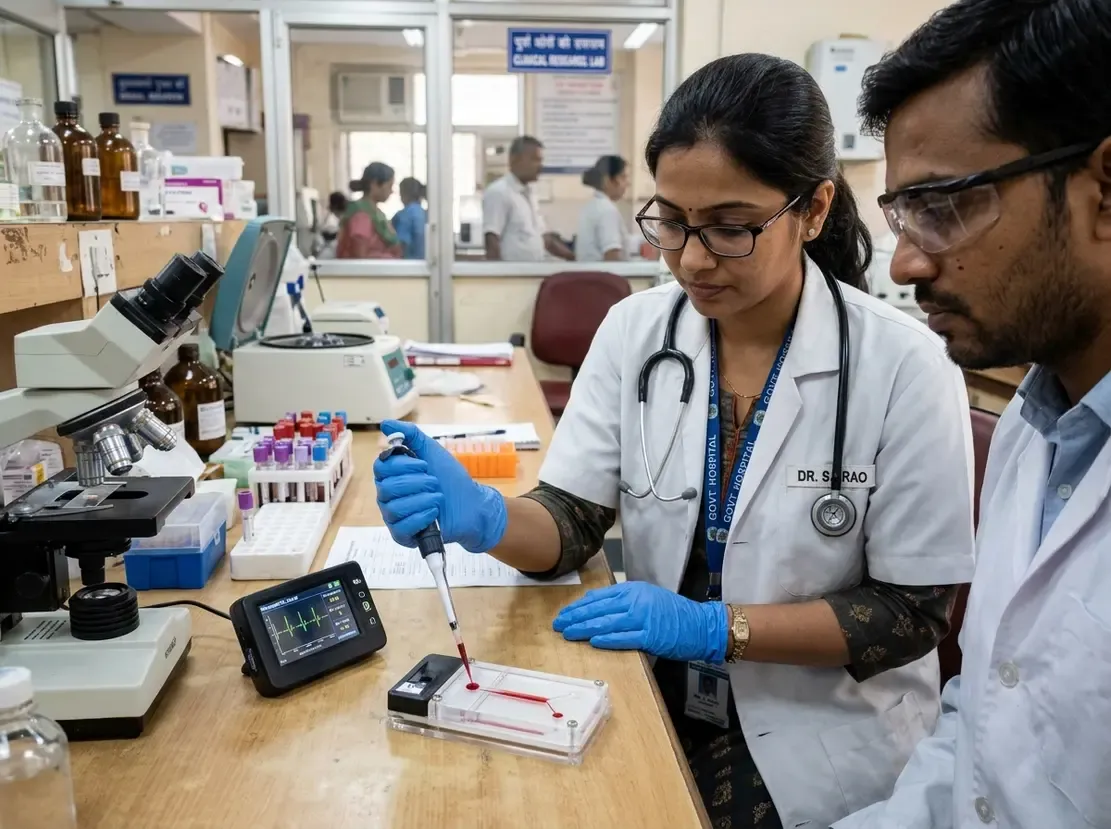
Diagnostic turnaround time frequently creates bottlenecks during rural clinical decision-making. To solve this delay, the health department is equipping peripheral clinics with smart testing analysers. Specifically, dry-biochemistry analysers allow health workers to measure haemoglobin, blood glucose, renal markers, and liver panels within five to ten minutes.
In addition, community health teams now utilize specialized portable kits to screen for severe anaemia and high-risk pregnancies, a critical component taught in comprehensive family medicine programs. As a result, clinicians identify obstetric complications and systemic metabolic conditions much earlier in peripheral pathways.
Integrating Mental Health Support via Tele-MANAS
The health department has simultaneously embedded rural psychological care into the primary health infrastructure. Peripheral health centres are directly linked to the 24/7 Tele-MANAS helpline network. Consequently, individuals experiencing depression, insomnia, chronic stress, or severe anxiety receive free, confidential psychological counselling right in their home communities.
In Prayagraj district alone, 494 health facilities support this coordinated mental health outreach. Dedicated toll-free access lines, including 14416, provide prompt triage. Thus, this integrated approach expands psychiatric accessibility while normalizing rural mental healthcare.
Frequently Asked Questions
Q1: How does the hub-and-spoke model operate in this primary care program?
District hospitals or medical colleges act as expert hubs, while village-level health centres serve as spokes. Community health officers upload patient data via the e-Sanjeevani portal to connect patients directly with hub specialists.
Q2: What rapid point-of-care diagnostic tests are available at these peripheral centres?
Centres use dry-biochemistry analysers that assess haemoglobin, blood sugar, kidney markers, and liver function within ten minutes. Furthermore, specialized portable screening kits help detect high-risk pregnancies early.
Q3: How do rural patients access confidential mental health support?
Local facilities connect patients directly to the national Tele-MANAS helpline via toll-free numbers, ensuring confidential tele-counselling for stress, depression, and other psychological conditions.
References
- Arogya Mandirs in UP to offer specialist consultations through telemedicine - ETHealthworld
- eSanjeevani: India's National Telemedicine Initiative - Ministry of Health and Family Welfare
- National Tele Mental Health Programme (Tele-MANAS) Operational Guidelines - Ministry of Health and Family Welfare