
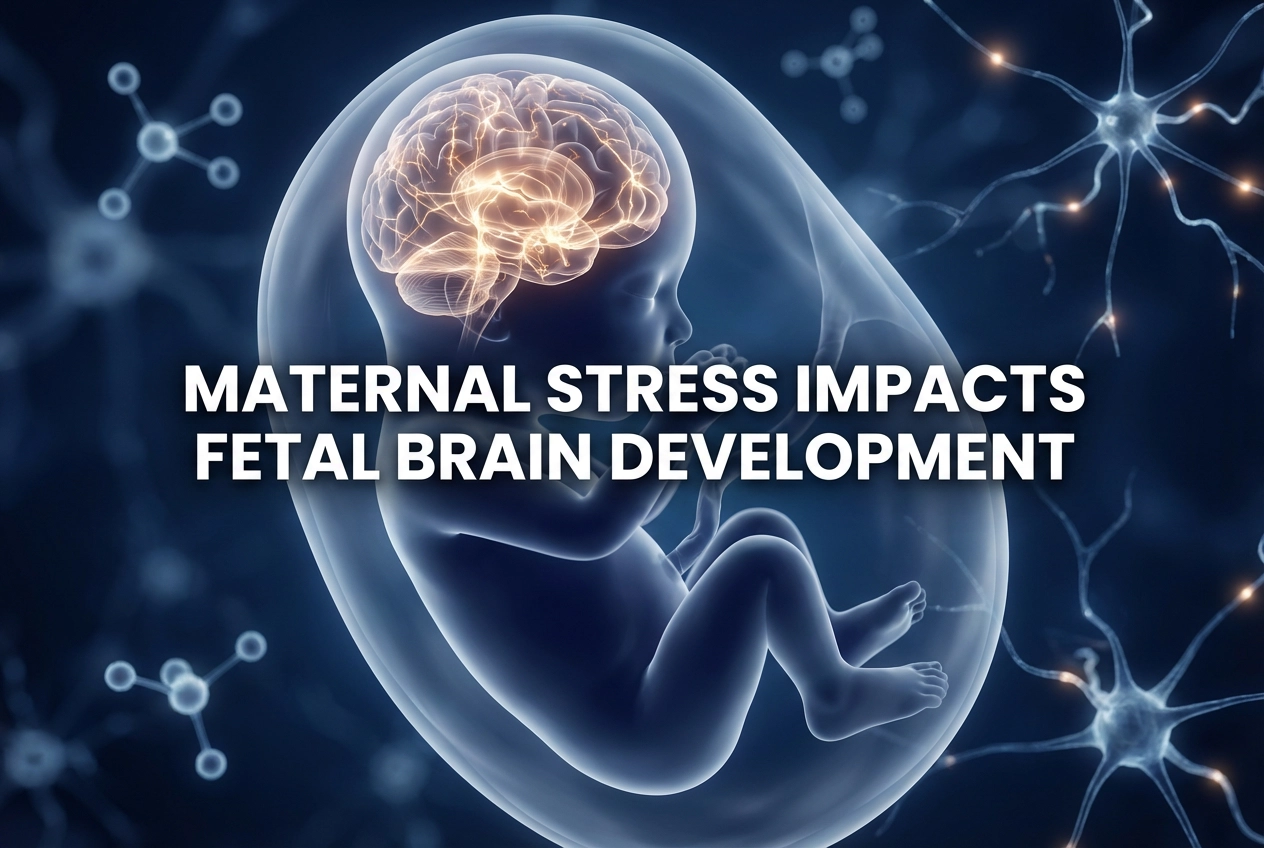
Maternal stress during pregnancy, which includes changes to the gut microbiome or activation of the immune system, can significantly impact the developing brain of a fetus. This connection potentially paves the way for neurodevelopmental abnormalities. A new genetic study conducted in mice has successfully mapped this crucial pathway, deepening our understanding of early life factors that influence Fetal Neurodevelopment. For professionals looking to deepen their understanding of child development and associated conditions, a specialized certification is highly beneficial, such as the Certification Course In Paediatrics.
Researchers published their paper in the journal Nature Neuroscience, detailing how maternal stress events affect the neuroimmune landscape of the developing fetal brain. They utilized spatial transcriptomics, a sophisticated technique revealing which genes are active and where within a tissue. Consequently, this study establishes a detailed resource of immune gene networks during a critical window of embryonic brain development.
The CXCL12/CXCR7 Signaling Pathway and Fetal Neurodevelopment
The study specifically proposed the ‘CXCL12/CXCR7’ signaling pathway as a key component in this process. Scientists believe this pathway is important because it can cause neural stem cells to incorrectly develop into neurons. Thus, this misdifferentiation potentially results in structural or functional defects in the offspring’s brain. Brian Kalish, a lead researcher from Boston Children’s Hospital, stated that the dataset uniquely captures dynamic immune signaling interactions at a stage when the brain is highly vulnerable, unlike previous atlases focusing on the adult brain. Additionally, the team determined that maternal immune activation and maternal microbiome depletion significantly alter the embryonic neuroimmune landscape. This resource powerfully underscores how the maternal environment precisely regulates immune molecules in the developing brain.
Sex-Specific Vulnerability: A Target for Early Intervention
The researchers also uncovered notable sex-specific responses in the fetus. For instance, the male brain demonstrated a particular vulnerability for a specific immune pathway. This finding is highly significant because it could become a potential target for early intervention strategies. Professionals interested in the mental health aspects linked to early developmental issues may find the Post Graduate Program In Child And Adolescent Psychiatry relevant to understanding these long-term impacts.
Furthermore, existing research on prenatal maternal psychological distress supports this notion. Studies show that elevated maternal distress and anxiety are associated with measurable changes in the fetal brain, including decreased volume of the left hippocampus and increased cortical gyrification in the frontal and temporal lobes. The primary stress hormone, cortisol, crosses the placental barrier, which causes this effect. Therefore, recognizing maternal stress as a physiological signal that directly shapes the developing brain is essential for systemic support and maternal mental health interventions.
Frequently Asked Questions
Q1: What specific pathway did the mice study identify as critical for misdevelopment?
The study identified the ‘CXCL12/CXCR7’ signaling pathway. The researchers propose that this immune pathway is crucial because it leads to the incorrect development of neural stem cells into neurons, potentially causing structural or functional brain defects.
Q2: How does maternal stress generally impact fetal brain development?
Maternal stress, anxiety, or depression can alter fetal brain development. Moreover, studies show associations with outcomes like reduced left hippocampal volume, increased cortical gyrification, and altered white matter connections. Cortisol, the primary stress hormone, crosses the placental barrier and disrupts key brain regions.
Q3: What is the significance of the sex-specific finding in the study?
The researchers found notable sex-specific responses in the fetus, particularly a vulnerability for a specific immune pathway in the male brain. Consequently, this observation opens a new avenue for research, identifying potential sex-specific targets for early intervention strategies to mitigate neurodevelopmental risks. Expertise in the general neurological field, as explored in the Neurology Speciality Courses, is key to advancing this area.
References
- Genetic study in mice maps pathway linked to neurodevelopmental defects inoffspring – ETHealthworld
- Prenatal Exposure to Stress, Alterations in Fetal Brain Development Associated with Neurodevelopmental Outcomes – MGH Center for Women’s Mental Health
- Comprehensive Review of the Impact of Maternal Stress on Fetal Development – PMC
- Understanding the impact of pregnancy stressors on neuroimmune landscape of the fetal brain – News-Medical.Net
- CXCR7 prevents excessive CXCL12-mediated downregulation of CXCR4 in migrating cortical interneurons – Development
Disclaimer: This article was automatically generated from publicly available sources and is provided for informational and educational purposes only. OC Academy does not exercise editorial control or claim authorship over this content. It is not a substitute for professional medical advice, diagnosis, or treatment. Always consult a qualified healthcare provider and refer to current local and national clinical guidelines.