
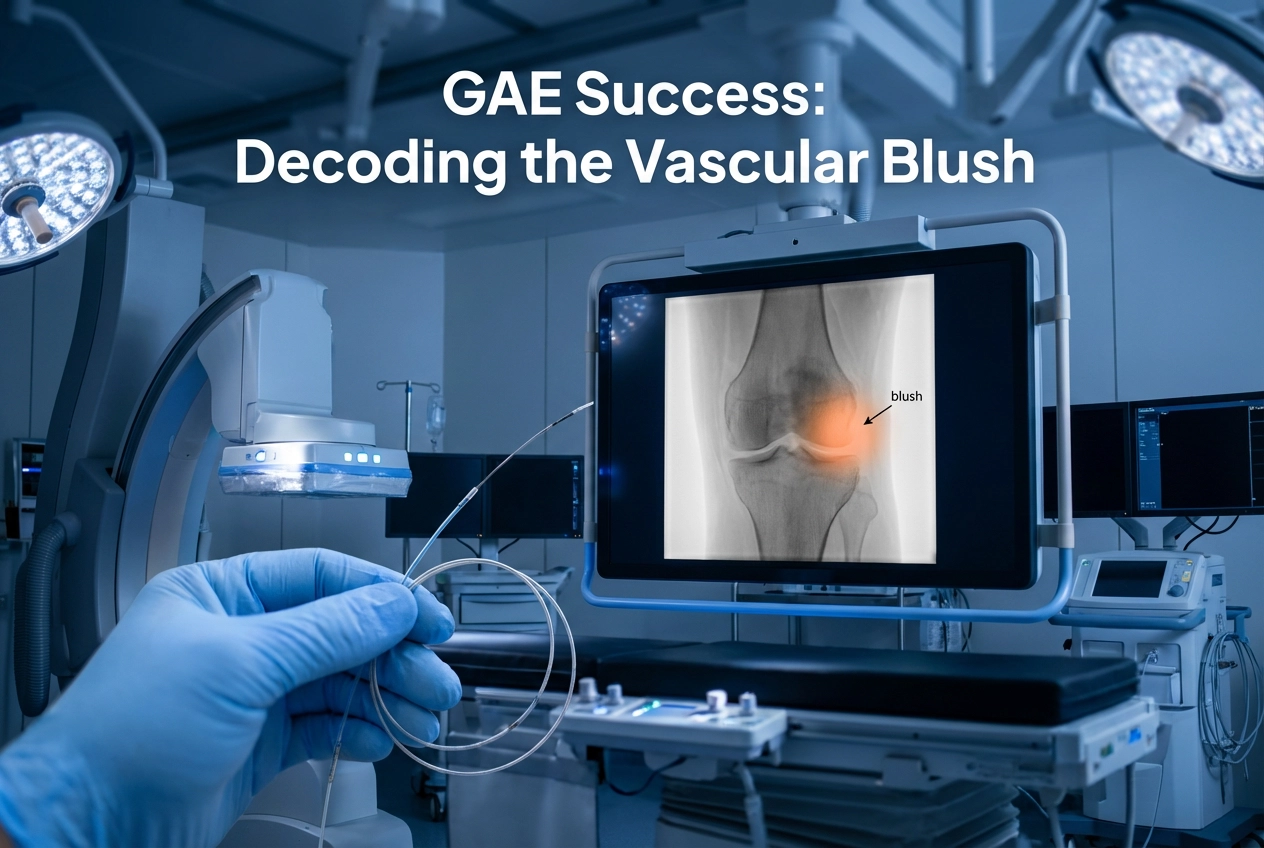
Genicular artery embolization represents a significant breakthrough for managing chronic knee osteoarthritis pain. However, identifying objective **genicular artery embolization endpoints** remains a challenge for many interventional radiologists. A recent study introduces a quantitative approach using blush size segmentation to guide these procedures. Specifically, researchers utilize digital subtraction angiography to create detailed color maps of the knee vasculature. Consequently, this method offers a precise way to monitor procedural success in real-time. This technique helps bridge the gap between subjective visual assessment and predictable clinical outcomes for patients.
Standardizing **Genicular Artery Embolization Endpoints**
Recent advancements in imaging software now allow physicians to quantify synovial hypervascularity during the procedure. Specifically, the team converted digital subtraction angiography images into color maps to measure the hypervascular area. By measuring the blush size before and after the intervention, clinicians can calculate a precise blush reduction ratio. This objective metric provides a much-needed surrogate parameter for determining procedural success. Furthermore, data indicates that patients with higher osteoarthritis grades typically display larger baseline blush sizes. Consequently, these quantitative tools help tailor the intervention to the specific inflammatory profile of each patient joint. Therefore, standardized measurements ensure that the treatment effectively targets the most diseased tissues.
Clinical Outcomes and BRR Thresholds
The research established a critical threshold for achieving significant pain relief at the six-month mark. Specifically, a blush reduction ratio of 68.3% served as the optimal cutoff for predicting substantial clinical improvement. Moreover, the procedure proved effective even for patients suffering from persistent pain following a total knee replacement. This is particularly relevant because post-surgical pain often stems from residual synovial inflammation. Additionally, the researchers found that larger embolic volumes generally led to a more significant reduction in hypervascular blush. However, physicians must balance this with the need to avoid non-target embolization. Therefore, using segmentation software to guide the embolic volume ensures both safety and efficacy during the session.
Frequently Asked Questions
Q1: What is the significance of the 68.3% blush reduction ratio?
This ratio represents the optimal quantitative threshold for predicting clinical success after the procedure. Achieving a reduction of at least 68.3% in vascular blush correlates strongly with significant improvements in knee pain and function at the six-month follow-up.
Q2: Can genicular artery embolization help patients after a total knee replacement?
Yes, the study demonstrates that the procedure is effective for patients experiencing persistent pain after knee replacement. By targeting residual hypervascularity in the synovium, clinicians can alleviate discomfort even in cases where surgical hardware is already present.
References
- Taheri Amin A et al. Segmentation of blush size guides embolic endpoints in genicular artery embolization. Eur Radiol. 2026 Mar 05. doi: 10.1007/s00330-026-12425-7. PMID: 41784792.
- Sriram T. Genicular arterial embolization in knee osteoarthritis: Current evidence, clinical outcomes, and future perspectives. J Arthrosc Surg Sports Med. 2026. doi: 10.25259/JASSM_75_2025.
- Sharma N, et al. Safety and Efficacy of Genicular Artery Embolization for the Treatment of Knee Pain Secondary to Osteoarthritis—Initial Indian Experience. Indian J Radiol Imaging. 2023;33(3):334-340. doi: 10.1055/s-0043-1768612.