
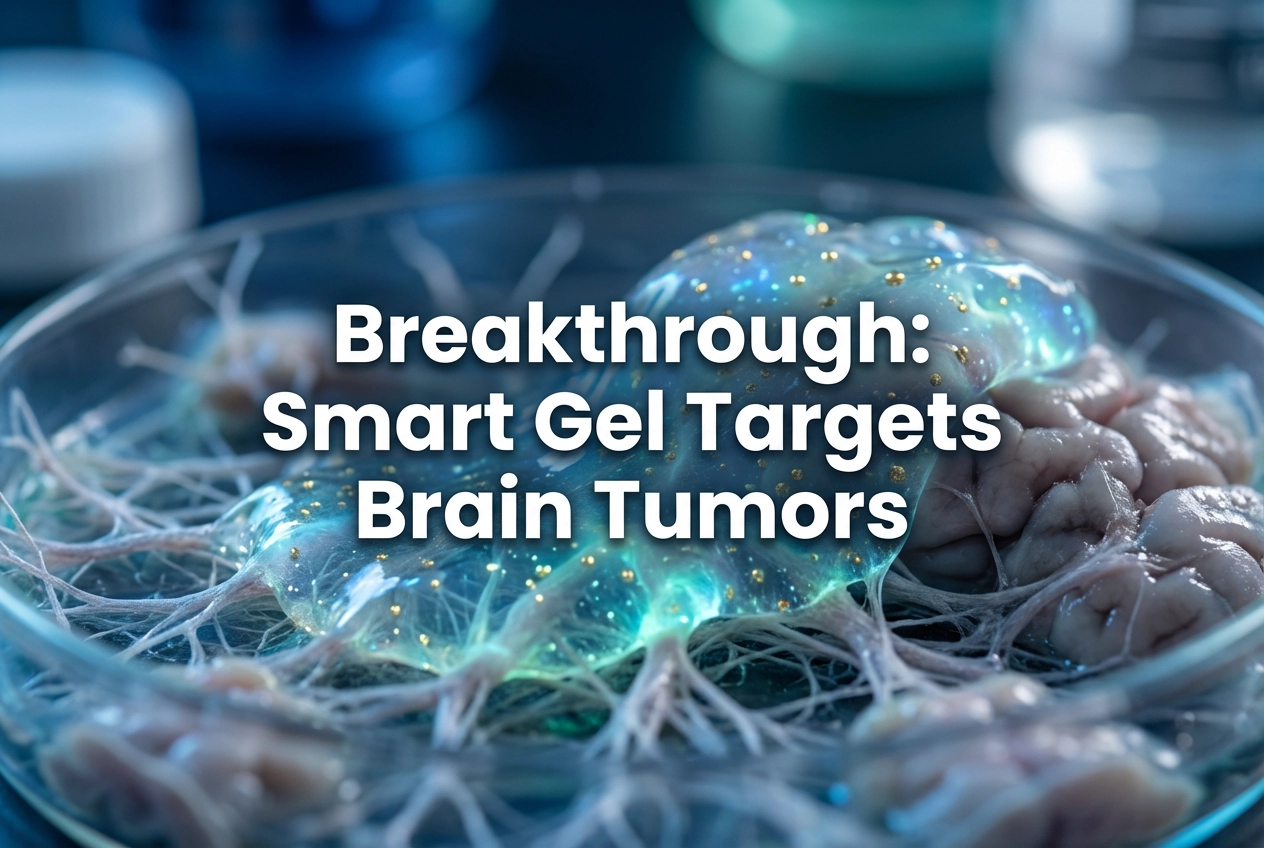
Can a Smart Gel Revolutionize Brain Cancer Treatment?
Scientists from the University of Sheffield recently secured a £1 million grant to advance glioblastoma drug delivery. This ambitious three-year project aims to transform how clinicians treat aggressive brain tumors and inflammatory skin conditions. Furthermore, the research team utilizes Cold Atmospheric Plasma (CAP) and Molecularly Imprinted Polymers (MIPs) to achieve precision. Historically, localized chemotherapy delivery remained difficult due to biological barriers. However, this new ‘smart gel’ technology offers a sophisticated solution for post-surgical sites.
Innovations in Glioblastoma Drug Delivery
The research led by Professors Rob Short and Nick Turner focuses on co-locating plasma and medicine. Specifically, the team uses AI-driven modelling to simulate molecular interactions for custom-fitted cavities. This approach allows the hydrogel to grow around the drug molecule itself. Consequently, the gel can hold complex drugs that were previously impossible to integrate into standard delivery systems. Therefore, clinicians can now target glioblastoma cells with unprecedented accuracy using implanted pellets. Because the system utilizes an endoscopic CAP device, it minimizes invasive procedures during follow-up care.
The Power of Molecularly Imprinted Polymers
Molecularly Imprinted Polymers function like custom-made locks for specific medicinal keys. Additionally, a handheld CAP device acts as a switch to trigger the medication release. Because the plasma generates reactive particles and electric fields, it provides a controlled, on-demand dosage for patients. Moreover, this dual-action system oxygenates the surrounding tissue to promote faster healing. Instead of relying on passive diffusion, the ‘smart plaster’ technology ensures that the drug reaches the site precisely when needed. Similarly, this method shows great promise for treating fungal infections and autoimmune diseases. Consequently, this multi-disciplinary collaboration bridges the gap between laboratory science and real-world medical impact.
Frequently Asked Questions
Q1: How does the CAP device trigger the medication?
The handheld CAP device produces a cocktail of reactive particles and electric fields that acts as a safe \”switch\” to release the drug.
Q2: Why is the ‘smart gel’ better than traditional hydrogels?
Unlike old hydrogels that acted like simple sponges, this technology uses molecular imprinting to hold complex drugs in custom-fitted molecular cavities.
Q3: What other conditions can this technology treat?
Beyond brain cancer, researchers are developing this system to manage severe inflammatory skin diseases and prevent dangerous post-surgical fungal infections.
References
- Scientists awarded £1m to develop potentially life-saving smart gel for braincancer – ETHealthworld
- University of Sheffield – Mathematical and Physical Sciences Research News (2026)
- UKRI Gateway – Engineering and Physical Sciences Research Council Grant Details
Disclaimer: This article was automatically generated from publicly available sources and is provided for informational and educational purposes only. OC Academy does not exercise editorial control or claim authorship over this content. It is not a substitute for professional medical advice, diagnosis, or treatment. Always consult a qualified healthcare provider and refer to current local and national clinical guidelines.