
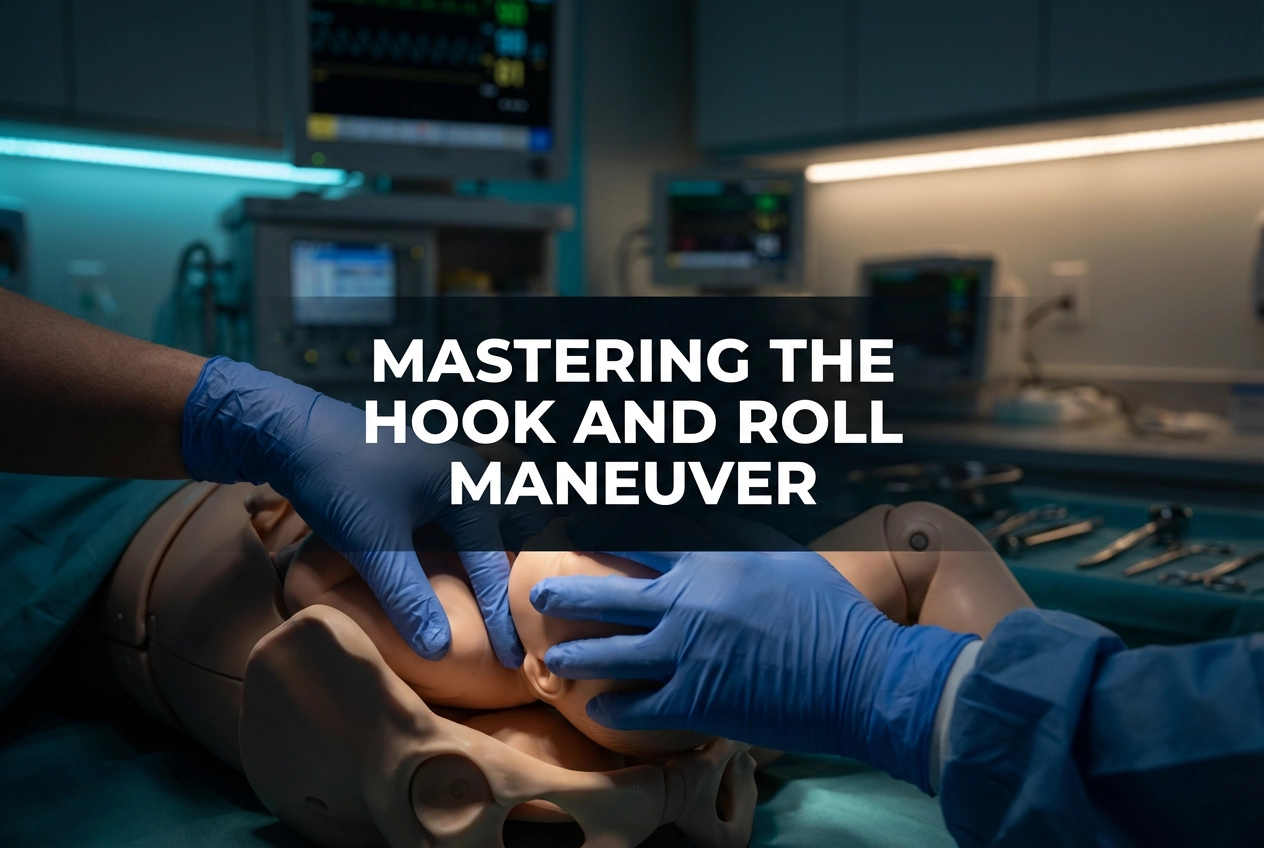
Shoulder dystocia represents a high-stakes obstetric emergency that requires immediate and effective intervention. Consequently, physicians often seek improved techniques to prevent maternal and neonatal trauma. The Hook and Roll maneuver offers a sophisticated modification of existing posterior axilla strategies. Specifically, it combines digital traction with fetal rotation to facilitate delivery. This approach provides a promising alternative to traditional rotational methods.
The Technique of the Hook and Roll Maneuver
First, the clinician must identify the posterior axilla. Subsequently, they hook a single finger into the axillary space to provide gentle traction. This action elevates the posterior shoulder toward the vaginal opening. Simultaneously, the operator rolls the anterior shoulder toward the fetal face. This dual movement rotates the fetus between 30 and 90 degrees. Therefore, the maneuver reduces the biacromial diameter while utilizing the spacious maternal sacrum. In addition, the technique allows for a smoother delivery compared to more forceful interventions. However, the clinician must maintain controlled pressure to ensure fetal safety throughout the process.
Clinical Outcomes and Safety Profile
Recent institutional data highlights the significant success of this approach. Specifically, the institution reported successful resolution in 53 out of 54 cases. This results in an impressive 98.1% success rate. Furthermore, the maneuver demonstrated a remarkable safety profile. For instance, no neonatal injuries occurred in the 16 cases where it served as the primary internal maneuver. Thus, the technique offers high efficacy without increasing the risk of brachial plexus injury. Consequently, medical educators now emphasize its ease of performance during emergency drills. Finally, early data suggests that this method could become a standard alternative in modern obstetric protocols.
Frequently Asked Questions
Q1: What distinguishes the Hook and Roll maneuver from other techniques?
The Hook and Roll maneuver is unique because it combines posterior axilla traction with a simultaneous ventral roll of the anterior shoulder. Unlike simpler traction methods, this technique actively reduces the fetal diameter through rotation.
Q2: Is the Hook and Roll maneuver safe for the neonate?
Yes, early clinical data indicates a low rate of neonatal complications. In cases where clinicians used it as the primary internal maneuver, no injuries were reported, suggesting it is a safe alternative for resolving impaction.
References
- Heilman EA et al. The Hook & Roll Maneuver for Resolution of Shoulder Dystocia. Obstet Gynecol. 2026 Mar 01. doi: 10.1097/AOG.0000000000006167. PMID: 41538800.
- Namak S et al. Axillary Digital Traction Maneuver: Shoulder Dystocia Management. J Family Med Community Health. 2016;3(4):1086.
- Bothou A et al. Overview of techniques to manage shoulder dystocia during vaginal birth. Eur J Midwifery. 2021;5:48.