
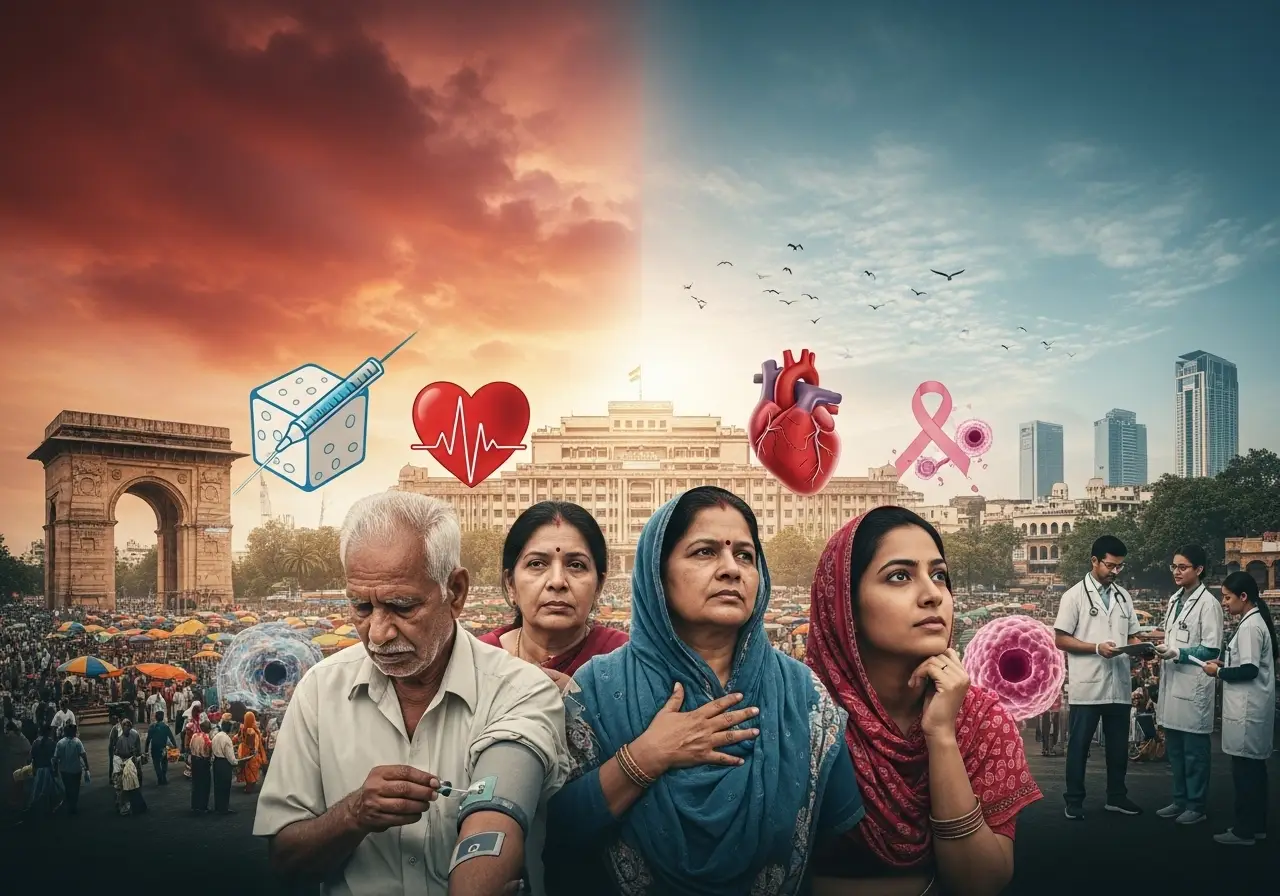
India is grappling with a significant India health crisis, driven by the alarming surge in non-communicable diseases (NCDs) such as diabetes, heart disease, and cancer. A panel of esteemed Padma awardee doctors warns of a looming health emergency, stressing that without immediate interventions, the nation risks being overwhelmed by this NCD epidemic. At a recent session hosted by Pacific OneHealth, experts called for urgent steps to address these rising health challenges.
The Escalating Burden of NCDs
Non-communicable diseases are escalating rapidly across India, posing a severe threat to public health. Indeed, these chronic conditions, including diabetes, heart ailments, and various cancers, now account for a substantial percentage of deaths in the country. For instance, a recent report highlighted that India is experiencing the fastest rise in cancer cases, with alarming incidences compared to global rates. Furthermore, the prevalence of conditions like pre-diabetes and pre-hypertension is increasing at younger ages, indicating a broader societal shift towards unhealthy lifestyles. These trends underscore the urgent need for comprehensive strategies to mitigate the impact of NCDs. To effectively combat these rising health challenges, consider exploring our International Post Graduate Program In Diabetes Mellitus Management or the Certification Course In Diabetes And Metabolic Disorder Care.
Universal Healthcare and Ethical Practices
Achieving universal healthcare remains a critical objective for India to combat the growing NCD burden. Dr. D. S. Rana, Chairman of the Board of Trustees at Sir Ganga Ram Hospital, emphasizes the necessity of fair access and robust regulation in the healthcare sector. He asserts that ethical practices and regulatory courage, particularly concerning drug pricing and hospital costs, are essential to ensure equitable healthcare for all citizens. Therefore, bridging existing disparities will require concerted efforts to make quality healthcare accessible, not merely a privilege.
Addressing Cardiovascular Illnesses
Heart disease continues to be a major contributor to the overall India health crisis. Padma Shri Dr. Praveen Chandra, Chairman of Interventional and Structural Heart Cardiology at Medanta, describes the heart as a “common pathway for multiple diseases.” He notes that timely emergency angioplasty, especially within the “golden hour,” can save numerous lives. Additionally, advanced cardiac procedures are now viable even for elderly patients, including those in their 80s and 90s, offering hope for improved outcomes. Promoting preventive health, consequently, remains crucial to reduce the incidence of cardiovascular ailments. For those interested in this area, our International Post Graduate Program In Cardiology and Certification Course In Heart Failure And Heart Valve Disease offer in-depth knowledge.
The Diabetes Epidemic in Delhi
The capital city faces a severe diabetes epidemic, highlighting the widespread nature of this NCD. Padma Shri Dr. Anoop Misra, a leading endocrinologist and diabetologist, reveals that one in three Delhi residents is diabetic, with an additional 30 percent being pre-diabetic. He stresses that prevention and early control are paramount to managing this crisis. While new medications like Ozempic show promise, lifestyle modifications and public awareness campaigns remain the most powerful tools in fighting diabetes. These interventions, undoubtedly, must focus on sustained changes to dietary habits and physical activity. Understanding and managing diabetes effectively is crucial, and our Master Specialization In Diabetes Mellitus Management can provide advanced insights.
Fostering Trust-Based Care and Prevention
Experts advocate for a healthcare system rooted in trust and a stronger emphasis on preventive measures. Dr. Mohsin Wali, Senior Consultant, Internal Medicine at Sir Ganga Ram Hospital, highlights non-profit models as examples of “Healthcare As It Should Be.” Such models can effectively address the increasing NCD burden and contribute to a healthier India. Dr. Swadeep Srivastava, President and Co-Founder of Pacific OneHealth, emphasizes transforming healthcare from a privilege into a universal promise. This involves seamlessly integrating preventive, primary, and tertiary care to ensure no one is left behind in the health journey. While medical technology has advanced significantly, the unchecked rise of lifestyle-related illnesses and poor uptake of preventive screening continue to drive the nation toward a public health catastrophe.
Frequently Asked Questions
Q1: What diseases are contributing to India’s health emergency?
A1: India’s health emergency stems from a “triple threat” of non-communicable diseases (NCDs), primarily including diabetes, heart disease, and cancer, which are rising at alarming rates.
Q2: What is the current status of diabetes in Delhi?
A2: In Delhi, one in three residents is diabetic, and another 30 percent are pre-diabetic, indicating a significant diabetes epidemic in the capital.
Q3: What solutions do experts propose to address India’s NCD crisis?
A3: Experts propose urgent steps such as achieving universal healthcare, strengthening regulation in drug pricing and hospital costs, promoting ethical practices, emphasizing preventive care and lifestyle changes, and adopting trust-based, non-profit healthcare models.
References
- How a triple threat of diseases is pushing India toward a health emergency – ETHealthworld
- India on brink of health crisis, surge in diabetes, heart disease and cancer: Doctors sound alarm – Rediff
- India on brink of health crisis: Padma awardee doctors warn – Deccan Herald
- India’s Looming Health Crisis: The NCD Epidemic Threat – Devdiscourse
- One in 3 people in Delhi has diabetes: Experts – NewsBytes
- Health report indicates significant growth in non-communicable diseases across India
- Empowering healthcare: Harnessing digital solutions for NCD diagnosis and transformation
Disclaimer: This article was automatically generated from publicly available sources and is provided for informational and educational purposes only. OC Academy does not exercise editorial control or claim authorship over this content. It is not a substitute for professional medical advice, diagnosis, or treatment. Always consult a qualified healthcare provider and refer to current local and national clinical guidelines.