Why India Must Overhaul Its Public Nutrition Strategy

India is confronting a shifting nutritional landscape. Consequently, healthcare leaders are re-evaluating the current India nutrition strategy to tackle rising public health challenges. While clinical efforts historically targeted starvation and undernutrition, contemporary clinicians observe a dual burden. Specifically, high rates of micronutrient deficiencies now coexist with accelerating levels of obesity.
Dr Mona Duggal, Director of the ICMR National Institute for Research in Digital Health and Science, advocates for systemic reforms. Furthermore, she stresses that traditional supplementation alone cannot resolve widespread deficiencies. Instead, clinicians and policymakers must implement data-driven, region-specific fortification programmes.
The Challenge of Supplementation Compliance
Iron and folic acid tablets have long anchored national anti-anaemia initiatives. However, patient compliance remains an enduring barrier in clinical practice. Many women discontinue prescribed supplements due to adverse gastrointestinal effects, including nausea and dark stools. For example, national health survey data shows that only 37.8 percent of pregnant mothers completed the recommended supplementation regimen.
Therefore, a vast majority of pregnant patients remain unprotected against nutritional anaemia. In contrast, staple food fortification bypasses behavioral adherence challenges. When daily dietary staples carry micronutrients, patients receive protection without changing their daily routines.
Indeed, a community intervention in Haryana's Ambala district demonstrated this reality. Researchers introduced wheat flour fortified with iron, folic acid, and vitamin B12 through the Public Distribution System. As a result, 98 percent of surveyed households regularly consumed the fortified flour.
Revising the India Nutrition Strategy
Although food fortification delivers superior uptake, public health rollout requires careful execution. For instance, national rice fortification encountered distinct hurdles during its progressive scale-up. In particular, clinicians raised safety questions regarding individuals with sickle cell anaemia and thalassemia major. Because repetitive iron intake can exacerbate iron overload in hemoglobinopathy patients, vigilant screening is necessary.
Moreover, operational challenges arose when buoyant fortified rice kernels floated during routine washing. Consumers frequently discarded these nutrient-dense kernels due to misconceptions. Consequently, policymakers paused welfare-based rice fortification in early 2026 to assess storage stability and kernel integrity.
Dr Duggal notes that robust post-market surveillance must accompany every fortification programme. Thus, real-time monitoring and active adverse-event tracking are essential to refine national nutrition policies.
Digital Health and Population-Specific Reference Ranges
Modern clinical decisions rely heavily on laboratory diagnostic thresholds. However, Indian healthcare facilities historically evaluated patients against Western reference intervals. Dr Duggal highlights that western norms often fail to reflect native metabolic physiology and diverse dietary habits. Therefore, the Indian Council of Medical Research conducts community trials to build indigenous reference ranges.
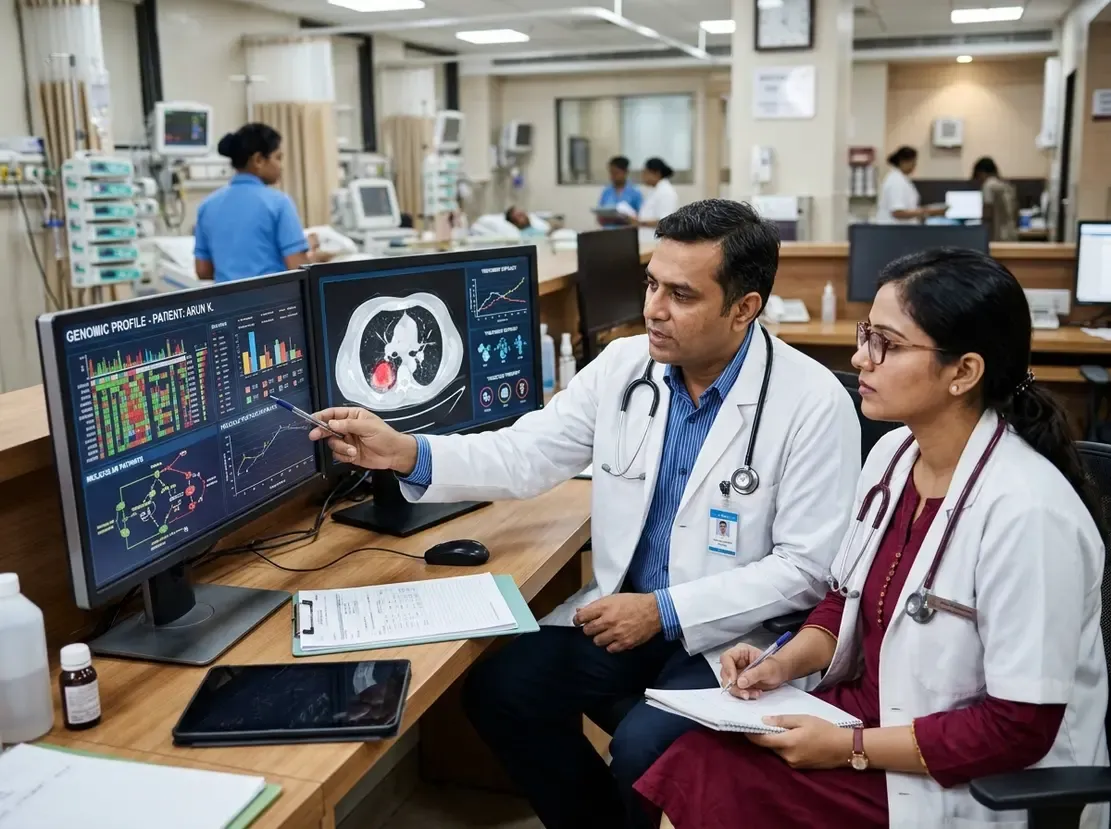
Additionally, modern digital health tools require local calibration. While artificial intelligence and clinical algorithms provide rapid diagnostic insights, engineers must train these tools on domestic datasets. Without representative demographic inputs, automated systems risk misclassifying nutritional deficiencies.
Ultimately, overcoming the dual burden of malnutrition requires integrated clinical action. Medical practitioners should combine customized dietary counseling with evidence-based supplementation. Furthermore, continuous surveillance will ensure that national nutrition programmes achieve sustained therapeutic success.
Frequently Asked Questions
Q1: Why do patients frequently discontinue iron and folic acid supplements?
Patients often discontinue daily iron supplementation due to uncomfortable gastrointestinal side effects. These include constipation, nausea, abdominal cramping, and dark stools. In addition, low perceived necessity when symptoms are mild leads to poor patient adherence.
Q2: Why is food fortification considered more effective than oral supplementation?
Food fortification integrates essential micronutrients directly into staple foods like flour, rice, and salt. Consequently, individuals obtain required vitamins and minerals without altering daily routines or taking additional pills.
Q3: Why must clinical AI models in India use domestic population data?
Indian populations exhibit unique genetic, metabolic, and dietary profiles compared to Western cohorts. Therefore, clinical algorithms trained on Western data can introduce diagnostic errors when evaluating nutritional indices in Indian patients.
References
- India’s Nutrition Strategy Must Move from Supplements to Region-Specific,Data-Led Programmes: Dr Mona Duggal - ETHealthworld
- Early Program Assessment of the Haryana Wheat Flour Fortification Program, India - Current Developments in Nutrition
- Dietary Guidelines for Indians - Indian Council of Medical Research & National Institute of Nutrition (ICMR-NIN)
- Large-scale staple food fortification as a complementary strategy to address vitamin and mineral vulnerabilities in India: A critical review - NITI Aayog