How Private Equity Is Reshaping Indian Medical Devices

Private equity investors are actively pivoting toward Indian medical devices to build scalable healthcare platforms. Currently, India imports approximately seventy percent of its advanced medical equipment and consumables. However, rising domestic healthcare demand and robust policy incentives are accelerating local production. Consequently, major global funds are injecting capital into established Indian manufacturers to drive consolidation and modernise manufacturing pipelines.
Capital Inflow into Indian Medical Devices
Recent high-profile transactions demonstrate this accelerating financial momentum. For example, Temasek completed a strategic private equity investment in Romsons, a major domestic manufacturer of critical care consumables. Furthermore, global buyout funds such as KKR are expanding their MedTech portfolios through platforms like Healthium. Therefore, private capital is moving beyond hospitals to capture high-margin medical manufacturing opportunities.
Additionally, investors view fragmentation in the device industry as a prime opportunity for value creation. Because hospital asset valuations remain elevated, funds are building integrated device platforms. Consequently, consolidators are acquiring complementary businesses across surgical consumables, diagnostics, and orthopaedics.
Regulatory Drivers and Manufacturing Scale
Government initiatives play a pivotal role in reshaping the MedTech landscape. Specifically, the National Medical Device Policy 2023 provides targeted fiscal support and infrastructural assistance for domestic facilities. Furthermore, regulatory authorities are enforcing stricter quality standards on both domestic and imported goods. As a result, scaled manufacturers gain a significant competitive edge in institutional procurement.
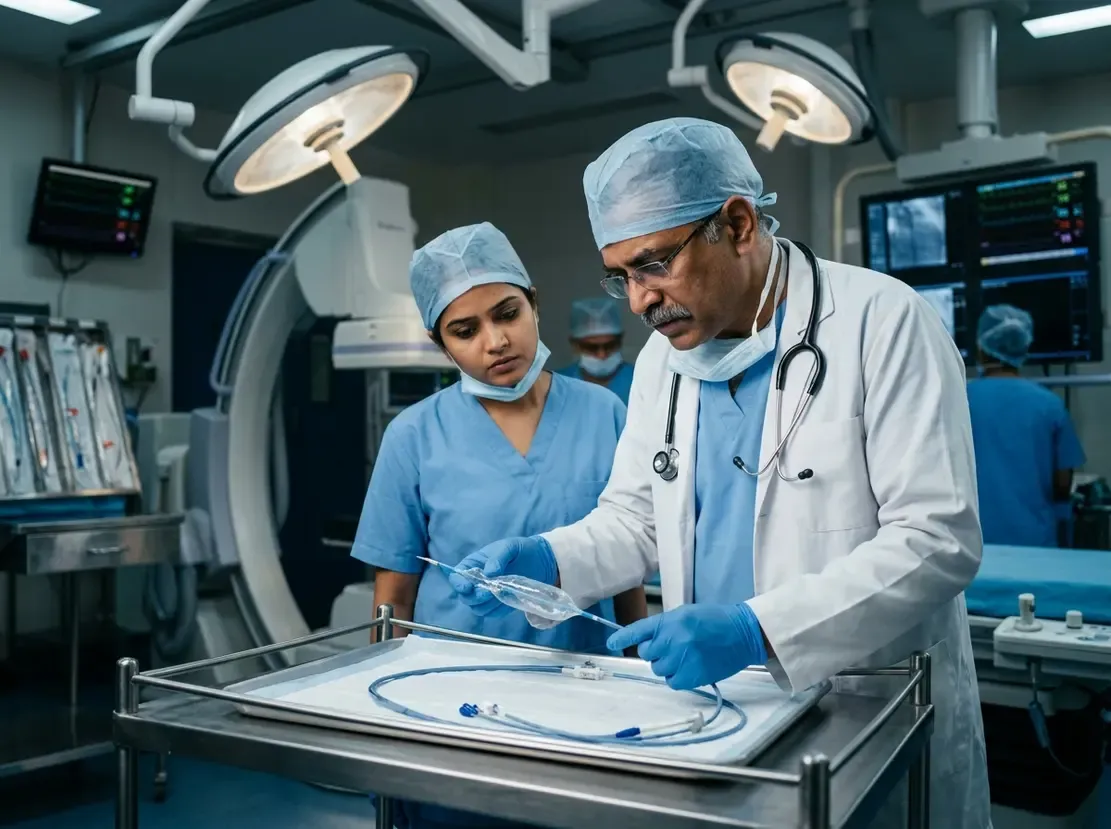
However, industry leaders emphasize that capital must translate into tangible production capacity. For instance, funding must support advanced tooling, high-precision cleanrooms, and comprehensive testing laboratories. Therefore, long-term success depends on genuine capability building rather than simple ownership transfers.
Clinical Implications for Healthcare Providers
This wave of consolidation carries direct clinical consequences for practicing physicians and hospital administrators. First, increased capital investment improves supply chain resilience for essential consumables and surgical disposables. Thus, clinicians experience fewer stockouts of critical devices during acute care procedures.
Moreover, institutional backing accelerates domestic research and development. Consequently, Indian healthcare institutions can access cost-effective devices that meet international quality benchmarks. Ultimately, building robust domestic capabilities ensures high-standard clinical care while reducing dependency on foreign supply chains.
Frequently Asked Questions
Q1: Why are investors focusing on Indian medical devices?
Investors recognize significant market potential because India currently imports nearly seventy percent of its medical devices. Furthermore, rising domestic patient volumes and favorable manufacturing policies offer sustained revenue growth.
Q2: How does private equity entry impact healthcare providers?
Private equity investment enhances supply chain stability and expands access to standardized medical consumables. Consequently, healthcare providers benefit from improved device reliability and more competitive procurement pricing.
Q3: What regulatory framework supports domestic device manufacturing?
The National Medical Device Policy 2023 provides a comprehensive roadmap for domestic manufacturing. In addition, Central Drugs Standard Control Organisation regulations enforce consistent quality and safety standards across all medical hardware.
References
- Medical devices emerge as PE’s next big healthcare bet - ETHealthworld
- Medical Device Manufacturer Romsons Group Partners with Temasek to Support Global Expansion - Digital Health News
- National Medical Device Policy 2023 - Ministry of Chemicals and Fertilizers, Government of India