
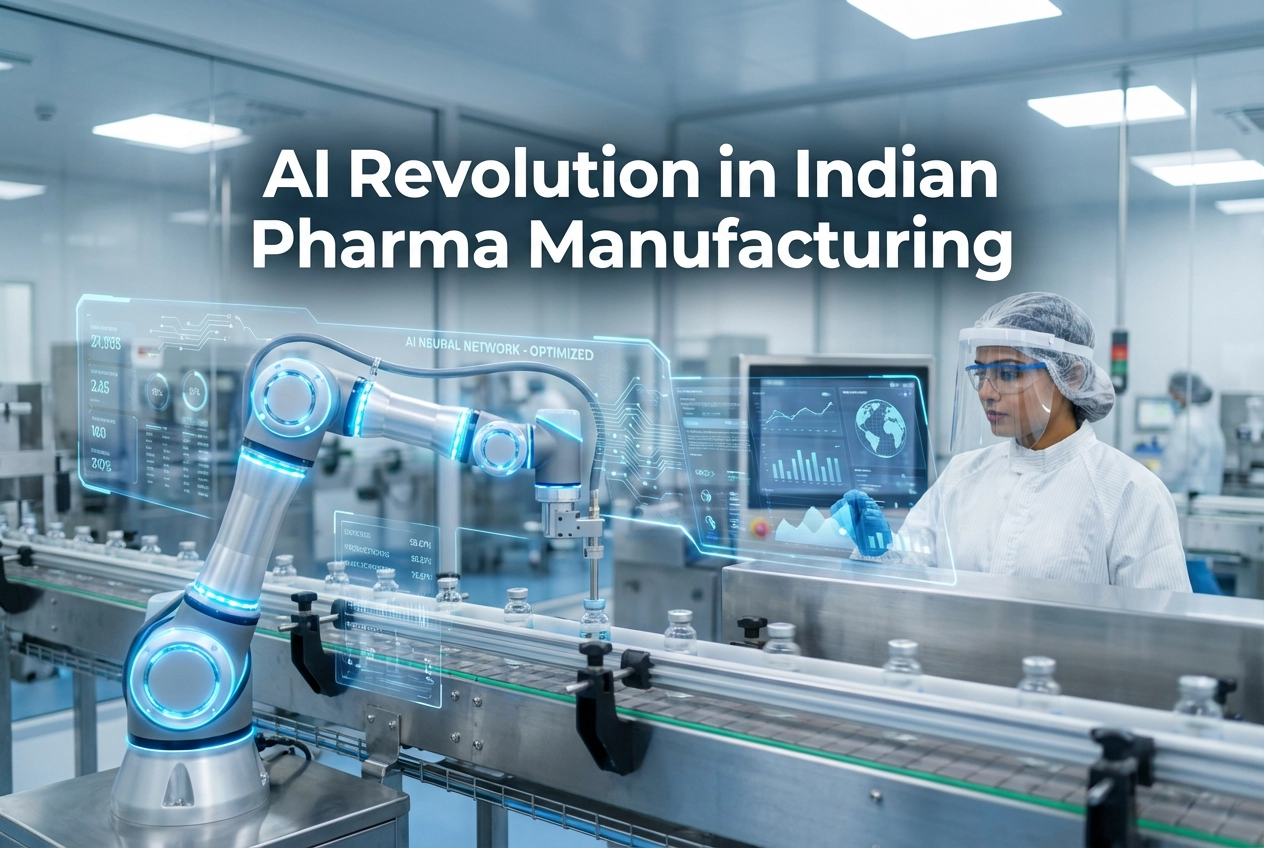
Industrial AI in Pharma is transitioning from executive strategy to actual shop-floor implementation across India. This shift emphasizes real-time metrics and predictive maintenance to ensure product quality. Consequently, the pharmaceutical sector now relies on data-driven insights to manage complex production cycles effectively. This technological evolution allows manufacturers to move beyond simple automation toward a more intelligent, resilient system.
The Importance of Explainable Industrial AI in Pharma
For life sciences, AI systems must be deterministic and explainable. Specifically, regulatory bodies require a clear audit trail for every pharmaceutical batch produced. If a batch failure occurs, manufacturers must reconstruct exactly what the system observed. Therefore, transparent AI models help identify the reasoning behind specific automated recommendations. This level of accountability ensures that safety remains a top priority during the manufacturing process. Furthermore, it allows companies to maintain high standards of compliance with global health regulations without compromising on speed.
Upskilling the Life Sciences Workforce
Technology alone cannot drive the necessary transformation in the healthcare production sector. Instead, success depends on leadership and culture within the organization. Companies are currently prioritizing change management and upskilling programs for their middle management and staff. As a result, workers become more comfortable using digital twins and predictive insights to improve throughput. By investing in structured training, manufacturers prepare their workforce to lead the next phase of growth. This human-centric approach combines automation with the invaluable wisdom of experienced professionals. Professionals interested in advancing their knowledge base regarding systemic changes in healthcare delivery might explore the Pharmacy Speciality Courses.
Sector-Specific Gains in Healthcare Production
In the life sciences industry, AI serves as a powerful tool for regulatory precision and operational efficiency. It enables real-time quality oversight and ensures robust data integrity throughout the supply chain. Moreover, scalable operations allow companies to meet evolving license-to-operate requirements consistently in competitive markets. Because the margin for error in pharmaceutical production is narrow, these systems offer a pathway to industry leadership. Ultimately, integrating AI into the production line fosters a more resilient and competitive manufacturing ecosystem in India.
Frequently Asked Questions
Q1: Why is explainability critical for Industrial AI in Pharma?
Explainability is vital because it allows manufacturers to reconstruct decision-making processes during batch failures. This transparency ensures regulatory compliance and maintains a clear audit trail for high safety standards.
Q2: How does upskilling contribute to AI adoption in factories?
Upskilling prepares the workforce to handle advanced tools like digital twins and predictive analytics. Consequently, employees feel empowered to make data-driven decisions while retaining their practical expertise on the shop floor.
Q3: What are the primary benefits of AI in life sciences?
The primary benefits include enhanced regulatory precision, real-time quality oversight, and better data integrity. These improvements help companies meet license-to-operate requirements while boosting overall productivity.
References
- From Pilot to Plant Floor: Industrial AI Moves from Boardroom to Assembly Line – ETHealthworld
- Rockwell Automation. (2024). Digital Transformation in Life Sciences.
- Deloitte. (2024). Scaling AI in Life Sciences Manufacturing.
Disclaimer: This article was automatically generated from publicly available sources and is provided for informational and educational purposes only. OC Academy does not exercise editorial control or claim authorship over this content. It is not a substitute for professional medical advice, diagnosis, or treatment. Always consult a qualified healthcare provider and refer to current local and national clinical guidelines.