
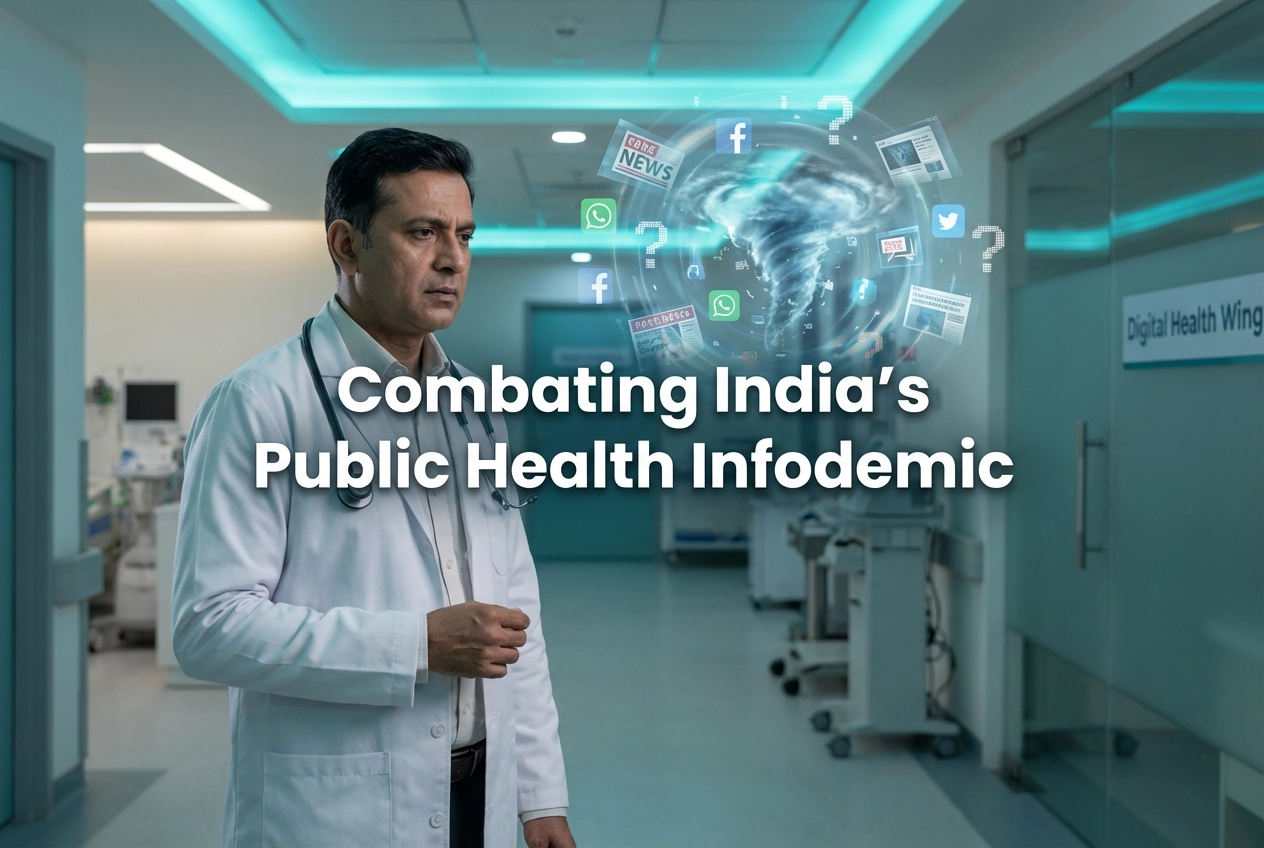
The proliferation of health misinformation in the digital age, known as the Infodemic, presents a major threat to public health systems and institutional credibility. Former Union Health Minister Harsh Vardhan recently stated that an Infodemic corrodes trust at personal, policy, and institutional levels. Consequently, misinformation diverts public attention toward harmful or reactive choices, thus weakening vital public health efforts. Therefore, experts stress that combating false information is now a critical second front in modern healthcare. Understanding how to provide reliable information is key to effective General Practice.
The Dual Threat: Misinformation and Eroding Trust
Misinformation spreads much faster than disease, ultimately undermining public trust and negatively affecting health outcomes. Data shows the alarming scope of the problem. For instance, misinformation accounts for 1 to 51 percent of vaccine-related posts online. Moreover, celebrities and politicians drive a reported 69 percent of misinformation engagement, amplifying its reach. Therefore, the infodemic erodes credibility and often delays life-saving interventions. Dr. Mahesh Verma, Vice Chancellor of GGSIPU, affirmed that the Infodemic is one of the biggest threats facing mankind today. He stressed that media must either amplify myths or become a strong counter-myth tool.
Implementing Information Therapy to Counter the Infodemic
The antidote to the uncontrolled spread of false information is Information Therapy (Ix). Information Therapy involves the proactive and timely provision of evidence-based health information to meet an individual’s specific needs, thereby supporting sound medical decision-making. Because the goal is to empower patients, this approach can increase confidence in self-care and disease management while also potentially reducing healthcare resource utilization. Furthermore, Dr. Sunil Khetarpal noted that communication failure, not medical failure, is a primary cause of patient dissatisfaction. Simply spending 40 seconds on empathetic listening can significantly reduce patient anxiety. Technology and AI should support, not substitute, human judgment and responsibility in this process. Developing strong communication skills is vital for practitioners taking on any specialized area, such as pursuing a Post Graduate Program in Emergency Medicine.
A Roadmap for Doctors and Health Systems
The former Union minister argued that 90 percent of health outcomes rely on prevention, but misinformation shifts focus toward less effective, harmful choices. Therefore, structured health communication is essential. Dr. Verma outlined a three-pronged approach: Prevent, Protect, and Promote. This initiative requires coordinated action from the medical community, the media, and the masses. Similarly, the government of India leveraged official websites and mobile apps like Aarogya Setu to direct citizens toward reliable sources during the COVID-19 crisis. Consequently, healthcare professionals must actively speak up and prioritize accuracy over viral sharing to restore scientific temper and credibility. The book ‘Perils of Health Infodemic’ offers practical frameworks for citizens and professionals to navigate misleading information through digital hygiene and responsible communication, skills applicable across all specialties, including Foundation Comprehensive Training For New Doctor.
Frequently Asked Questions
Q1: What is an infodemic and why is it dangerous?
According to the World Health Organization, an infodemic is too much information, including false or misleading information, in digital and physical environments during a disease outbreak. It is dangerous because it corrodes trust at institutional, policy, and personal levels, diverting attention toward harmful choices and weakening public health systems.
Q2: What is “Information Therapy” (Ix) and how can doctors use it?
Information Therapy is the therapeutic provision of timely, evidence-based health information to meet an individual’s specific needs, supporting sound medical decision-making. Doctors can use it by practicing proactive, empathetic listening, providing accurate information, and empowering patients to take an active role in their health and self-care.
Q3: How does the infodemic specifically impact public health in India?
The infodemic in India has exacerbated panic and led to unscientific practices, such as a surge in searching for unproven immunity boosters during the COVID-19 pandemic. It weakens policy compliance, delays life-saving interventions, and requires health literacy efforts to promote caution in using health information.
References
- Infodemic corrodes institutional trust, weakens policy compliance: Ex-Unionhealth minister – ETHealthworld.
- Impact of ‘infodemic in pandemic’ on food and nutrition related perceptions and practices of Indian internet users. PLOS.
- The Pandemic, Infodemic, and People’s Resilience in India: Viewpoint. PMC – NIH.
- A Model of Information Therapy: Definition and Empirical Application. UNT Digital Library.
- Information therapy. Wikipedia.
- Information Therapy: A New Interest for HIM. Journal of AHIMA.
- Fighting an Infodemic in the Time of the COVID-19 Pandemic in India: Leveraging Technology and Social Media. NIH.
Disclaimer: This article was automatically generated from publicly available sources and is provided for informational and educational purposes only. OC Academy does not exercise editorial control or claim authorship over this content. It is not a substitute for professional medical advice, diagnosis, or treatment. Always consult a qualified healthcare provider and refer to current local and national clinical guidelines.