
Mastering Laparoscopic Davydov Vaginoplasty in MRKH
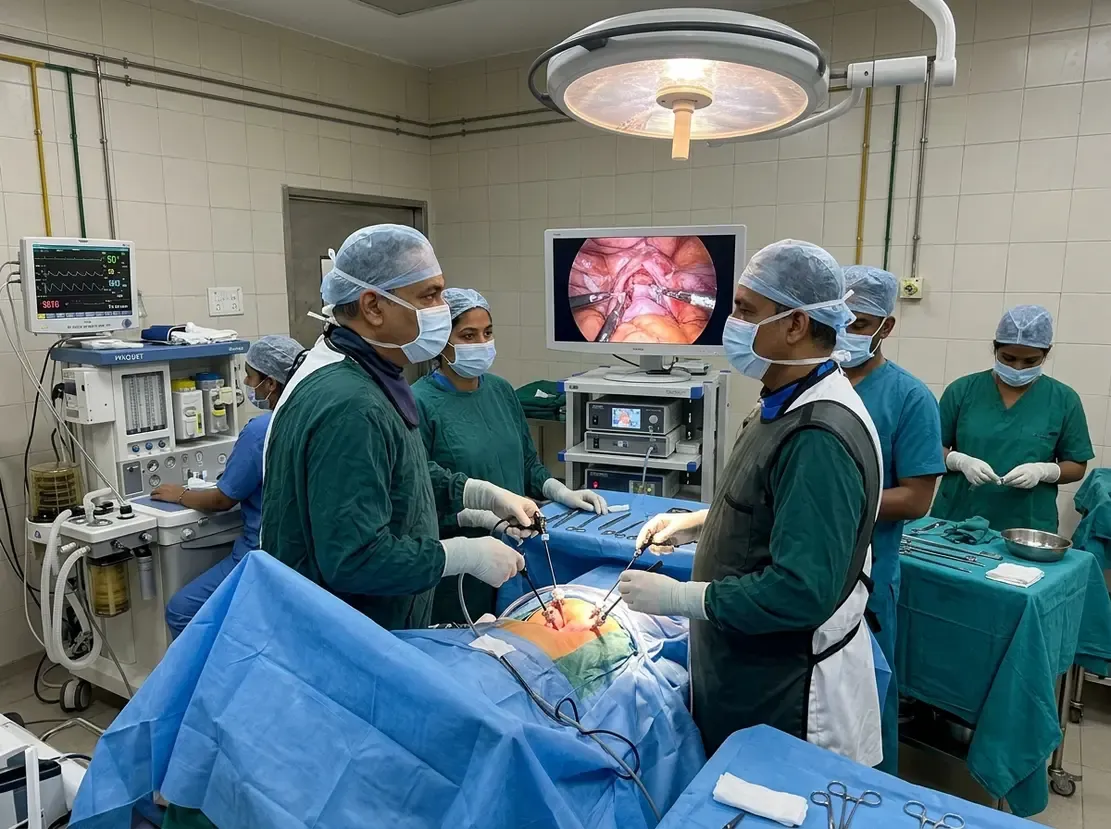
Müllerian agenesis, or Mayer-Rokitansky-Küster-Hauser syndrome, causes congenital absence of the uterus and vagina in women with normal 46,XX karyotypes. Consequently, patients present with primary amenorrhea and significant psychosexual distress. Fortunately, reconstructive pelvic surgeons can choose among several surgical techniques to restore functional anatomy. Currently, laparoscopic Davydov vaginoplasty has emerged as a premier minimally invasive strategy to build a functional neovagina. Therefore, clinicians frequently adopt this peritoneal mobilization technique to achieve favorable long-term anatomical and sexual results.
Clinical Indications and Preoperative Evaluation
Müllerian agenesis represents one of the most challenging causes of primary amenorrhea in adolescent females. Moreover, affected women display normal ovarian function and normal secondary sexual characteristics. Before planning surgery, gynecologists perform pelvic magnetic resonance imaging to assess uterine remnants and renal anatomy. Additionally, surgeons must confirm psychological readiness and provide detailed counseling regarding postoperative canal maintenance. Non-surgical vaginal dilation remains the first-line therapy according to international guidelines. However, when dilation fails or anatomical agenesis precludes non-invasive therapy, surgical reconstruction becomes necessary. As a result, gynecologic teams select peritoneal neovaginoplasty for its high anatomical success and rapid mucosal epithelialization.
Key Steps in Laparoscopic Davydov Vaginoplasty
The operative technique combines simultaneous laparoscopic and perineal dissection. First, the surgical team conducts a thorough laparoscopic survey of the pelvic cavity. Next, surgeons incise the pelvic peritoneum transversally between the bladder base and rectum. Subsequently, blunt and sharp dissection develops the recto-vesical potential space toward the perineum. Simultaneously, the perineal surgeon incises the vaginal dimple to access this newly developed tunnel. Furthermore, the surgical team introduces a 12-millimeter trocar transperineally under direct optical visualization to guide peritoneal mobilization. Then, surgeons pull the mobilized peritoneal flaps downward and suture them circumferentially to the vestibular mucosa. Finally, laparoscopists place a purse-string suture to close the neovaginal apex while preserving adjacent ureters.
Postoperative Outcomes and Clinical Pearls
Postoperative vaginoscopy at six months demonstrates complete squamous metaplasia and positive Lugol iodine staining. Consequently, the autologous peritoneal graft transforms into functional neovaginal tissue without requiring distant tissue harvest. In recent clinical series, patients achieve an average neovaginal length between 10 and 11 centimeters. Furthermore, patients report high satisfaction scores and experience minimal dyspareunia during sexual activity. To prevent apex descent or stenosis, surgeons emphasize careful peritoneal edge preservation and gentle dilation protocols. In addition, surgeons avoid energetic thermal injury near the bladder trigone and anterior rectal wall. Ultimately, this standardized laparoscopic approach minimizes blood loss, shortens hospital stays, and optimizes psychosocial recovery.
Frequently Asked Questions
Q1: What are the primary advantages of the laparoscopic Davydov procedure?
The procedure uses autologous peritoneum, which eliminates donor-site scars from skin grafts. Additionally, it achieves natural lubrication and excellent anatomical length with low complication rates.
Q2: How does peritoneal tissue adapt inside the neovaginal canal?
Over three to six months, the mobilized peritoneum undergoes gradual squamous metaplasia. Consequently, it develops an iodine-positive stratified epithelium that closely resembles normal vaginal mucosa.
Q3: Do patients require lifelong dilation following this surgery?
Patients use soft dilators during the initial postoperative months to maintain patency during healing. However, regular sexual intercourse usually maintains adequate neovaginal caliber without long-term dilation therapy.
References
- Scarperi S et al. Laparoscopic modified Davydov's technique for vaginoplasty: operative steps and technical pearls. Am J Obstet Gynecol. 2026 Sep 18. doi: undefined. PMID: 42759742.
- Fedele L, Frontino G, Restelli E, Ciappina N, Motta F. Creation of a neovagina by Davydov's laparoscopic modified technique in patients with Rokitansky syndrome. Am J Obstet Gynecol. 2010;202(1):33.e1-33.e6.
- Kisu I, Banno K, Iida M, et al. Laparoscopic Vaginoplasty Procedure Using a Modified Peritoneal Pull-Down Technique with Uterine Strand Incision in Patients with Mayer–Rokitansky–Küster–Hauser Syndrome: Kisu Modification. J Clin Med. 2021;10(23):5537.


